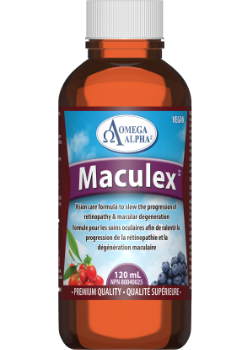
Maculex is a Vision care formula from Omega Alpha that works to slow the progression of retinopathy & macular degeneration. With a unique herbal combination Omega Alpha’s Maculex includes Bilberry, Eyebright and antioxidant rich Goji Fruit. Macular degeneration is the leading cause of visual loss in North America. It is caused by free radical damage to the macula, the area of the retina responsible for central vision. Free radical damage to light receptor sites of the macula can be slowed and even stopped completely with the right nutritional supplements. Bilberry helps to reduce the free radical damage to which these small blood vessels are particularly sensitive, while Eyebright is recommended by natural health practitioners for conjunctivitis (pink eye), blepharitis, eye fatigue and allergic eye symptoms. [LIQUID]
Each 1ml contains:
Vaccinium myrtillus Extract 1.2:1 (Bilberry Fruit) (Standardized 36% Anthocyanosides) 6000 mg
Euphrasia officinalis Extract 1:2.9 (Eyebright Herb) 1700 mg
Lycium barbarum Extract 1:5.9 (Goji Fruit) 850 mg
Non-Medicinal Ingredients:
Purified water, 20% Ethanol, Potassium sorbate, Benzoic acid (buffered).
Important Information:
Do not use if you are pregnant or breastfeeding. Consult a health care practitioner if symptoms worsen. Do not use if security seal is broken. Store protected from light and moisture. Store away from children. Consume within six (6) months after opening.
Dosage
Adults: Take 2 teaspoons (10 mL) once per day on an empty stomach. Can be mixed with juice or water. Shake well before use.
Advanced Herbal Formulas That Deliver
Support immune health, energy, and focus with Omega Alpha’s mushroom extracts.
Chaga Mushroom Extract
delivers antioxidant support, while
Cordyceps Mushroom Extract
boosts energy and endurance.
Coriolus (Turkey Tail) Mushroom Extract
supports immune and gut health, and
Lion’s Mane Mushroom Extract
enhances memory and cognition.
Maitake Mushroom Extract,
Reishi Mushroom Extract, and
Shiitake Mushroom Extract
provide additional support for immunity, stress balance, and overall wellness.
EYE HEALTH
Recent research shows that the oxidative damage free radicals cause to the eyes, in particular to the macula, can be slowed and even halted in some cases with the appropriate nutritional supplements...
The eye is a very important sensory organ, which is shown by the fact that a large area of our brain is committed to taking in and understanding visual information. Up to 70% of all of the sensory receptors in the body are in the eyes. Problems with the eyes become more common as we age.
How can we support
eye health, throughout our lifetime, so that our vision remains clear and focused?
The eye is a small sphere with a diameter of about 1 inch. Only one sixth of the eye is visible, the rest is protected in the orbital socket. There are many accessory structures of the eye including the eyebrows, eyelids, conjunctiva, lacrimal apparatus and eye muscles. Only a small part of the eye is dedicated to photoreception. This area is on the posterior wall on the inside the eyeball and is called the retina. It contains rods, for dim light and peripheral vision, and cones, for bright light and colour vision. The lens is situated at the front of the eyeball and its job is to focus light on the retina. Glasses are used to help focus light through the lens when the accommodation of the lens is inadequate or overcompensating. As we age, the muscles that move the lens decrease functioning making the use of glasses or contacts more common among older individuals.
There two main causes of degenerative eye conditions:
- Free radical damage
- Decreased blood flow to the eye
Free radicals are unstable molecules that in their bid to become more stable must bump into healthy cells and cause damage. This can cause cell death, alterations in genetic material and autoimmune reactions to damaged cells. Food, water and ultraviolet radiation from the sun are the major contributors of free radicals that build up in the eye.
The eyes reflect the overall health of the body. The vessels on the back of the eyeball are very small and fragile. Changes in them are often the first sign of cardiovascular diseases such as hypertension and atherosclerosis. These conditions lead to decreased blood flow to the retina. Lack of oxygen and an accumulation of waste products eventually compromises vision.
Poor diet, environmental toxins, medications and stress all decrease the body’s ability to neutralize free radicals and maintain healthy vessels. This can result in eye degeneration, occurring in the following conditions:
A cataract is a clouding of the eye’s lens. It is the most common cause of blindness worldwide. Factors that predispose one to the development of cataracts are old age, diabetes, exposure to radiation or heavy metals, eye injury, the use of medications, like steroids, and heredity.
Glaucoma is the second leading cause of blindness in North America. It is characterized by a rise in the pressure inside the eyeball. The pressure causes compression of the optic nerve and permanent vision changes result. Acute glaucoma attacks can be triggered by stress or dilation of the pupil for long periods of time. The cause of acute glaucoma is a build up of fluid in the eye. Fluid build up occurs because of poor drainage or an increase in production.
Chronic glaucoma results from waste accumulation in the eye, damage from previous eye problems, like cataracts, or the use of medications for high blood pressure and depression. Cortisone use can also lead to glaucoma.
Macular degeneration is the leading cause of visual loss in North America. It is caused by free radical damage to the macula, the area of the retina responsible for central vision. Other contributors to macular degeneration are hypertension and arteriosclerosis.
You can optimize your eye health and protect against eye disease in many ways, including:
- Have regular vision screenings and medical exams
- Follow a healthy dietary plan.
- Reduce the accumulation of toxins and waste products with regular organ detoxification.
- Have a balanced lifestyle with time for exercise and relaxation.
- Minimize exposure to the sun when your eyes are unprotected and do not smoke.
- Use appropriate nutritional and herbal supplements.
Vision screenings are an important part of maintaining eye health because vision changes can be gradual and may not be noticeable to an individual in normal daily activities. General physical exams, by your health care provider, include fundoscopy, an examination of the retina. This inspection may reveal precursors to eye disease, such as small changes in the retinal vessels.
A diet high in
antioxidants
including whole grains, raw fruits and raw vegetables decreases free radical damage. Eat foods containing lutein and
zeaxanthin
like
broccoli, collards, kale, mustard
greens, spinach and turnip greens. Eat foods rich in flavinoids and vitamins C and E like blueberries, blackberries, cherries, and other fruits and vegetables. Yellow fruits and vegetables should be consumed for their
vitamin A
content.
Support the cardiovascular system to decrease arteriosclerosis, prevent hypertension and maximize eye health. Avoid salt, sugar and animal fats. Consume foods that are high in
vitamin E, like avocados and wheat germ, to protect the vessels. Essential fatty acids decrease cholesterol levels. Try using flax seed, walnut or
pumpkin seed oil.
A detox can promote good eye health as it will reduce toxin build up and waste inside the body. Ensure you are drinking at least 2L of filtered water daily in addition to herbal teas and natural, pure fruit juices. It is also a good idea to drink a glass of warm water with lemon in the morning to activate the digestive tract. The healthiest foods to consume during detoxification include fresh vegetables and fruits, whole grains, fish, lean meats, soy products, nuts, seeds, steamed vegetables and cold-pressed vegetable oils. You can also use supplements to focus your detox on specific organs. Avoid pre-made, processed foods, fast food, coffee, black tea, alcohol, salt, white sugar, chocolate, tobacco, dairy, preservatives, artificial sweeteners and fried food.
Lifestyle factors, like emotional stress and inactivity, negatively affect eye health. Stress increases the production of free radicals. When an individual is under stress their diet tends to suffer, which can also compromise eye health. Inactivity decreases circulation to the whole body including the eye.
To prevent free radical damage to the eyes avoid direct sunlight. Use sunglasses, with full UV protection, to protect your eyes. Smoking generates large amounts of free radicals and is thought to be a risk factor for degenerative eye conditions.
Carefully SelectedShips to the U.S.Wellness EssentialsTrusted Brands
Product Details
EYE HEALTH
Recent research shows that the oxidative damage free radicals cause to the eyes, in particular to the macula, can be slowed and even halted in some cases with the appropriate nutritional supplements...
The eye is a very important sensory organ, which is shown by the fact that a large area of our brain is committed to taking in and understanding visual information. Up to 70% of all of the sensory receptors in the body are in the eyes. Problems with the eyes become more common as we age.
How can we support
eye health, throughout our lifetime, so that our vision remains clear and focused?
The eye is a small sphere with a diameter of about 1 inch. Only one sixth of the eye is visible, the rest is protected in the orbital socket. There are many accessory structures of the eye including the eyebrows, eyelids, conjunctiva, lacrimal apparatus and eye muscles. Only a small part of the eye is dedicated to photoreception. This area is on the posterior wall on the inside the eyeball and is called the retina. It contains rods, for dim light and peripheral vision, and cones, for bright light and colour vision. The lens is situated at the front of the eyeball and its job is to focus light on the retina. Glasses are used to help focus light through the lens when the accommodation of the lens is inadequate or overcompensating. As we age, the muscles that move the lens decrease functioning making the use of glasses or contacts more common among older individuals.
There two main causes of degenerative eye conditions:
- Free radical damage
- Decreased blood flow to the eye
Free radicals are unstable molecules that in their bid to become more stable must bump into healthy cells and cause damage. This can cause cell death, alterations in genetic material and autoimmune reactions to damaged cells. Food, water and ultraviolet radiation from the sun are the major contributors of free radicals that build up in the eye.
The eyes reflect the overall health of the body. The vessels on the back of the eyeball are very small and fragile. Changes in them are often the first sign of cardiovascular diseases such as hypertension and atherosclerosis. These conditions lead to decreased blood flow to the retina. Lack of oxygen and an accumulation of waste products eventually compromises vision.
Poor diet, environmental toxins, medications and stress all decrease the body’s ability to neutralize free radicals and maintain healthy vessels. This can result in eye degeneration, occurring in the following conditions:
A cataract is a clouding of the eye’s lens. It is the most common cause of blindness worldwide. Factors that predispose one to the development of cataracts are old age, diabetes, exposure to radiation or heavy metals, eye injury, the use of medications, like steroids, and heredity.
Glaucoma is the second leading cause of blindness in North America. It is characterized by a rise in the pressure inside the eyeball. The pressure causes compression of the optic nerve and permanent vision changes result. Acute glaucoma attacks can be triggered by stress or dilation of the pupil for long periods of time. The cause of acute glaucoma is a build up of fluid in the eye. Fluid build up occurs because of poor drainage or an increase in production.
Chronic glaucoma results from waste accumulation in the eye, damage from previous eye problems, like cataracts, or the use of medications for high blood pressure and depression. Cortisone use can also lead to glaucoma.
Macular degeneration is the leading cause of visual loss in North America. It is caused by free radical damage to the macula, the area of the retina responsible for central vision. Other contributors to macular degeneration are hypertension and arteriosclerosis.
You can optimize your eye health and protect against eye disease in many ways, including:
- Have regular vision screenings and medical exams
- Follow a healthy dietary plan.
- Reduce the accumulation of toxins and waste products with regular organ detoxification.
- Have a balanced lifestyle with time for exercise and relaxation.
- Minimize exposure to the sun when your eyes are unprotected and do not smoke.
- Use appropriate nutritional and herbal supplements.
Vision screenings are an important part of maintaining eye health because vision changes can be gradual and may not be noticeable to an individual in normal daily activities. General physical exams, by your health care provider, include fundoscopy, an examination of the retina. This inspection may reveal precursors to eye disease, such as small changes in the retinal vessels.
A diet high in
antioxidants
including whole grains, raw fruits and raw vegetables decreases free radical damage. Eat foods containing lutein and
zeaxanthin
like
broccoli, collards, kale, mustard
greens, spinach and turnip greens. Eat foods rich in flavinoids and vitamins C and E like blueberries, blackberries, cherries, and other fruits and vegetables. Yellow fruits and vegetables should be consumed for their
vitamin A
content.
Support the cardiovascular system to decrease arteriosclerosis, prevent hypertension and maximize eye health. Avoid salt, sugar and animal fats. Consume foods that are high in
vitamin E, like avocados and wheat germ, to protect the vessels. Essential fatty acids decrease cholesterol levels. Try using flax seed, walnut or
pumpkin seed oil.
A detox can promote good eye health as it will reduce toxin build up and waste inside the body. Ensure you are drinking at least 2L of filtered water daily in addition to herbal teas and natural, pure fruit juices. It is also a good idea to drink a glass of warm water with lemon in the morning to activate the digestive tract. The healthiest foods to consume during detoxification include fresh vegetables and fruits, whole grains, fish, lean meats, soy products, nuts, seeds, steamed vegetables and cold-pressed vegetable oils. You can also use supplements to focus your detox on specific organs. Avoid pre-made, processed foods, fast food, coffee, black tea, alcohol, salt, white sugar, chocolate, tobacco, dairy, preservatives, artificial sweeteners and fried food.
Lifestyle factors, like emotional stress and inactivity, negatively affect eye health. Stress increases the production of free radicals. When an individual is under stress their diet tends to suffer, which can also compromise eye health. Inactivity decreases circulation to the whole body including the eye.
To prevent free radical damage to the eyes avoid direct sunlight. Use sunglasses, with full UV protection, to protect your eyes. Smoking generates large amounts of free radicals and is thought to be a risk factor for degenerative eye conditions.
🌿
Daily Wellness
Easy to add to your everyday health routine.
✅
Carefully Selected
Chosen with quality and customer needs in mind.
💊
Simple to Use
Designed for convenient daily supplementation.
🚚
Ships to the U.S.
Fast, reliable shipping to U.S. customers.
Choosing a selection results in a full page refresh.