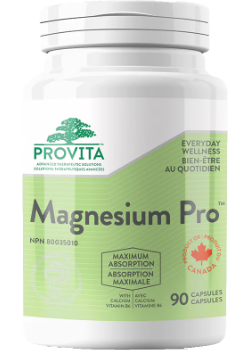
Provita combines of 4 types of magnesium associated with Vitamin B6 and Coral calcium for improved effectiveness in their Magnesium Pro formula. Magnesium Pro complex combines 4 excellent forms of Magnesium (Bisglycinate, Malate, Citrate and Oxide) with Coral calcium and Vitamin B6 for maximized absorption, bio-availability and efficiency. Magnesium is an essential mineral used in hundreds of body functions. Magnesium helps to maintain a healthy heart and blood pressure and it is essential for the assimilation of calcium into the bones and teeth. Furthermore, magnesium is one of the essential electrolytes maintaining the body’s pH (alkaline) levels balanced. A natural form of calcium from the Caribbean coral reef (coral calcium) has been added to provide additional trace mineral elements which may be less known but are also very important for our body. [CAPS]
Each capsule contains:
Magnesium 150 mg
From:
Vitamin B6 (Pyridoxine Hydrochloride) 30 mg
Coral Calcium 50 mg
Magnesium Malate 300 mg
Magnesium Oxide 130 mg
Magnesium Citrate 100 mg
Magnesium Bisglycinate 100 mg
Non-medicinal Ingredients:
Microcrystalline cellulose, gelatin
Important Information:
Some people may experience diarrhoea. Keep out of reach of children. Sealed for your protection. Do not use if seal is broken.
Dosage
Adults take 3 capsules per day, one capsule with each meal.
High-Potency Herbal Supplements by Provita
Provita offers targeted natural solutions for sleep, stress, and cognitive health with formulas like
Dream-On
for deep, restful sleep without melatonin,
GABA Pro
to support calm and relaxation,
Lion’s Mane 5000
for memory, focus, and brain function, and
PS-100+ With ALC
for cognitive support and mental clarity.
These advanced, non-habit-forming supplements are designed to support neurotransmitter balance, reduce mental fatigue, and promote overall brain health and wellness.
MAGNESIUM
By: Articles by a Naturopathic Doctor and a Holistic Nutritionist
Magnesium plays a role in every cell in our bodies, with many relaxing effects & is a very important mineral for cardiovascular health...
Magnesium is an essential mineral for all known living organisms. Magnesium ions catalyze many chemical reactions in the human body, including those in the mitochondria where most of the energy inside each cell of the body is produced. It also plays a role in cell signaling within the body, with wound healing and with
enzymes
governing the replication of DNA.
Magnesium is actually essential for more than 300 biochemical reactions in the body.
Who Needs Magnesium?
In short, most people...Recently, there has been some debate in regards to the efficacy of magnesium status testing using blood. It is argued that blood testing may not show deficiencies until they are dangerously low because only around 1% of the body's magnesium is found in the blood. It is possible that 50% or more of the population have low magnesium stores despite normal serum levels (a condition called "subclinically deficient"). These deficiencies may have to do with low dietary intake of magnesium, due to poor dietary habits, or loss through the refining and processing of foods. Chronic vomiting or diarrhea, excessive urination and sweating can also deplete magnesium. Foods rich in magnesium include dark leafy vegetables, bananas, avocado, peas, legumes, soy and whole grains.
Deficiency
Without magnesium, the transmission of nerve and muscle impulses is compromised. This can lead to nervous system disorders, muscle weakness or contraction, as well as cramps and spasms. For example, magnesium has been shown to decrease menstrual pain by relaxing the uterine muscles. Magnesium deficiency has also been strongly associated with depression, migraines, ADD,
PMS, fibromyalgia,
asthma, allergies and type II diabetes. Magnesium loss can be caused by some medications such as diuretics, antibiotics and some anti-cancer drugs. Foods high in fat and oxalic acid interfere with the absorption of magnesium. Oxalic acid containing foods include almonds, chard, cocoa, rhubarb, spinach and black tea. Body requirements for magnesium increase with increased intake of
zinc
and
vitamin D.
Magnesium And Women's Health
In addition to decreasing menstrual cramping, magnesium acts in pregnancy as a uterine relaxant that can prevent premature labour. Studies show supplemental magnesium in pregnancy also decreases the risk of birth defects such as cerebral palsy. It has also been researched for its ability to protect against osteoporosis as well as some cell growths.
Magnesium And Cardiovascular Health
Given its vital role in nerve and muscle function, magnesium is also an especially important mineral for heart health. An small increase in the body’s circulating magnesium levels can significantly reduce the risk of cardiovascular disease and ischaemic heart disease. Deficiency can cause abnormal heart rhythms, coronary spasms and calcification of the arteries. Studies have also shown that diets high in magnesium significantly reduce the risk of high blood pressure, and this correlation is stronger in women than in men.
Magnesium and Type II Diabetes
Excessive urination is one of the signs of poorly controlled diabetes. Because magnesium is lost in the urine, many diabetics are deficient. Research has been shown that magnesium may be protective against getting Type II Diabetes, and that supplementation may improve blood sugar control in those already affected.
Magnesium As A Laxative And Detoxifier
Because of its high osmotic gradient, taking large doses of magnesium can lead to increased water content in the intestines. This results in a "flushing" of the intestinal contents that is often used to treat constipation or to promote cleansing for detoxification. Magnesium hydroxide (milk of magnesia) is the most commonly used form of magnesium for treating constipation. For detoxification, commercial products containing magnesium sulfate (Epsom salt), and magnesium citrate are used. It is important never to attempt to create your own detoxification products using the above ingredients as fluid balance is delicate and misuse can result in severe dehydration. Consult your healthcare practitioner before beginning any detoxification protocol.
Types of Magnesium – Which Should I Choose?
There are many different forms of magnesium available on the market, making choosing one difficult. Each type is different in the cost and the amount available for absorption. It is difficult for researchers to narrow down which is the best form due to the short half-life of magnesium in the body and difficulties with variations between testing methods. Here are some widely accepted facts:
The least bioavailable forms are magnesium oxide, bicarbonate and carbonate. Because they are less soluble, they are also more likely to cause intestinal side effects such as discomfort and loose stools. The magnesium in antacids is also not a good supplemental source because it neutralizes stomach acid and will impair the absorption of other minerals, like calcium.
Magnesium as an amino acid chelate, such as magnesium glycinate or magnesium taurate, is up to 4 times better absorbed than magnesium oxide and can be taken with our without food. Also, magnesium taurate has added benefit for the heart, so you may want to consider this form if you are supplementing for cardiovascular benefits. Magnesium chloride, magnesium citrate, and other magnesium salts are about 30% bioavailable. Magnesium glycinate and citrate are both soluble forms, considered highly absorbable that provide a high elemental mineral content. These are probably the most widely recommended forms.
Co-Supplementation
Magnesium is commonly used in a Calcium/Magnesium complex. These are available as tablets, capsules, powders and liquids. When choosing a Cal/Mag complex consider the ratio of calcium to magnesium. The most popular is 2:1, calcium:magnesium because calcium is normally recommended at twice the daily amount as compared to magnesium. However for those individuals in need of extra magnesium 1:1 and 3:2 (Cal:Mag) ratio supplements are available. Many current formulas for
bone health
will include vitamin D which, promotes the absorption of calcium in the digestive tract. Interestingly, magnesium that is paired with malic acid has been shown to provide significant pain relief for individuals suffering from fibromyalgia.
Important Facts
Coral calcium may contain heavy metals and should not be taken during pregnancy or while breast feeding. Magnesium may interact with digoxin, certain anti-malarial medication, certain antibiotics, and bisphosphonates used to treat osteoporosis. Using magnesium as a laxative can result in severe dehydration. People with kidney disease should not take large doses of magnesium.
Magnesium– Quick Facts
Food Sources
· Most Unprocessed Food Contains Small Amounts Of Magnesium. More Concentrated Sources Are Dark Leafy Vegetables, Bananas, Avocado, Peas, Legumes, Soy And Whole Grains.
Deficiency Symptoms
· Confusion,
Insomnia, Poor Digestion, Constipation, Rapid Heart Rate, Seizures, Asthma, Chronic Pain, Kidney Stones.
Optimum Dosage
· 250-750mg Daily. (Clinical Doses May Be Higher As Recommended By Your Practitioner.
Works Well With
· Vitamin C,
Vitamin B
Complex, Calcium, Phosphorus,
Vitamin A, Vitamin D
Important Information
· Large Amounts Of Magnesium Can Be Toxic To Those With Kidney Impairment.
· Do Not Consume Magnesium After Meals Because It Neutralizes Stomach Acid.
· Excessive Magnesium Intake Will Cause Loose Stool.
· Coral Calcium Should Not Be Taken During Pregnancy Or While Breast Feeding.
· Magnesium May Interact With Digoxin, Certain Anti-Malarial Medication, Certain Antibiotics, And Bisphosphonates Used To Treat Osteoporosis.
Carefully SelectedShips to the U.S.Wellness EssentialsTrusted Brands
Product Details
MAGNESIUM
By: Articles by a Naturopathic Doctor and a Holistic Nutritionist
Magnesium plays a role in every cell in our bodies, with many relaxing effects & is a very important mineral for cardiovascular health...
Magnesium is an essential mineral for all known living organisms. Magnesium ions catalyze many chemical reactions in the human body, including those in the mitochondria where most of the energy inside each cell of the body is produced. It also plays a role in cell signaling within the body, with wound healing and with
enzymes
governing the replication of DNA.
Magnesium is actually essential for more than 300 biochemical reactions in the body.
Who Needs Magnesium?
In short, most people...Recently, there has been some debate in regards to the efficacy of magnesium status testing using blood. It is argued that blood testing may not show deficiencies until they are dangerously low because only around 1% of the body's magnesium is found in the blood. It is possible that 50% or more of the population have low magnesium stores despite normal serum levels (a condition called "subclinically deficient"). These deficiencies may have to do with low dietary intake of magnesium, due to poor dietary habits, or loss through the refining and processing of foods. Chronic vomiting or diarrhea, excessive urination and sweating can also deplete magnesium. Foods rich in magnesium include dark leafy vegetables, bananas, avocado, peas, legumes, soy and whole grains.
Deficiency
Without magnesium, the transmission of nerve and muscle impulses is compromised. This can lead to nervous system disorders, muscle weakness or contraction, as well as cramps and spasms. For example, magnesium has been shown to decrease menstrual pain by relaxing the uterine muscles. Magnesium deficiency has also been strongly associated with depression, migraines, ADD,
PMS, fibromyalgia,
asthma, allergies and type II diabetes. Magnesium loss can be caused by some medications such as diuretics, antibiotics and some anti-cancer drugs. Foods high in fat and oxalic acid interfere with the absorption of magnesium. Oxalic acid containing foods include almonds, chard, cocoa, rhubarb, spinach and black tea. Body requirements for magnesium increase with increased intake of
zinc
and
vitamin D.
Magnesium And Women's Health
In addition to decreasing menstrual cramping, magnesium acts in pregnancy as a uterine relaxant that can prevent premature labour. Studies show supplemental magnesium in pregnancy also decreases the risk of birth defects such as cerebral palsy. It has also been researched for its ability to protect against osteoporosis as well as some cell growths.
Magnesium And Cardiovascular Health
Given its vital role in nerve and muscle function, magnesium is also an especially important mineral for heart health. An small increase in the body’s circulating magnesium levels can significantly reduce the risk of cardiovascular disease and ischaemic heart disease. Deficiency can cause abnormal heart rhythms, coronary spasms and calcification of the arteries. Studies have also shown that diets high in magnesium significantly reduce the risk of high blood pressure, and this correlation is stronger in women than in men.
Magnesium and Type II Diabetes
Excessive urination is one of the signs of poorly controlled diabetes. Because magnesium is lost in the urine, many diabetics are deficient. Research has been shown that magnesium may be protective against getting Type II Diabetes, and that supplementation may improve blood sugar control in those already affected.
Magnesium As A Laxative And Detoxifier
Because of its high osmotic gradient, taking large doses of magnesium can lead to increased water content in the intestines. This results in a "flushing" of the intestinal contents that is often used to treat constipation or to promote cleansing for detoxification. Magnesium hydroxide (milk of magnesia) is the most commonly used form of magnesium for treating constipation. For detoxification, commercial products containing magnesium sulfate (Epsom salt), and magnesium citrate are used. It is important never to attempt to create your own detoxification products using the above ingredients as fluid balance is delicate and misuse can result in severe dehydration. Consult your healthcare practitioner before beginning any detoxification protocol.
Types of Magnesium – Which Should I Choose?
There are many different forms of magnesium available on the market, making choosing one difficult. Each type is different in the cost and the amount available for absorption. It is difficult for researchers to narrow down which is the best form due to the short half-life of magnesium in the body and difficulties with variations between testing methods. Here are some widely accepted facts:
The least bioavailable forms are magnesium oxide, bicarbonate and carbonate. Because they are less soluble, they are also more likely to cause intestinal side effects such as discomfort and loose stools. The magnesium in antacids is also not a good supplemental source because it neutralizes stomach acid and will impair the absorption of other minerals, like calcium.
Magnesium as an amino acid chelate, such as magnesium glycinate or magnesium taurate, is up to 4 times better absorbed than magnesium oxide and can be taken with our without food. Also, magnesium taurate has added benefit for the heart, so you may want to consider this form if you are supplementing for cardiovascular benefits. Magnesium chloride, magnesium citrate, and other magnesium salts are about 30% bioavailable. Magnesium glycinate and citrate are both soluble forms, considered highly absorbable that provide a high elemental mineral content. These are probably the most widely recommended forms.
Co-Supplementation
Magnesium is commonly used in a Calcium/Magnesium complex. These are available as tablets, capsules, powders and liquids. When choosing a Cal/Mag complex consider the ratio of calcium to magnesium. The most popular is 2:1, calcium:magnesium because calcium is normally recommended at twice the daily amount as compared to magnesium. However for those individuals in need of extra magnesium 1:1 and 3:2 (Cal:Mag) ratio supplements are available. Many current formulas for
bone health
will include vitamin D which, promotes the absorption of calcium in the digestive tract. Interestingly, magnesium that is paired with malic acid has been shown to provide significant pain relief for individuals suffering from fibromyalgia.
Important Facts
Coral calcium may contain heavy metals and should not be taken during pregnancy or while breast feeding. Magnesium may interact with digoxin, certain anti-malarial medication, certain antibiotics, and bisphosphonates used to treat osteoporosis. Using magnesium as a laxative can result in severe dehydration. People with kidney disease should not take large doses of magnesium.
Magnesium– Quick Facts
Food Sources
· Most Unprocessed Food Contains Small Amounts Of Magnesium. More Concentrated Sources Are Dark Leafy Vegetables, Bananas, Avocado, Peas, Legumes, Soy And Whole Grains.
Deficiency Symptoms
· Confusion,
Insomnia, Poor Digestion, Constipation, Rapid Heart Rate, Seizures, Asthma, Chronic Pain, Kidney Stones.
Optimum Dosage
· 250-750mg Daily. (Clinical Doses May Be Higher As Recommended By Your Practitioner.
Works Well With
· Vitamin C,
Vitamin B
Complex, Calcium, Phosphorus,
Vitamin A, Vitamin D
Important Information
· Large Amounts Of Magnesium Can Be Toxic To Those With Kidney Impairment.
· Do Not Consume Magnesium After Meals Because It Neutralizes Stomach Acid.
· Excessive Magnesium Intake Will Cause Loose Stool.
· Coral Calcium Should Not Be Taken During Pregnancy Or While Breast Feeding.
· Magnesium May Interact With Digoxin, Certain Anti-Malarial Medication, Certain Antibiotics, And Bisphosphonates Used To Treat Osteoporosis.
🌿
Daily Wellness
Easy to add to your everyday health routine.
✅
Carefully Selected
Chosen with quality and customer needs in mind.
💊
Simple to Use
Designed for convenient daily supplementation.
🚚
Ships to the U.S.
Fast, reliable shipping to U.S. customers.
Choosing a selection results in a full page refresh.