

1
/
of
1
Omega Alpha
Multi-Zyme - 90 V-Caps
Multi-Zyme - 90 V-Caps
Regular price
$37.49 USD
Regular price
Sale price
$37.49 USD
Shipping calculated at checkout.
Availability
In stock, and ready to ship
- 7 digestive strains
- Assists in breaking down the food that we eat
- Easy to take capsules
- Help nutrients to be absorbed
- Supports Healthy Digestion
Quantity
Couldn't load pickup availability

Multi-Zyme - 90 V-Caps
$37.49
Omega Alpha Multi-Zyme - 90 V-Caps is a dietary supplement in capsule form, intended for adults as part of a daily wellness routine.
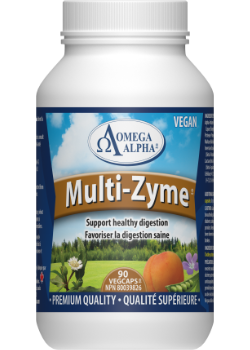
The digestive process takes food material, breaks it down into absorbable pieces and transports it into the body. It is a complex process, involving many organs. Supporting digestion is made easy with Omega Alpha’s Multi‐Zyme. The friendly bacteria in the intestines make nutrients that are hard to get from food, taking an enzyme capsule with your supplements will help you get the most out of them. Digestive enzymes are responsible for breaking down the food that we eat into their building blocks, which are small enough to be absorbed in the intestinal tract. Once absorbed, these building blocks can either be used for energy or stored for later use. With the combination of 7 digestive strains, Multi‐Zyme from Omega Alpha can be take one to three times per day with food to help support healthy digestion. [VCAP]
Each v-cap contains:
alpha-Amylase (4-alpha-D-Glucan glucanohydrolase) 140 mg (3080 FCC DU1)
Lipase (Triacylglycerol lipase) 80 mg (96 FCC LU2)
Protease 70 mg (1260 FCC HUT3)
Maltase (Malt diastase) 60 mg (270 FCC DP4)
Invertase/Sucrase (beta-Fructofuranosidase) 30 mg (129 FCC INVU5)
Lactase (beta-D-galactoside galactohydrolase) 30 mg (117 FCC ALU6)
Cellulase (4-(1,3;1,4)-beta-D-Glucan 4-glucanohydrolase) 20 mg (70 FCC CU7)
Non-Medicinal Ingredients:
Hypromellose (vegcaps®/vegetarian capsule shell) Acid Resistant Capsules, Oryza sativa (Rice) Powder, Magnesium Stearate.
Important Information:
Consult a health care practitioner prior to use if you are pregnant, breastfeeding, having surgery, have gastrointestinal lesions/ulcers, galactosemia, diabetes, taking anticoagulant agents, anti-inflammatory or other enzyme products. Headaches, heartburn, bloating and hypersensitivity (e.g. allergy) have been known to occur; in which case discontinue use. Do not use if security seal is broken. Store away from children. Store protected from light and moisture.
alpha-Amylase (4-alpha-D-Glucan glucanohydrolase) 140 mg (3080 FCC DU1)
Lipase (Triacylglycerol lipase) 80 mg (96 FCC LU2)
Protease 70 mg (1260 FCC HUT3)
Maltase (Malt diastase) 60 mg (270 FCC DP4)
Invertase/Sucrase (beta-Fructofuranosidase) 30 mg (129 FCC INVU5)
Lactase (beta-D-galactoside galactohydrolase) 30 mg (117 FCC ALU6)
Cellulase (4-(1,3;1,4)-beta-D-Glucan 4-glucanohydrolase) 20 mg (70 FCC CU7)
Non-Medicinal Ingredients:
Hypromellose (vegcaps®/vegetarian capsule shell) Acid Resistant Capsules, Oryza sativa (Rice) Powder, Magnesium Stearate.
Important Information:
Consult a health care practitioner prior to use if you are pregnant, breastfeeding, having surgery, have gastrointestinal lesions/ulcers, galactosemia, diabetes, taking anticoagulant agents, anti-inflammatory or other enzyme products. Headaches, heartburn, bloating and hypersensitivity (e.g. allergy) have been known to occur; in which case discontinue use. Do not use if security seal is broken. Store away from children. Store protected from light and moisture.
Dosage
Adults: Take 1-2 capsules, one to three times per day with food.
Adults: Take 1-2 capsules, one to three times per day with food.
Advanced Herbal Formulas That Deliver
Support immune health, energy, and focus with Omega Alpha’s mushroom extracts.
Chaga Mushroom Extract
delivers antioxidant support, while
Cordyceps Mushroom Extract
boosts energy and endurance.
Coriolus (Turkey Tail) Mushroom Extract
supports immune and gut health, and
Lion’s Mane Mushroom Extract
enhances memory and cognition.
Maitake Mushroom Extract,
Reishi Mushroom Extract, and
Shiitake Mushroom Extract
provide additional support for immunity, stress balance, and overall wellness.
Support immune health, energy, and focus with Omega Alpha’s mushroom extracts.
Chaga Mushroom Extract
delivers antioxidant support, while
Cordyceps Mushroom Extract
boosts energy and endurance.
Coriolus (Turkey Tail) Mushroom Extract
supports immune and gut health, and
Lion’s Mane Mushroom Extract
enhances memory and cognition.
Maitake Mushroom Extract,
Reishi Mushroom Extract, and
Shiitake Mushroom Extract
provide additional support for immunity, stress balance, and overall wellness.
MULTIENZYMES
Enzymes break down food and help our digestive system...
Enzymes are catalysts of chemical reactions. This means that they initiate and increase the rate of cellular processes such as metabolism. Without enzymes, reactions in the body would take place too slowly to sustain life. Digestive enzymes are responsible for breaking down the food that we eat into their building blocks, which are small enough to be absorbed in the intestinal tract. Once absorbed, these building blocks can either be used for energy or stored for later use. In order to fully act on our food these enzymes are secreted in our digestive juices such as: saliva, stomach acid, pancreatic juice and bile.
Types Of Digestive Enzymes
The human body produces three main types of digestive enzyme known as:
amylase, protease and lipase. Each has a unique function, and all work together to allow us to digest our food and absorb its nutrients properly.
Amylase
This class of enzymes is responsible for digesting the starches and complex carbohydrates that we eat into their simple sugar subunits. Because of their size, our bodies are not capable of absorbing starches or sugars that are larger than one subunit. The most common amylase in our bodies is alpha-amylase, which is in both saliva and in pancreatic secretions. This is the enzyme that allows us to digest foods like potato, pasta, corn, and bread. When we are deficient in amylase, eating these foods will cause gas and bloating, and may cause a number of other symptoms throughout the body.
Protease
Protease is another class of enzymes in the body, but these ones are responsible for breaking down
protein. Digestive proteases in our body are
pepsin, trypsin and chymotrypsin. Pepsin is released in our stomach, and the other two are found in our pancreatic secretions.
protein
is the building block of most of the structure of our bodies including our muscles, bones, skin and hair. It is also required for most of our bodily processes in the form of cell signaling molecules, hormones and immune molecules. Protein is found in foods like meat, dairy, nuts and legumes. The inability to properly digest protein results in foul smelling gas and stool.
Lipase
The third major class of digestive enzyme in the human body is lipase. This molecule is responsible for digestion of our dietary fat into free fatty acids that are easily absorbed in our gut. It is secreted by the
pancreas
and released in the intestines. Dietary fats that require the presence of lipase can be both unhealthy saturated fats found in french-fries and potato chips, and the health-boosting fats from
fish oil
and olive oil. The inability to properly digest dietary fat can result in steatorrhea (fat in the stool), or pale floating stools.
Lactase
Another digestive enzyme that commonly requires supplementation is lactase. This enzyme is responsible for digesting the primary sugar found in milk, called lactose. Deficiency in this enzyme is a common condition known as lactose intolerance. Symptoms of lactose intolerance are: nausea, gas, cramping and diarrhea when the sufferer eats dairy products such as: milk, cheese, yogurt, butter, and so on.
Natural Enzymes
Enzymes occur naturally in all raw foods. When we refer to the "ripeness" of a food we are talking about its readiness to be eaten. Ripe foods become the most abundant in enzymes that are used for our proper digestion. Unfortunately these naturally occurring enzymes are quickly destroyed by cooking or processing. This means that the average person has a diet that is deficient in natural enzymes. This external deficiency forces the body to do more work to compensate and digest the food, or else the foods are not properly digested. When the body cannot properly digest and absorb the nutrients from the food that we eat, it results in a condition called "malabsorption".
Malabsorption
This condition differs from malnutrition, where the person may not be eating enough food or nutrients to sustain their body. Malabsorption has a number of different causes, but ultimately results in the sufferer no longer getting the nourishment that they need from the food that they eat, even though their diet is sufficient in nutrients. Unfortunately, because things are not being digested or absorbed properly, supplementation of nutrients often cannot help with this condition. The signs of malabsorption depend on the particular subset of enzyme affected. In general, this condition creates a number of different digestive symptoms such as: reflux, gas, bloating, foul flatulence, undigested food in the stool, as well as pale and floating stool. Because this condition can also result in a variety of nutrient deficiencies, it can account for symptoms such as: dry skin and hair, cracked and peeling nails, slow healing, muscle wasting, and even weight loss. If you suspect that you may have malabsorption, it is important to contact your healthcare practitioner so they may do further testing to determine what type of nutrients you are lacking and how to help you digest them better in the future.
Leaky Gut
The term "leaky gut" is used to describe undigested food particles that get into the bloodstream and cause allergic reactions. This condition is caused by a breakdown in the integrity of the gut lining, combined with a failure to fully digest some food. When food particles are exposed to the blood, the resulting immune response can cause inflammation and a large number of other problems throughout the entire body. This is one reason why digestive enzyme supplements can improve a variety of health complaints. They are widely recommended by natural health practitioners for: indigestion, gas, bloating, arthritis, autoimmune disorders, food allergies and skin conditions.
CoSupplementation
Many enzyme supplements will contain other ingredients to promote their particular purpose. Some examples of common additives are listed below:
Betaine HCl
One common substance found in these formulas is betaine hydrochloride (
Betaine HCl
), which can act as a source of acid for the stomach to help further digestion. Many enzymes need to be activated before they can function in the gut, and it is often acid digestion that causes this activation. Because of this, acid supplementation can help to increase how well the enzyme supplement works.
Pancreatin
Another addition may be glandular extracts such as
Pancreatin, which is made by concentrating the pancreatic juices of an animal. This extract will include most naturally occurring enzymes in the ratio of the animal from which they were extracted.
Ox Bile
This digestive aid is created from the bile of oxen and can help to promote proper fat digestion in someone with insufficient bile production of their own, whether due to cholecystectomy, or unknown causes.
Enzyme Activity and USP
Showing an amount of enzyme by weight is not pertinent information on a supplement label as it is the enzyme's activity that is important and is independent of weight. Thankfully, all the three major digestive enzymes are contained in pancreatin. This is a standardized product that has been rated by the United States Pharmacopeia (USP). The USP is a rating system that enables the comparison of different products sold in the market.
Because it is purified, pancreatin has standardized quantities of enzyme units in it, and is often used as a point of comparison for digestive enzyme supplements. Each milligram (mg) of pancreatin contains at least 25 USP units of amylase activity, 2 USP units of lipase activity, and 25 USP units of protease activity. Any supplements labeled with 3X, or 4X are referring to this standard dose (ie. 3X contains 75 USP units of amylase activity per mg and so on).
How Can I Supplement With Digestive Enzymes?
Eating a diet that contains more raw fruits and vegetables can help to supply you with more enzyme rich food. If this is not an option, there are many commercial digestive enzyme preparations, each with a unique mix of enzymes. Choose a supplement that contains enzymes for the type of nutrient, or nutrients, you have trouble digesting. There are vegetarian and animal source supplements. Digestive enzymes can be in tablets, capsules, liquid or powder form. Each type of enzyme has different units of strength, and unfortunately there is no standardization with regard to which units are used on the product label, making it difficult for the consumer to judge the potency of potential enzyme supplements. Enzyme supplements may contain
Betaine HCl, to increase stomach acid and facilitate the workings of the enzymes, or
ox bile, to digest fats.
Important Information
Do not take digestive enzymes if you are pregnant or nursing. Do not use digestive enzymes if you have active bleeding, blood disorders or if you use blood thinners. Discontinue digestive enzymes 2 weeks prior to dental work or surgery as they can increase the risk of bleeding.
Digestive Enzymes – Quick Facts
Sources
· Plant, Microbial Or Animal Source.
Applications
· Indigestion, Gas, Bloating, Arthritis, Autoimmune Conditions, Food Allergies, Skin Conditions, The Inability To Digest Fats, Sugars, Milk Sugar Or Protein
Optimum Dosage
· As Directed With Meals Or Just After Meals. (Clinical Doses May Be Higher As Recommended By Your Practitioner).
Works Well With
· Betaine Hcl, Ox Bile, Pancreatin,
Probiotics
Important Information
· Do Not Take Digestive Enzymes If You Are Pregnant Or Nursing.
· Do Not Use Digestive Enzymes If You Have Active Bleeding, Blood Disorders Or If You Use Blood Thinners.
· Discontinue Digestive Enzymes 2 Weeks Prior To Dental Work Or Surgery.
Enzymes break down food and help our digestive system...
Enzymes are catalysts of chemical reactions. This means that they initiate and increase the rate of cellular processes such as metabolism. Without enzymes, reactions in the body would take place too slowly to sustain life. Digestive enzymes are responsible for breaking down the food that we eat into their building blocks, which are small enough to be absorbed in the intestinal tract. Once absorbed, these building blocks can either be used for energy or stored for later use. In order to fully act on our food these enzymes are secreted in our digestive juices such as: saliva, stomach acid, pancreatic juice and bile.
Types Of Digestive Enzymes
The human body produces three main types of digestive enzyme known as:
amylase, protease and lipase. Each has a unique function, and all work together to allow us to digest our food and absorb its nutrients properly.
Amylase
This class of enzymes is responsible for digesting the starches and complex carbohydrates that we eat into their simple sugar subunits. Because of their size, our bodies are not capable of absorbing starches or sugars that are larger than one subunit. The most common amylase in our bodies is alpha-amylase, which is in both saliva and in pancreatic secretions. This is the enzyme that allows us to digest foods like potato, pasta, corn, and bread. When we are deficient in amylase, eating these foods will cause gas and bloating, and may cause a number of other symptoms throughout the body.
Protease
Protease is another class of enzymes in the body, but these ones are responsible for breaking down
protein. Digestive proteases in our body are
pepsin, trypsin and chymotrypsin. Pepsin is released in our stomach, and the other two are found in our pancreatic secretions.
protein
is the building block of most of the structure of our bodies including our muscles, bones, skin and hair. It is also required for most of our bodily processes in the form of cell signaling molecules, hormones and immune molecules. Protein is found in foods like meat, dairy, nuts and legumes. The inability to properly digest protein results in foul smelling gas and stool.
Lipase
The third major class of digestive enzyme in the human body is lipase. This molecule is responsible for digestion of our dietary fat into free fatty acids that are easily absorbed in our gut. It is secreted by the
pancreas
and released in the intestines. Dietary fats that require the presence of lipase can be both unhealthy saturated fats found in french-fries and potato chips, and the health-boosting fats from
fish oil
and olive oil. The inability to properly digest dietary fat can result in steatorrhea (fat in the stool), or pale floating stools.
Lactase
Another digestive enzyme that commonly requires supplementation is lactase. This enzyme is responsible for digesting the primary sugar found in milk, called lactose. Deficiency in this enzyme is a common condition known as lactose intolerance. Symptoms of lactose intolerance are: nausea, gas, cramping and diarrhea when the sufferer eats dairy products such as: milk, cheese, yogurt, butter, and so on.
Natural Enzymes
Enzymes occur naturally in all raw foods. When we refer to the "ripeness" of a food we are talking about its readiness to be eaten. Ripe foods become the most abundant in enzymes that are used for our proper digestion. Unfortunately these naturally occurring enzymes are quickly destroyed by cooking or processing. This means that the average person has a diet that is deficient in natural enzymes. This external deficiency forces the body to do more work to compensate and digest the food, or else the foods are not properly digested. When the body cannot properly digest and absorb the nutrients from the food that we eat, it results in a condition called "malabsorption".
Malabsorption
This condition differs from malnutrition, where the person may not be eating enough food or nutrients to sustain their body. Malabsorption has a number of different causes, but ultimately results in the sufferer no longer getting the nourishment that they need from the food that they eat, even though their diet is sufficient in nutrients. Unfortunately, because things are not being digested or absorbed properly, supplementation of nutrients often cannot help with this condition. The signs of malabsorption depend on the particular subset of enzyme affected. In general, this condition creates a number of different digestive symptoms such as: reflux, gas, bloating, foul flatulence, undigested food in the stool, as well as pale and floating stool. Because this condition can also result in a variety of nutrient deficiencies, it can account for symptoms such as: dry skin and hair, cracked and peeling nails, slow healing, muscle wasting, and even weight loss. If you suspect that you may have malabsorption, it is important to contact your healthcare practitioner so they may do further testing to determine what type of nutrients you are lacking and how to help you digest them better in the future.
Leaky Gut
The term "leaky gut" is used to describe undigested food particles that get into the bloodstream and cause allergic reactions. This condition is caused by a breakdown in the integrity of the gut lining, combined with a failure to fully digest some food. When food particles are exposed to the blood, the resulting immune response can cause inflammation and a large number of other problems throughout the entire body. This is one reason why digestive enzyme supplements can improve a variety of health complaints. They are widely recommended by natural health practitioners for: indigestion, gas, bloating, arthritis, autoimmune disorders, food allergies and skin conditions.
CoSupplementation
Many enzyme supplements will contain other ingredients to promote their particular purpose. Some examples of common additives are listed below:
Betaine HCl
One common substance found in these formulas is betaine hydrochloride (
Betaine HCl
), which can act as a source of acid for the stomach to help further digestion. Many enzymes need to be activated before they can function in the gut, and it is often acid digestion that causes this activation. Because of this, acid supplementation can help to increase how well the enzyme supplement works.
Pancreatin
Another addition may be glandular extracts such as
Pancreatin, which is made by concentrating the pancreatic juices of an animal. This extract will include most naturally occurring enzymes in the ratio of the animal from which they were extracted.
Ox Bile
This digestive aid is created from the bile of oxen and can help to promote proper fat digestion in someone with insufficient bile production of their own, whether due to cholecystectomy, or unknown causes.
Enzyme Activity and USP
Showing an amount of enzyme by weight is not pertinent information on a supplement label as it is the enzyme's activity that is important and is independent of weight. Thankfully, all the three major digestive enzymes are contained in pancreatin. This is a standardized product that has been rated by the United States Pharmacopeia (USP). The USP is a rating system that enables the comparison of different products sold in the market.
Because it is purified, pancreatin has standardized quantities of enzyme units in it, and is often used as a point of comparison for digestive enzyme supplements. Each milligram (mg) of pancreatin contains at least 25 USP units of amylase activity, 2 USP units of lipase activity, and 25 USP units of protease activity. Any supplements labeled with 3X, or 4X are referring to this standard dose (ie. 3X contains 75 USP units of amylase activity per mg and so on).
How Can I Supplement With Digestive Enzymes?
Eating a diet that contains more raw fruits and vegetables can help to supply you with more enzyme rich food. If this is not an option, there are many commercial digestive enzyme preparations, each with a unique mix of enzymes. Choose a supplement that contains enzymes for the type of nutrient, or nutrients, you have trouble digesting. There are vegetarian and animal source supplements. Digestive enzymes can be in tablets, capsules, liquid or powder form. Each type of enzyme has different units of strength, and unfortunately there is no standardization with regard to which units are used on the product label, making it difficult for the consumer to judge the potency of potential enzyme supplements. Enzyme supplements may contain
Betaine HCl, to increase stomach acid and facilitate the workings of the enzymes, or
ox bile, to digest fats.
Important Information
Do not take digestive enzymes if you are pregnant or nursing. Do not use digestive enzymes if you have active bleeding, blood disorders or if you use blood thinners. Discontinue digestive enzymes 2 weeks prior to dental work or surgery as they can increase the risk of bleeding.
Digestive Enzymes – Quick Facts
Sources
· Plant, Microbial Or Animal Source.
Applications
· Indigestion, Gas, Bloating, Arthritis, Autoimmune Conditions, Food Allergies, Skin Conditions, The Inability To Digest Fats, Sugars, Milk Sugar Or Protein
Optimum Dosage
· As Directed With Meals Or Just After Meals. (Clinical Doses May Be Higher As Recommended By Your Practitioner).
Works Well With
· Betaine Hcl, Ox Bile, Pancreatin,
Probiotics
Important Information
· Do Not Take Digestive Enzymes If You Are Pregnant Or Nursing.
· Do Not Use Digestive Enzymes If You Have Active Bleeding, Blood Disorders Or If You Use Blood Thinners.
· Discontinue Digestive Enzymes 2 Weeks Prior To Dental Work Or Surgery.
Carefully Selected
Ships to the U.S.
Wellness Essentials
Trusted Brands
Product Details
MULTIENZYMESEnzymes break down food and help our digestive system...
Enzymes are catalysts of chemical reactions. This means that they initiate and increase the rate of cellular processes such as metabolism. Without enzymes, reactions in the body would take place too slowly to sustain life. Digestive enzymes are responsible for breaking down the food that we eat into their building blocks, which are small enough to be absorbed in the intestinal tract. Once absorbed, these building blocks can either be used for energy or stored for later use. In order to fully act on our food these enzymes are secreted in our digestive juices such as: saliva, stomach acid, pancreatic juice and bile.
Types Of Digestive Enzymes
The human body produces three main types of digestive enzyme known as:
amylase, protease and lipase. Each has a unique function, and all work together to allow us to digest our food and absorb its nutrients properly.
Amylase
This class of enzymes is responsible for digesting the starches and complex carbohydrates that we eat into their simple sugar subunits. Because of their size, our bodies are not capable of absorbing starches or sugars that are larger than one subunit. The most common amylase in our bodies is alpha-amylase, which is in both saliva and in pancreatic secretions. This is the enzyme that allows us to digest foods like potato, pasta, corn, and bread. When we are deficient in amylase, eating these foods will cause gas and bloating, and may cause a number of other symptoms throughout the body.
Protease
Protease is another class of enzymes in the body, but these ones are responsible for breaking down
protein. Digestive proteases in our body are
pepsin, trypsin and chymotrypsin. Pepsin is released in our stomach, and the other two are found in our pancreatic secretions.
protein
is the building block of most of the structure of our bodies including our muscles, bones, skin and hair. It is also required for most of our bodily processes in the form of cell signaling molecules, hormones and immune molecules. Protein is found in foods like meat, dairy, nuts and legumes. The inability to properly digest protein results in foul smelling gas and stool.
Lipase
The third major class of digestive enzyme in the human body is lipase. This molecule is responsible for digestion of our dietary fat into free fatty acids that are easily absorbed in our gut. It is secreted by the
pancreas
and released in the intestines. Dietary fats that require the presence of lipase can be both unhealthy saturated fats found in french-fries and potato chips, and the health-boosting fats from
fish oil
and olive oil. The inability to properly digest dietary fat can result in steatorrhea (fat in the stool), or pale floating stools.
Lactase
Another digestive enzyme that commonly requires supplementation is lactase. This enzyme is responsible for digesting the primary sugar found in milk, called lactose. Deficiency in this enzyme is a common condition known as lactose intolerance. Symptoms of lactose intolerance are: nausea, gas, cramping and diarrhea when the sufferer eats dairy products such as: milk, cheese, yogurt, butter, and so on.
Natural Enzymes
Enzymes occur naturally in all raw foods. When we refer to the "ripeness" of a food we are talking about its readiness to be eaten. Ripe foods become the most abundant in enzymes that are used for our proper digestion. Unfortunately these naturally occurring enzymes are quickly destroyed by cooking or processing. This means that the average person has a diet that is deficient in natural enzymes. This external deficiency forces the body to do more work to compensate and digest the food, or else the foods are not properly digested. When the body cannot properly digest and absorb the nutrients from the food that we eat, it results in a condition called "malabsorption".
Malabsorption
This condition differs from malnutrition, where the person may not be eating enough food or nutrients to sustain their body. Malabsorption has a number of different causes, but ultimately results in the sufferer no longer getting the nourishment that they need from the food that they eat, even though their diet is sufficient in nutrients. Unfortunately, because things are not being digested or absorbed properly, supplementation of nutrients often cannot help with this condition. The signs of malabsorption depend on the particular subset of enzyme affected. In general, this condition creates a number of different digestive symptoms such as: reflux, gas, bloating, foul flatulence, undigested food in the stool, as well as pale and floating stool. Because this condition can also result in a variety of nutrient deficiencies, it can account for symptoms such as: dry skin and hair, cracked and peeling nails, slow healing, muscle wasting, and even weight loss. If you suspect that you may have malabsorption, it is important to contact your healthcare practitioner so they may do further testing to determine what type of nutrients you are lacking and how to help you digest them better in the future.
Leaky Gut
The term "leaky gut" is used to describe undigested food particles that get into the bloodstream and cause allergic reactions. This condition is caused by a breakdown in the integrity of the gut lining, combined with a failure to fully digest some food. When food particles are exposed to the blood, the resulting immune response can cause inflammation and a large number of other problems throughout the entire body. This is one reason why digestive enzyme supplements can improve a variety of health complaints. They are widely recommended by natural health practitioners for: indigestion, gas, bloating, arthritis, autoimmune disorders, food allergies and skin conditions.
CoSupplementation
Many enzyme supplements will contain other ingredients to promote their particular purpose. Some examples of common additives are listed below:
Betaine HCl
One common substance found in these formulas is betaine hydrochloride (
Betaine HCl
), which can act as a source of acid for the stomach to help further digestion. Many enzymes need to be activated before they can function in the gut, and it is often acid digestion that causes this activation. Because of this, acid supplementation can help to increase how well the enzyme supplement works.
Pancreatin
Another addition may be glandular extracts such as
Pancreatin, which is made by concentrating the pancreatic juices of an animal. This extract will include most naturally occurring enzymes in the ratio of the animal from which they were extracted.
Ox Bile
This digestive aid is created from the bile of oxen and can help to promote proper fat digestion in someone with insufficient bile production of their own, whether due to cholecystectomy, or unknown causes.
Enzyme Activity and USP
Showing an amount of enzyme by weight is not pertinent information on a supplement label as it is the enzyme's activity that is important and is independent of weight. Thankfully, all the three major digestive enzymes are contained in pancreatin. This is a standardized product that has been rated by the United States Pharmacopeia (USP). The USP is a rating system that enables the comparison of different products sold in the market.
Because it is purified, pancreatin has standardized quantities of enzyme units in it, and is often used as a point of comparison for digestive enzyme supplements. Each milligram (mg) of pancreatin contains at least 25 USP units of amylase activity, 2 USP units of lipase activity, and 25 USP units of protease activity. Any supplements labeled with 3X, or 4X are referring to this standard dose (ie. 3X contains 75 USP units of amylase activity per mg and so on).
How Can I Supplement With Digestive Enzymes?
Eating a diet that contains more raw fruits and vegetables can help to supply you with more enzyme rich food. If this is not an option, there are many commercial digestive enzyme preparations, each with a unique mix of enzymes. Choose a supplement that contains enzymes for the type of nutrient, or nutrients, you have trouble digesting. There are vegetarian and animal source supplements. Digestive enzymes can be in tablets, capsules, liquid or powder form. Each type of enzyme has different units of strength, and unfortunately there is no standardization with regard to which units are used on the product label, making it difficult for the consumer to judge the potency of potential enzyme supplements. Enzyme supplements may contain
Betaine HCl, to increase stomach acid and facilitate the workings of the enzymes, or
ox bile, to digest fats.
Important Information
Do not take digestive enzymes if you are pregnant or nursing. Do not use digestive enzymes if you have active bleeding, blood disorders or if you use blood thinners. Discontinue digestive enzymes 2 weeks prior to dental work or surgery as they can increase the risk of bleeding.
Digestive Enzymes – Quick Facts
Sources
· Plant, Microbial Or Animal Source.
Applications
· Indigestion, Gas, Bloating, Arthritis, Autoimmune Conditions, Food Allergies, Skin Conditions, The Inability To Digest Fats, Sugars, Milk Sugar Or Protein
Optimum Dosage
· As Directed With Meals Or Just After Meals. (Clinical Doses May Be Higher As Recommended By Your Practitioner).
Works Well With
· Betaine Hcl, Ox Bile, Pancreatin,
Probiotics
Important Information
· Do Not Take Digestive Enzymes If You Are Pregnant Or Nursing.
· Do Not Use Digestive Enzymes If You Have Active Bleeding, Blood Disorders Or If You Use Blood Thinners.
· Discontinue Digestive Enzymes 2 Weeks Prior To Dental Work Or Surgery.


🌿
Daily Wellness
Easy to add to your everyday health routine.
✅
Carefully Selected
Chosen with quality and customer needs in mind.
💊
Simple to Use
Designed for convenient daily supplementation.
🚚
Ships to the U.S.
Fast, reliable shipping to U.S. customers.