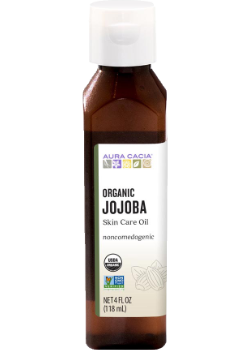
Aura Cacia’s Jojoba Oil can be used anywhere on the body. It serves a natural skin moisturizer and an excellent hair and scalp conditioner. Jojoba (Simmondsia chinensis) oil is an ideal carrier oil for essential oils because it’s stable, absorbs quickly and has no distinguishing aroma of its own. Jojoba is native to the southwestern deserts of the United States and parts of northern Mexico. Serving as a natural skin moisturizer, it is an ideal carrier oil for essential oils due to its stability, quick absorption, and the lack of a distinguishing aroma of its own. [OIL]
Contains:
Organic Simmondsia Chinensis (Jojoba) Oil.
Important Information:
For external use only. Avoid contact with eyes. Keep out of reach of children. If irritation occurs, discontinue use.
Dosage
Apply to damp skin after showering, add to a cotton ball and use to remove makeup, rub on skin before a day in the sun, add a few drops to hair conditioner.
Essential Oils That Nurture Body, Mind & Spirit
Aura Cacia offers an extensive selection of high quality essential oils and aromatherapy products for all ages. They offer certified organic and fair trade products when they can. Otherwise, Aura Cacia uses their very own Well Earth ethical and sustainable sourcing program developed by Frontier Co-op. They have also established the Aura Cacia 1% Organic Fund in which they donate 1% of sales from organic products to organic farmers and their communities. Aura Cacia sources their ingredients directly so that personal relationships can be developed with farmers and so they can get the best sources available. Founded in 1982, you can trust the quality Aura Cacia offers in all your must have essential oils and aromatherapy goods.
Jojoba (Simmondsia chinensis) oil is an ideal carrier oil for essential oils because it’s stable, absorbs quickly and has no distinguishing aroma of its own.
Jojoba Oil
can be used anywhere on the body. It serves a natural skin moisturizer and an excellent hair and scalp conditioner. Jojoba is native to the southwestern deserts of the United States and parts of northern Mexico.
JOJOBA OIL
Jojoba is a great moisturizer that can be used to naturally treat a number of skin conditions and can easily replace many different products in your daily routine …
The jojoba plant (Simmondsia chinensis) is naturally found in the Southern United States and Mexico. The seeds of this plant contain nearly 50% oil by weight. This extracted oil is technically a wax ester, making it extremely similar to the oil normally produced by our skin (sebum). Since jojoba oil mimics our body’s own naturally occurring oils, it is excellent at nourishing dry skin.
How Is Jojoba Oil Different?
Unlike most vegetable oils, jojoba is technically a wax ester and does not contain triglycerides. Because of this, it is more shelf-stable than
safflower, canola, and almond oils. It is also more easily absorbed and used by our skin than other oils because of its similarity to sebum.
Cosmetic Use
Back in the early 1970’s, jojoba oil was initially brought into the spotlight because of the removal of whale oil from the market due to whaling bans. Jojoba became the most common replacement for whale oil in cosmetics at that time. Jojoba is now commonly found in lotions, moisturizers,
shampoo
and
conditioners. The pure oil can also be purchased as a moisturizing product for many different parts of the body. It can also be used as a natural makeup remover, facial cleanser, moisturizer, cuticle oil, and
lip balm. If massaged into the hair and then washed out 15-30 minutes later, jojoba oil can also act as a deep conditioner for the hair. Jojoba is also commonly used as a shaving lotion that is applied prior to shaving cream to give an extremely smooth shave and leave the skin feeling soft and supple.
Medicinal Use
Because jojoba oil can so closely replace our body’s own natural sebum production, it functions as an excellent moisturizer for dry skin. It is also able to dissolve oil-based grime on the face, and in the pores. It can be applied to the skin and wiped away to cleanse the face naturally while also providing moisture. This is often beneficial in cases of Acne and
Dermatitis, particularly on the face. It can help to unclog hair follicles, which can help to prevent folliculitis, some pimples, and even some cases of hair loss. For more information, please see our
Hair Disorders
and Hair Loss articles. Application to lips overnight and to sunburns can soothe chapped and irritated skin, and help to speed healing.
How Does Aromatherapy Work?
There are two proposed mechanisms. The first follows the theory that the aroma of the oils have a direct influence on the brain. Through the olfactory system, our nose, the aromas travel to the limbic system of the brain.
The limbic system is involved in various functions in the body such as emotional responses, memory storage and hormone regulation. It also plays a role in sensory perception and motor function, as well as olfaction, the sense of smell.
Another theory is simply that, just as plants and herbs have medicinal properties, essential oils made from the same plants and herbs have pharmacological effects, as well. This theory relies on the ability of the scented oils to be absorbed through the skin and exert their medicinal effect on deeper bodily processes that way. These two mechanisms support the argument that the oils can be, but do not necessarily have to be applied on the skin to achieve their healing goals.
Versatile as a mode of treatment,
aromatherapy
offers improvement for mental and emotional issues such as anxiety, depression and
insomnia
while also treating symptoms like difficulty concentrating and muscle and joint pain. Acute conditions such as exhaustion, nausea and headaches can also be improved through the use of aromatherapy. Even chronic conditions like respiratory difficulties, stress and low libido can be treated. Aromatherapy has even been known to improve immune functioning.
Aromatherapy has many applications and is used to treat a variety of ailments with reported success. Unfortunately, there are limited scientific studies on the efficacy of aromatherapy due to the individualized nature of treatment.
Dilution
Because of their extremely concentrated state, it is important to dilute essential oils in other high quality carrier oils like olive, almond, grape seed, or sesame. Keeping in the spirit of oil not mixing with water, an essential oil can only be diluted by mixing it with another oil. When essential oils are used without being diluted, they can cause severe skin irritation, gastrointestinal upset and even liver damage in the long term. Certain essential oils are not for internal use, and can be toxic even in small amounts.
Essential Oils Can Be:
- inhaled through steam inhalation, humidifiers, diffusers, and vaporizers
- added to a carrier oil and applied to your skin directly or as a hot or cold compress
- spritzed onto objects like pillows, bedding and furniture
- added to infusers, potpourri and candles to enhance the odour of an indoor space
- applied to skin as perfume
- used as a gargle or mouth wash, added to toothpaste, soaps, cleaning solutions, lotions and creams, face and body spray
- added to baths, hot tubs, Jacuzzis, hand and foot baths and saunas
Essential Oil Uses
Essential oils are aromatic compounds extracted from a number of different plants. They are also known as volatile oils because they evaporate so quickly, which is also how they create such a strong aroma in the air. Because of this ability to quickly create strong scents, these oils are often used in perfumes, cosmetics, soaps and other scented products.
How Are They Made?
Essential oils are extracted from the plant by steam distillation, cold pressing, or solvent extraction. Good quality products create a pure product that will evaporate cleanly if dripped on a piece of paper. Each type of extraction is used for different plant materials. Solvent extraction is used for substances like flowers that contain very little volatile oil, and those that can be damaged by the temperatures used in steam distillation. Solvents used are hexane or supercritical carbon dioxide. Because carbon dioxide evaporates quickly when the temperature is raised to normal, it is the preferred solvent extraction method to maintain purity. Solvent extraction performed at lower temperatures is preferred to maintain the integrity of the active compounds.
Medicinal Properties
The benefits of essential oils are as diverse as the oils themselves. Some are diluted and used as skin treatments for acne or rashes, while others are used for internal use to fight infection or even help to treat specific diseases. Often current research will focus on specific compounds found in essential oils, to determine which one is responsible for their medicinal benefits. More traditional herbalists believe that it is the synergy between all of the active constituents in the oil that provide the full benefit. In some cases, the benefits of essential oils can simply be attributed to the effect of their scent on the brain. To stimulate the limbic system in the brain, essential oils are often used for aromatherapy in combination with massage and other balancing techniques.
Carefully SelectedShips to the U.S.Wellness EssentialsTrusted Brands
Product Details
Jojoba (Simmondsia chinensis) oil is an ideal carrier oil for essential oils because it’s stable, absorbs quickly and has no distinguishing aroma of its own.
Jojoba Oil
can be used anywhere on the body. It serves a natural skin moisturizer and an excellent hair and scalp conditioner. Jojoba is native to the southwestern deserts of the United States and parts of northern Mexico.
JOJOBA OIL
Jojoba is a great moisturizer that can be used to naturally treat a number of skin conditions and can easily replace many different products in your daily routine …
The jojoba plant (Simmondsia chinensis) is naturally found in the Southern United States and Mexico. The seeds of this plant contain nearly 50% oil by weight. This extracted oil is technically a wax ester, making it extremely similar to the oil normally produced by our skin (sebum). Since jojoba oil mimics our body’s own naturally occurring oils, it is excellent at nourishing dry skin.
How Is Jojoba Oil Different?
Unlike most vegetable oils, jojoba is technically a wax ester and does not contain triglycerides. Because of this, it is more shelf-stable than
safflower, canola, and almond oils. It is also more easily absorbed and used by our skin than other oils because of its similarity to sebum.
Cosmetic Use
Back in the early 1970’s, jojoba oil was initially brought into the spotlight because of the removal of whale oil from the market due to whaling bans. Jojoba became the most common replacement for whale oil in cosmetics at that time. Jojoba is now commonly found in lotions, moisturizers,
shampoo
and
conditioners. The pure oil can also be purchased as a moisturizing product for many different parts of the body. It can also be used as a natural makeup remover, facial cleanser, moisturizer, cuticle oil, and
lip balm. If massaged into the hair and then washed out 15-30 minutes later, jojoba oil can also act as a deep conditioner for the hair. Jojoba is also commonly used as a shaving lotion that is applied prior to shaving cream to give an extremely smooth shave and leave the skin feeling soft and supple.
Medicinal Use
Because jojoba oil can so closely replace our body’s own natural sebum production, it functions as an excellent moisturizer for dry skin. It is also able to dissolve oil-based grime on the face, and in the pores. It can be applied to the skin and wiped away to cleanse the face naturally while also providing moisture. This is often beneficial in cases of Acne and
Dermatitis, particularly on the face. It can help to unclog hair follicles, which can help to prevent folliculitis, some pimples, and even some cases of hair loss. For more information, please see our
Hair Disorders
and Hair Loss articles. Application to lips overnight and to sunburns can soothe chapped and irritated skin, and help to speed healing.
How Does Aromatherapy Work?
There are two proposed mechanisms. The first follows the theory that the aroma of the oils have a direct influence on the brain. Through the olfactory system, our nose, the aromas travel to the limbic system of the brain.
The limbic system is involved in various functions in the body such as emotional responses, memory storage and hormone regulation. It also plays a role in sensory perception and motor function, as well as olfaction, the sense of smell.
Another theory is simply that, just as plants and herbs have medicinal properties, essential oils made from the same plants and herbs have pharmacological effects, as well. This theory relies on the ability of the scented oils to be absorbed through the skin and exert their medicinal effect on deeper bodily processes that way. These two mechanisms support the argument that the oils can be, but do not necessarily have to be applied on the skin to achieve their healing goals.
Versatile as a mode of treatment,
aromatherapy
offers improvement for mental and emotional issues such as anxiety, depression and
insomnia
while also treating symptoms like difficulty concentrating and muscle and joint pain. Acute conditions such as exhaustion, nausea and headaches can also be improved through the use of aromatherapy. Even chronic conditions like respiratory difficulties, stress and low libido can be treated. Aromatherapy has even been known to improve immune functioning.
Aromatherapy has many applications and is used to treat a variety of ailments with reported success. Unfortunately, there are limited scientific studies on the efficacy of aromatherapy due to the individualized nature of treatment.
Dilution
Because of their extremely concentrated state, it is important to dilute essential oils in other high quality carrier oils like olive, almond, grape seed, or sesame. Keeping in the spirit of oil not mixing with water, an essential oil can only be diluted by mixing it with another oil. When essential oils are used without being diluted, they can cause severe skin irritation, gastrointestinal upset and even liver damage in the long term. Certain essential oils are not for internal use, and can be toxic even in small amounts.
Essential Oils Can Be:
- inhaled through steam inhalation, humidifiers, diffusers, and vaporizers
- added to a carrier oil and applied to your skin directly or as a hot or cold compress
- spritzed onto objects like pillows, bedding and furniture
- added to infusers, potpourri and candles to enhance the odour of an indoor space
- applied to skin as perfume
- used as a gargle or mouth wash, added to toothpaste, soaps, cleaning solutions, lotions and creams, face and body spray
- added to baths, hot tubs, Jacuzzis, hand and foot baths and saunas
Essential Oil Uses
Essential oils are aromatic compounds extracted from a number of different plants. They are also known as volatile oils because they evaporate so quickly, which is also how they create such a strong aroma in the air. Because of this ability to quickly create strong scents, these oils are often used in perfumes, cosmetics, soaps and other scented products.
How Are They Made?
Essential oils are extracted from the plant by steam distillation, cold pressing, or solvent extraction. Good quality products create a pure product that will evaporate cleanly if dripped on a piece of paper. Each type of extraction is used for different plant materials. Solvent extraction is used for substances like flowers that contain very little volatile oil, and those that can be damaged by the temperatures used in steam distillation. Solvents used are hexane or supercritical carbon dioxide. Because carbon dioxide evaporates quickly when the temperature is raised to normal, it is the preferred solvent extraction method to maintain purity. Solvent extraction performed at lower temperatures is preferred to maintain the integrity of the active compounds.
Medicinal Properties
The benefits of essential oils are as diverse as the oils themselves. Some are diluted and used as skin treatments for acne or rashes, while others are used for internal use to fight infection or even help to treat specific diseases. Often current research will focus on specific compounds found in essential oils, to determine which one is responsible for their medicinal benefits. More traditional herbalists believe that it is the synergy between all of the active constituents in the oil that provide the full benefit. In some cases, the benefits of essential oils can simply be attributed to the effect of their scent on the brain. To stimulate the limbic system in the brain, essential oils are often used for aromatherapy in combination with massage and other balancing techniques.
🌿
Daily Wellness
Easy to add to your everyday health routine.
✅
Carefully Selected
Chosen with quality and customer needs in mind.
💊
Simple to Use
Designed for convenient daily supplementation.
🚚
Ships to the U.S.
Fast, reliable shipping to U.S. customers.
Choosing a selection results in a full page refresh.