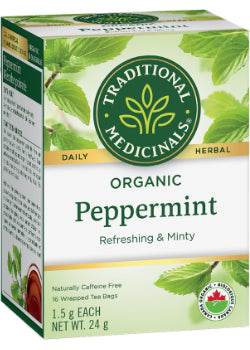
ORGANIC PEPPERMINT TEA. Traditional Medicinal's Peppermint tea promotes healthy digestion by relieving mild gastrointestinal tract conditions that occur after eating. Mint leaves have been used in medicine for several thousand years according to records from the Greek, Roman and ancient Egyptian eras. Peppermint tea is traditionally used as a digestive aid for occasional indigestion, and it is particularly helpful with flatulence and a sensation of fullness. The aromatic taste and cooling sensation of peppermint is unmistakable! Children and adults alike enjoy its refreshing flavor. [TEA BAGS]
In each cup of brewed tea:
Organic peppermint leaf
Important Information:
Keep out of reach of children. Not for use during pregnancy. Do not use if you are pregnant or breastfeeding. Do not use if you have a history of systemic lupus erythematosus, are taking corticosteroids or cyclosporine.
Dosage
For maximum benefit, herbal tea must be properly prepared. Pour 8 oz. freshly boiled water over a tea bag in a cup. Cover cup and steep 10-15 minutes. Gently squeeze the tea bag to release any remaining extract. Drink 3-4 cups daily after meals or when experiencing digestive discomfort.
Traditional Medicinals makes best selling natural, herbal tea blends. Popular blends; Breathe Easy, Cold Formula, Easy Now, Organic Weightless, plus many more, Traditional Medicinals has a tea for every mood. Formulated with organic ingredients; each cup of quality herbal tea supports your overall health.
HEALTHY DIGESTION: THE KEY TO VIBRANCY
You might only notice healthy digestion when you don't have it. Most people don't even think about their digestion until symptoms start. Enzyme supplements &
probiotics
can make a significant difference for you
digestive health...
The digestive process takes food material, breaks it down into absorbable pieces and transports it into the body. It is a complex process, involving many organs. Digestion begins with the scent of food stimulating the secretion of saliva. When food enters the mouth
enzymes
in the saliva begin to break it down.Chewing physically breaks down food pieces and stimulates saliva production. The mucus membranes of the mouth can absorb some nutrients.
Swallowed food travels don the esophagus and into the stomach. The stomach uses muscular contractions to mix the food with digestive enzymes and hydrochloric acid. High acid levels kill germs that may be in the food. Food stays in the stomach longer if it contains more fat and shorter if it contains more sugar.
The small intestine attaches to the stomach. Near it's beginning, ducts from the liver and
pancreas
release digestive juices. Nutrients are absorbed through the thin intestinal wall and transported via the bloodstream, to where they are needed. The remainder of the food is pushed through into the large intestine where water is absorbed. The remaining food is compacted and prepared for excretion as stool.
The liver produces bile, which metabolizes fats and proteins. It also takes the toxic material from food substances, like medications, alcohol, and hormones, and processes them to make them harmless. The liver produces factors for blood clotting and the immune system. The gallbladder is a storage area for bile from the liver. The pancreas manufactures enzymes and hormones, like insulin. Insulin allows cells to take in sugar to burn as fuel.
Many foods that we eat, other substances we consume and our lifestyles contribute to digestive disorders. Highly processed foods, alcohol, medications and tobacco are difficult for our body to break down and cause great strain on our organs, such as the liver and pancreas. They may also physically damage the digestive lining. Processed foods are also deficient in nutrients so not only does the body have to work extra hard to digest the food, but it also gets depleted of the things it needs to do its work. Water and fibre intake is important to have proper moisture and bulk in the stool and make bowel movements regular.
Peppermint
Peppermint is found in many candies, mints and gums that line the supermarket checkout. Its fresh, clean taste and smell are a favourite for breath freshening products. Did you know that peppermint does more than freshen your breath after you eat? Medicinally it is known as a carminative, an herb that decreases gas and bloating. It also decreases spasms in the digestive tract that cause
diarrhea
and symptoms characterizing
irritable bowel
syndrome.
Its antispasmodic activity is due to the blockage of
calcium
channels in intestinal muscle cells. By preventing
calcium
exchange muscles do not contract. Peppermint is also used in
aromatherapy
as an energizing agent.
Peppermint can be purchased as a loose herb, encapsulated herb, enteric-coated oil tablet or essential oil. The loose herb is a popular tea. Peppermint may be a part of formulas for soothing digestion. The oil is often added to candy, gum and used in baths. The essential oil of peppermint is a highly concentrated substance. When using essential oils they can be diluted in carrier oil, such as olive, almond or any cooking oil.
Essential oils can be toxic when taken internally therefore, Use the essential oil of peppermint cautiously. Do not give peppermint to individuals with gallstones, biliary obstruction,
hiatal hernia
or liver damage. Do not give
peppermint oil
to children, pregnant women, nursing mothers or individuals with allergies to the mint family. Do not take peppermint oil concurrently with calcium channel blockers.
Carefully SelectedShips to the U.S.Wellness EssentialsTrusted Brands
Product Details
HEALTHY DIGESTION: THE KEY TO VIBRANCY
You might only notice healthy digestion when you don't have it. Most people don't even think about their digestion until symptoms start. Enzyme supplements &
probiotics
can make a significant difference for you
digestive health...
The digestive process takes food material, breaks it down into absorbable pieces and transports it into the body. It is a complex process, involving many organs. Digestion begins with the scent of food stimulating the secretion of saliva. When food enters the mouth
enzymes
in the saliva begin to break it down.Chewing physically breaks down food pieces and stimulates saliva production. The mucus membranes of the mouth can absorb some nutrients.
Swallowed food travels don the esophagus and into the stomach. The stomach uses muscular contractions to mix the food with digestive enzymes and hydrochloric acid. High acid levels kill germs that may be in the food. Food stays in the stomach longer if it contains more fat and shorter if it contains more sugar.
The small intestine attaches to the stomach. Near it's beginning, ducts from the liver and
pancreas
release digestive juices. Nutrients are absorbed through the thin intestinal wall and transported via the bloodstream, to where they are needed. The remainder of the food is pushed through into the large intestine where water is absorbed. The remaining food is compacted and prepared for excretion as stool.
The liver produces bile, which metabolizes fats and proteins. It also takes the toxic material from food substances, like medications, alcohol, and hormones, and processes them to make them harmless. The liver produces factors for blood clotting and the immune system. The gallbladder is a storage area for bile from the liver. The pancreas manufactures enzymes and hormones, like insulin. Insulin allows cells to take in sugar to burn as fuel.
Many foods that we eat, other substances we consume and our lifestyles contribute to digestive disorders. Highly processed foods, alcohol, medications and tobacco are difficult for our body to break down and cause great strain on our organs, such as the liver and pancreas. They may also physically damage the digestive lining. Processed foods are also deficient in nutrients so not only does the body have to work extra hard to digest the food, but it also gets depleted of the things it needs to do its work. Water and fibre intake is important to have proper moisture and bulk in the stool and make bowel movements regular.
Peppermint
Peppermint is found in many candies, mints and gums that line the supermarket checkout. Its fresh, clean taste and smell are a favourite for breath freshening products. Did you know that peppermint does more than freshen your breath after you eat? Medicinally it is known as a carminative, an herb that decreases gas and bloating. It also decreases spasms in the digestive tract that cause
diarrhea
and symptoms characterizing
irritable bowel
syndrome.
Its antispasmodic activity is due to the blockage of
calcium
channels in intestinal muscle cells. By preventing
calcium
exchange muscles do not contract. Peppermint is also used in
aromatherapy
as an energizing agent.
Peppermint can be purchased as a loose herb, encapsulated herb, enteric-coated oil tablet or essential oil. The loose herb is a popular tea. Peppermint may be a part of formulas for soothing digestion. The oil is often added to candy, gum and used in baths. The essential oil of peppermint is a highly concentrated substance. When using essential oils they can be diluted in carrier oil, such as olive, almond or any cooking oil.
Essential oils can be toxic when taken internally therefore, Use the essential oil of peppermint cautiously. Do not give peppermint to individuals with gallstones, biliary obstruction,
hiatal hernia
or liver damage. Do not give
peppermint oil
to children, pregnant women, nursing mothers or individuals with allergies to the mint family. Do not take peppermint oil concurrently with calcium channel blockers.