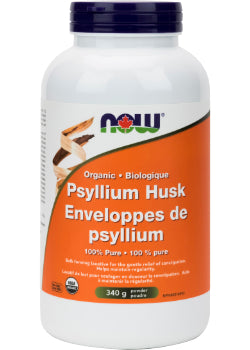
PSYLLIUM HUSK POWDER FROM NOW FOODS AN EXCELENT SOUCRE OF DIETARY FIBER.Psyllium has traditionally been used as a fiber supplement to help relieve constipation and promote regularity. Now Psyllium Husk Powder is a safe, effective way to maximize fiber intake. Often referred to as a mucilaginous fiber, psyllium husks have the unique ability to absorb more than half their weight, making them an excellent intestinal cleanser. Now Psyllium husk Powder is ideal for those concerned with constipation and are a great addition to any cleansing program. [POWDER]
Each 1/2 tbsp provides:
Organic Psyllium Husk 4.5g
Important Information:
Contains no sugar, salt, starch, yeast, wheat, corn, soy, milk, preservatives or additives. See below for caution & warnings.
Dosage
Mix 1/2 tablespoon twice daily with 270ml of liquid. Stir briskly and drink immediately. Maintain adequate fluid intake. Take 2 hours before or after taking other medications.
Since 1968 NOW has been a leader in the natural products industry. NOW Foods is an award-winning and highly respected manufacturer of vitamins, minerals, dietary supplements and natural foods. Now Foods brings you over 1600 Natural Foods, Supplements, Sports Nutrition and Personal Care Products. NOW supplements are high quality products at affordable prices.
What is Psyllium?
Psyllium seed is a grain grown in India that is prized for its high fibre content. Psyllium works as a bulk-forming laxative containing 10-30% mucilage. In the intestine psyllium swells and forms a gelatinous mass which keeps the feces soft and hydrated, promoting regular bowel movements. Psyllium is a good intestinal cleanser and stool softener. Heath practitioners will often recommend psyllium for intestinal conditions such as
colitis, constipation,
diarrhea,
hemorrhoids, bladder problems, rheumatism and ulcers.
Why Take Fiber?
Medical research has conclusively shown the benefits of high fiber diets. Fiber is the indigestible parts of fruits, seeds, vegetables, whole grains and other edible plants. Fiber is generally classified as either soluble or insoluble.
Soluble fiber is that which easily dissolves in water. Fruit
pectin
is an example of soluble fiber. Soluble fibers lead to the production of short chain fatty acids (SCFAs), which support the nourishment of the cells of the large intestine and promote digestive. SCFAs also help maintain cholesterol levels that are already within the normal range.
Insoluble fiber is not easily dissolved in water. Wheat bran is an insoluble fiber. Insoluble fibers contain roughage which helps tone the bowel.* Research has also shown that insoluble fiber may play a role in reducing intestinal permeability.
Benefits of a high fiber diet may include:
- Helps maintain cholesterol levels already within the normal range
- Supports healthy blood sugar levels when used as part of the diet
- Improve bowel function
- Feed intestinal bacteria
- Decrease intestinal permeability
Intestinal Health
The intestine is the main absorptive area of the digestive tract. It is essentially a tube with a thin mucosal lining and lots of blood vessels on the inside and muscles around the outside. It has its own immune tissue called GALT, or gut associated lymphoid tissue. The inner lining is filled with little fingers, or projection of the mucosa, which greatly increases its absorptive surface.
Lying on the membrane are many friendly organisms, which help our body with the digestive process. The small intestine attaches to the stomach. Near it's beginning, ducts from the liver and
pancreas
release digestive juices. These juices mix with the partially digested food from the stomach and continue the digestive process. Nutrients are absorbed through the thin intestinal wall and transported via the bloodstream, to where they are needed. The liver also excretes processed toxins and fats through the bile. These substances must be carried through the intestine without being absorbed.
The remainder of the food is pushed through into the large intestine. The main function of the large intestine is the preparation of stool for excretion. In order to do this the digested food must be dehydrated and compacted. The last bit of nutrients may also be absorbed here.
Some of the most important players in intestinal health are not part of our own body. Friendly intestinal bacteria, often called
probiotics, are an essential part of digestion. They break down food particles, manufacture vitamins and prevent the infection of the tract with other microbes. Each bowel movement actually contains millions of these friendly bacteria; they are in a constant state of renewal. Many concerns like
indigestion, gas, bloating and
constipation
can be due to an imbalance of the intestinal bacteria. It is easy to upset this balance by improper diet or taking medications like antibiotics.
Cautions:
Consult a health care practitioner if symptoms worsen or if laxative effect does not occur within seven days. Consult a health care practitioner immediately if you experience chest pain, vomiting, or difficulty in swallowing or breathing after taking this product. Consult a health care practitioner prior to use if you have symptoms such as abdominal pain, nausea, vomiting or fever (as these could be signs of abnormal constrictions of the gastrointestinal tract, diseases of the oesophagus and/or the superior opening of the stomach (cardia), potential or existing intestinal blockage, paralysis of the intestine, megacolon, fecal impaction, inflamed bowel or appendicitis), or if you are taking medications which inhibit peristaltic movement. Do not use if you have difficulty swallowing, if you have
diabetes
mellitus in which blood sugar is difficult to regulate, or if you are experiencing a sudden change in bowel habits that has persisted for more than 2 weeks, undiagnosed rectal bleeding, or failure to defecate following the use of another laxative product. Hypersensitivity, such as allergy, has been known to occur following inhaled and/or ingested psyllium; in which case, discontinue use. May cause temporary gas and/or bloating.
Carefully SelectedShips to the U.S.Wellness EssentialsTrusted Brands
Product Details
What is Psyllium?
Psyllium seed is a grain grown in India that is prized for its high fibre content. Psyllium works as a bulk-forming laxative containing 10-30% mucilage. In the intestine psyllium swells and forms a gelatinous mass which keeps the feces soft and hydrated, promoting regular bowel movements. Psyllium is a good intestinal cleanser and stool softener. Heath practitioners will often recommend psyllium for intestinal conditions such as
colitis, constipation,
diarrhea,
hemorrhoids, bladder problems, rheumatism and ulcers.
Why Take Fiber?
Medical research has conclusively shown the benefits of high fiber diets. Fiber is the indigestible parts of fruits, seeds, vegetables, whole grains and other edible plants. Fiber is generally classified as either soluble or insoluble.
Soluble fiber is that which easily dissolves in water. Fruit
pectin
is an example of soluble fiber. Soluble fibers lead to the production of short chain fatty acids (SCFAs), which support the nourishment of the cells of the large intestine and promote digestive. SCFAs also help maintain cholesterol levels that are already within the normal range.
Insoluble fiber is not easily dissolved in water. Wheat bran is an insoluble fiber. Insoluble fibers contain roughage which helps tone the bowel.* Research has also shown that insoluble fiber may play a role in reducing intestinal permeability.
Benefits of a high fiber diet may include:
- Helps maintain cholesterol levels already within the normal range
- Supports healthy blood sugar levels when used as part of the diet
- Improve bowel function
- Feed intestinal bacteria
- Decrease intestinal permeability
Intestinal Health
The intestine is the main absorptive area of the digestive tract. It is essentially a tube with a thin mucosal lining and lots of blood vessels on the inside and muscles around the outside. It has its own immune tissue called GALT, or gut associated lymphoid tissue. The inner lining is filled with little fingers, or projection of the mucosa, which greatly increases its absorptive surface.
Lying on the membrane are many friendly organisms, which help our body with the digestive process. The small intestine attaches to the stomach. Near it's beginning, ducts from the liver and
pancreas
release digestive juices. These juices mix with the partially digested food from the stomach and continue the digestive process. Nutrients are absorbed through the thin intestinal wall and transported via the bloodstream, to where they are needed. The liver also excretes processed toxins and fats through the bile. These substances must be carried through the intestine without being absorbed.
The remainder of the food is pushed through into the large intestine. The main function of the large intestine is the preparation of stool for excretion. In order to do this the digested food must be dehydrated and compacted. The last bit of nutrients may also be absorbed here.
Some of the most important players in intestinal health are not part of our own body. Friendly intestinal bacteria, often called
probiotics, are an essential part of digestion. They break down food particles, manufacture vitamins and prevent the infection of the tract with other microbes. Each bowel movement actually contains millions of these friendly bacteria; they are in a constant state of renewal. Many concerns like
indigestion, gas, bloating and
constipation
can be due to an imbalance of the intestinal bacteria. It is easy to upset this balance by improper diet or taking medications like antibiotics.
Cautions:
Consult a health care practitioner if symptoms worsen or if laxative effect does not occur within seven days. Consult a health care practitioner immediately if you experience chest pain, vomiting, or difficulty in swallowing or breathing after taking this product. Consult a health care practitioner prior to use if you have symptoms such as abdominal pain, nausea, vomiting or fever (as these could be signs of abnormal constrictions of the gastrointestinal tract, diseases of the oesophagus and/or the superior opening of the stomach (cardia), potential or existing intestinal blockage, paralysis of the intestine, megacolon, fecal impaction, inflamed bowel or appendicitis), or if you are taking medications which inhibit peristaltic movement. Do not use if you have difficulty swallowing, if you have
diabetes
mellitus in which blood sugar is difficult to regulate, or if you are experiencing a sudden change in bowel habits that has persisted for more than 2 weeks, undiagnosed rectal bleeding, or failure to defecate following the use of another laxative product. Hypersensitivity, such as allergy, has been known to occur following inhaled and/or ingested psyllium; in which case, discontinue use. May cause temporary gas and/or bloating.
🌿
Daily Wellness
Easy to add to your everyday health routine.
✅
Carefully Selected
Chosen with quality and customer needs in mind.
💊
Simple to Use
Designed for convenient daily supplementation.
🚚
Ships to the U.S.
Fast, reliable shipping to U.S. customers.
Choosing a selection results in a full page refresh.