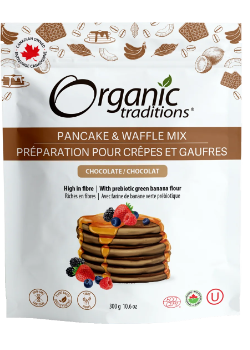
Perfectly fluffy & nutritious pancakes and waffles
Excellent source of fibre
Rich chocolate taste
Made with prebiotic green banana flour
Free from gluten, GMOs, dairy, added sugars, peanuts
Quantity
Couldn't load pickup availability
Pancake & Waffle Mix (Chocolate) - 300g
$14.61
Organic Traditions Pancake & Waffle Mix (Chocolate) - 300g is a dietary supplement in powder form, intended for adults as part of a daily wellness routine.
Fuel your day with convenient and nutritious breakfasts using Organic Traditions Pancake & Waffle Mix. Instant and gluten-free, Organic Traditions Pancake & Waffle Mix is made from a combination of certified gluten-free oat flour, prebiotic-rich green banana flour, and coconut flour, which is abundant in healthy fats. Enjoy perfectly fluffy and nutritious pancakes and waffles that serve as an excellent source of fiber, enhanced with magnesium and antioxidant-rich organic cacao powder for a delightful chocolate flavor. [POWDER]
50g (makes approx.3 - 4 pancakes):
Calories 200
Fat 6g
saturated 3g
trans 0g
Carbohydrate 32g
Fibre 7g
Sugars 8g
Protein 5g
Cholesterol 0mg
Sodium 330mg
Potassium 250mg
Calcium 150mg
Iron 1.2mg
Ingredients:
organic green banana flour, organic gluten-free oat flour, organic coconut flour, organic coconut palm sugar, organic coconut milk powder, organic cacao powder, baking powder, organic vanilla flavour, sea salt, organic cinnamon extract
Important Information:
Allergy Information: May contain tree nuts, sesame. Contains an oxygen absorber. Do not consume. Store in a cool dry place.
Dosage
Whisk 1 egg or 1 egg substitute, 3/4 cup of milk or water and 2 tbsp of oil together
Mix 3/4 cup of dry mix with wet ingredients together until well combined.
Heat oil or butter in a pan over medium heat. Ladle approximately 1/4 cup of pancake batter per pancake into the warmed pan.
Flip when bubbles appear and is golden brown (about 3-4 minutes per side).
It’s Not A Trend, It’s a Tradition... Naturally
Organic Traditions Fibre Flow range offers an easy and delicious way to support daily digestive health and increase fibre intake, with options like
Fibre Flow (Strawberry),
Fibre Flow (Unflavoured),
Fibre Flow (Yuzu Lime),
and
Fibre Flow (Variety Pack),
all made with clean, plant-based ingredients to support gut wellness.
The functional latte collection includes nourishing blends such as
Matcha Latte With Probiotics,
Turmeric Latte With Probiotics And Saffron,
Beet Latte With Probiotics,
Chocolate Latte With Ashwagandha And Probiotics,
Lavender Latte,
Pumpkin Spice Latte,
Holiday Spice Latte,
Mint Chocolate Latte,
and
Yerba Mate Mint Latte With Matcha And Probiotics,
delivering targeted benefits for energy, immunity, relaxation, and overall wellness.
Shop these high-quality superfoods right here at ca
UNDERSTANDING GLUTEN INTOLERANCE: UNRAVELING THE BASICS
Gluten is a combination of two proteins – gliadin and glutenin – commonly found in the endosperm (the inside) of certain grains, predominantly wheat, barley, and rye. It is crucial in providing elasticity and structure to the dough, so it is commonly found in many types of bread, pasta, and other baked goods. Unfortunately, some individuals have an intolerance or an allergy to gluten, varying from mild to severe. And while these are related conditions, it's essential to be able to distinguish between the two, as they have different underlying mechanisms and effects.
What Is Gluten Intolerance?
Gluten intolerance, also known as non-
celiac
gluten sensitivity, is a condition wherein people experience adverse reactions after consuming gluten-containing foods. It is distinct from celiac disease, which is an autoimmune disorder where the immune system responds abnormally to gluten, attacking the small intestine's lining. Over time, this can damage the intestinal villi, finger-like projections responsible for nutrient absorption. Celiac disease requires strict, lifelong adherence to a gluten-free diet, as even tiny amounts of gluten can trigger symptoms and perpetuate the damage.
Gluten intolerance, on the other hand, does not involve an autoimmune response or severe damage to the small intestine. However, individuals with gluten intolerance may still experience a range of uncomfortable symptoms after consuming gluten, including abdominal pain, bloating, gas,
diarrhea, or
constipation, fatigue and weakness, migraines or tension headaches, skin problems, joint and muscle pain, and mood disturbances like depression, anxiety, or irritability. The exact cause of gluten intolerance is not yet fully understood, but it is believed to involve a combination of genetic, immunological, and environmental factors.
Recognizing Gluten Intolerance
Diagnosing gluten intolerance can be challenging since the symptoms can overlap with many other conditions. It is essential to rule out celiac disease and wheat allergies before confirming gluten intolerance. A knowledgeable healthcare provider can help you with this.
Once you have a diagnosis in hand, you’ll need to adopt and strictly adhere to a gluten-free diet. This involves avoiding foods that contain wheat, barley, rye, and related grains. Fortunately, gluten-free alternatives are widely available, and many individuals find relief once they adopt a gluten-free lifestyle. Supplements can also help.
Gluten Intolerance Support Supplements
Many supplements can complement a gluten-free diet and help ease the symptoms of gluten sensitivity. These include digestive
enzymes, essential fatty acids, multi-vitamin/mineral blends,
probiotics,
glutamine,
calcium, iron, and vitamins C and D. These can not only help manage gluten intolerance but can also help ensure that individuals living with gluten intolerance or allergy get all of the essential nutrients they need to maintain optimal health and wellness.
While you can get these nutrients in isolated form, a few quality gut health blends that supply all the essentials already exist. Among these are Gluten-Ease from Enzymedica, Vegan Pro Digest from Nova probiotics, and Digest Gluten from Genestra. Always follow label instructions and dosing directions carefully for optimal results.
Gluten-Free Eating 101
A gluten-free diet excludes all gluten and is essential for people with celiac disease, non-celiac gluten sensitivity, or wheat allergy. Here are the basics of a gluten-free diet:
Eliminate all sources of gluten from your diet. This includes foods containing wheat, barley, rye, and their derivatives. Common gluten-containing foods to avoid include.
Wheat-based products:
bread, pasta, couscous, flour, and most baked goods.
Barley:
malt, malt vinegar, and some cereals.
Rye:
found in certain bread, rye beer, and some cereals.
Gluten-Free Grains:
Fortunately, there are many gluten-free grains and starches that you can include in your diet. These include:
- Rice
- Corn (maize)
- Quinoa
- Buckwheat
- Millet
- Sorghum
Gluten-free oats
(ensure they are certified gluten-free to avoid cross-contamination)
Fruits and Vegetables:
Fresh fruits and vegetables are naturally gluten-free, so they can be enjoyed without any concerns.
Proteins: Meat, fish, poultry, eggs, and legumes (beans, lentils, chickpeas, etc.) are naturally gluten-free and can be included in your diet.
Dairy: Most dairy products, such as milk, cheese, yogurt, and butter, are gluten-free. However, it's essential to check for added ingredients containing gluten, especially in flavoured or processed dairy products.
Processed and Packaged Foods:
Be cautious with processed and packaged foods as they might contain hidden sources of gluten, such as sauces, soups, dressings, and certain snacks. Always read the ingredient labels carefully to identify any gluten-containing ingredients.
Gluten-Free Substitutes: There are now numerous gluten-free alternatives available for those with a gluten intolerance, such as gluten-free bread, pasta, and flour. These can be found in many grocery stores and specialty health food stores.
Gluten in Non-Food Products:
In some cases, gluten can also be found in non-food products, such as medications, vitamins, and cosmetics. Always check the labels and consult with a healthcare professional if needed.
Carefully SelectedShips to the U.S.Wellness EssentialsTrusted Brands
Product Details
UNDERSTANDING GLUTEN INTOLERANCE: UNRAVELING THE BASICS
Gluten is a combination of two proteins – gliadin and glutenin – commonly found in the endosperm (the inside) of certain grains, predominantly wheat, barley, and rye. It is crucial in providing elasticity and structure to the dough, so it is commonly found in many types of bread, pasta, and other baked goods. Unfortunately, some individuals have an intolerance or an allergy to gluten, varying from mild to severe. And while these are related conditions, it's essential to be able to distinguish between the two, as they have different underlying mechanisms and effects.
What Is Gluten Intolerance?
Gluten intolerance, also known as non-
celiac
gluten sensitivity, is a condition wherein people experience adverse reactions after consuming gluten-containing foods. It is distinct from celiac disease, which is an autoimmune disorder where the immune system responds abnormally to gluten, attacking the small intestine's lining. Over time, this can damage the intestinal villi, finger-like projections responsible for nutrient absorption. Celiac disease requires strict, lifelong adherence to a gluten-free diet, as even tiny amounts of gluten can trigger symptoms and perpetuate the damage.
Gluten intolerance, on the other hand, does not involve an autoimmune response or severe damage to the small intestine. However, individuals with gluten intolerance may still experience a range of uncomfortable symptoms after consuming gluten, including abdominal pain, bloating, gas,
diarrhea, or
constipation, fatigue and weakness, migraines or tension headaches, skin problems, joint and muscle pain, and mood disturbances like depression, anxiety, or irritability. The exact cause of gluten intolerance is not yet fully understood, but it is believed to involve a combination of genetic, immunological, and environmental factors.
Recognizing Gluten Intolerance
Diagnosing gluten intolerance can be challenging since the symptoms can overlap with many other conditions. It is essential to rule out celiac disease and wheat allergies before confirming gluten intolerance. A knowledgeable healthcare provider can help you with this.
Once you have a diagnosis in hand, you’ll need to adopt and strictly adhere to a gluten-free diet. This involves avoiding foods that contain wheat, barley, rye, and related grains. Fortunately, gluten-free alternatives are widely available, and many individuals find relief once they adopt a gluten-free lifestyle. Supplements can also help.
Gluten Intolerance Support Supplements
Many supplements can complement a gluten-free diet and help ease the symptoms of gluten sensitivity. These include digestive
enzymes, essential fatty acids, multi-vitamin/mineral blends,
probiotics,
glutamine,
calcium, iron, and vitamins C and D. These can not only help manage gluten intolerance but can also help ensure that individuals living with gluten intolerance or allergy get all of the essential nutrients they need to maintain optimal health and wellness.
While you can get these nutrients in isolated form, a few quality gut health blends that supply all the essentials already exist. Among these are Gluten-Ease from Enzymedica, Vegan Pro Digest from Nova probiotics, and Digest Gluten from Genestra. Always follow label instructions and dosing directions carefully for optimal results.
Gluten-Free Eating 101
A gluten-free diet excludes all gluten and is essential for people with celiac disease, non-celiac gluten sensitivity, or wheat allergy. Here are the basics of a gluten-free diet:
Eliminate all sources of gluten from your diet. This includes foods containing wheat, barley, rye, and their derivatives. Common gluten-containing foods to avoid include.
Wheat-based products:
bread, pasta, couscous, flour, and most baked goods.
Barley:
malt, malt vinegar, and some cereals.
Rye:
found in certain bread, rye beer, and some cereals.
Gluten-Free Grains:
Fortunately, there are many gluten-free grains and starches that you can include in your diet. These include:
- Rice
- Corn (maize)
- Quinoa
- Buckwheat
- Millet
- Sorghum
Gluten-free oats
(ensure they are certified gluten-free to avoid cross-contamination)
Fruits and Vegetables:
Fresh fruits and vegetables are naturally gluten-free, so they can be enjoyed without any concerns.
Proteins: Meat, fish, poultry, eggs, and legumes (beans, lentils, chickpeas, etc.) are naturally gluten-free and can be included in your diet.
Dairy: Most dairy products, such as milk, cheese, yogurt, and butter, are gluten-free. However, it's essential to check for added ingredients containing gluten, especially in flavoured or processed dairy products.
Processed and Packaged Foods:
Be cautious with processed and packaged foods as they might contain hidden sources of gluten, such as sauces, soups, dressings, and certain snacks. Always read the ingredient labels carefully to identify any gluten-containing ingredients.
Gluten-Free Substitutes: There are now numerous gluten-free alternatives available for those with a gluten intolerance, such as gluten-free bread, pasta, and flour. These can be found in many grocery stores and specialty health food stores.
Gluten in Non-Food Products:
In some cases, gluten can also be found in non-food products, such as medications, vitamins, and cosmetics. Always check the labels and consult with a healthcare professional if needed.
🌿
Daily Wellness
Easy to add to your everyday health routine.
✅
Carefully Selected
Chosen with quality and customer needs in mind.
💊
Simple to Use
Designed for convenient daily supplementation.
🚚
Ships to the U.S.
Fast, reliable shipping to U.S. customers.
Choosing a selection results in a full page refresh.