

1
/
of
1
Provita
Prostate Pro Forte - 60 V-Caps
Prostate Pro Forte - 60 V-Caps
Regular price
$60.00 USD
Regular price
Sale price
$60.00 USD
Shipping calculated at checkout.
Availability
In stock, and ready to ship
- Fast and highly efficient
- Benefits felt within days
- 100% natural vegan formula
- Helps reduce the urologic symptoms associated with benign prostatic hyperplasia
- Helps to support prostate health
- Does not contain dairy, egg, gluten, soy, wheat, corn, yeast, nuts, artificial sweeteners, colours or flavours
Quantity
Couldn't load pickup availability

Prostate Pro Forte - 60 V-Caps
$60.00
Provita Prostate Pro Forte - 60 V-Caps is a dietary supplement in capsule form, intended for adults as part of a daily wellness routine.
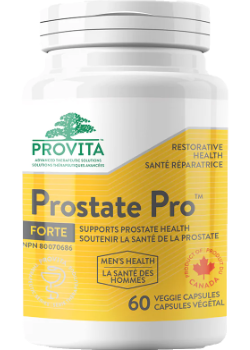
Designed to help support prostate health and reduce the urologic symptoms associated with benign prostatic hyperplasia, Provita Prostate Pro Forte is 100% natural and vegan. Recommended by naturopaths its beneficial effects can be felt within days of administration. Provita’s Prostate Pro was developed to address painful and frequent nocturnal urination, treat and reduce the risk of inflammation and chronic conditions associated with benign prostatic hyperplasia, by addressing the root causes. This unique formulation includes 23 masterfully selected ingredients, for maximum overall effectiveness. [VCAPS]
2 capsules contain:
Phytosterols (Free plant sterols) (containing 80% Beta-Sitosterol, Campesterol and Stigmasterol) 150 mg
Saw Palmetto (Serenoa repens), 45% fatty acids 100 mg
Pygeum (Prunus africana), 12% Phytosterols 100 mg
Goldenseal (Hydrastis canadensis) 50 mg
Olive leaf (Olea europaea) 10: 1, 15% Oleuropein 40 mg
Stinging Nettle (Urtica dioica) 100 mg
Pumpkin seed oil 10:1 (Cucurbita pepo) 40 mg
Boswellia serrata (65% Boswellic acids) 100 mg
Graminex® Flower Pollen Extract 20:1 (QCE 1000 mg) 50 mg
DIM (3,3’-Diindolylmethane) 5 mg
Indole-3-carbinol 5 mg
Piperine (Piper nigrum) 10 mg
Rosmarinus officinalis PE 4:1 (QCE 80 mg) 40 mg
Lycopene 30 mg
Zinc (Zinc oxide) 30 mg
Selenium (Selenomethionine) 100 mcg
Copper (Copper Bisglycinate) 4 mg
Vitamin B6 (Pyridoxine Hydrochloride) 10 mg
Vitamin D3 (Cholecalciferol) 25 mcg
Boron (Sodium Borate) 700 mcg
L-Alanine 30 mg
Glycine 30 mg
L-Glutamic Acid 30 mg
Non-medicinal Ingredients:
Tricalcium phosphate, vegetable stearate, silicon dioxide, ascorbyl palmitate.
Capsule shell: hypromellose (vegetarian gelatin)
Important Information:
If symptoms persist or worsen, consult a health care practitioner. To exclude the diagnosis of prostate cancer, consult a health care practitioner prior to use. Some people may experience mild gastrointestinal disturbances such as diarrhea, abdominal pain, heartburn, nausea and vomiting; in which case, discontinue use. If you are taking any other medications or natural health products, consult a health care practitioner prior to use, as piperine may alter their effectiveness. Consult a health care practitioner before taking if you are allergic to flower pollen. Discontinue use if abdominal upset or nausea occurs. If you are taking other diuretics, consult a healthcare practitioner prior to use. Hypersensitivity (e.g. allergy) has been known to occur; in which case, discontinue use. Do not use if seal is broken. Keep out of reach of children. Keep sealed, store in a cool, dry place.
Phytosterols (Free plant sterols) (containing 80% Beta-Sitosterol, Campesterol and Stigmasterol) 150 mg
Saw Palmetto (Serenoa repens), 45% fatty acids 100 mg
Pygeum (Prunus africana), 12% Phytosterols 100 mg
Goldenseal (Hydrastis canadensis) 50 mg
Olive leaf (Olea europaea) 10: 1, 15% Oleuropein 40 mg
Stinging Nettle (Urtica dioica) 100 mg
Pumpkin seed oil 10:1 (Cucurbita pepo) 40 mg
Boswellia serrata (65% Boswellic acids) 100 mg
Graminex® Flower Pollen Extract 20:1 (QCE 1000 mg) 50 mg
DIM (3,3’-Diindolylmethane) 5 mg
Indole-3-carbinol 5 mg
Piperine (Piper nigrum) 10 mg
Rosmarinus officinalis PE 4:1 (QCE 80 mg) 40 mg
Lycopene 30 mg
Zinc (Zinc oxide) 30 mg
Selenium (Selenomethionine) 100 mcg
Copper (Copper Bisglycinate) 4 mg
Vitamin B6 (Pyridoxine Hydrochloride) 10 mg
Vitamin D3 (Cholecalciferol) 25 mcg
Boron (Sodium Borate) 700 mcg
L-Alanine 30 mg
Glycine 30 mg
L-Glutamic Acid 30 mg
Non-medicinal Ingredients:
Tricalcium phosphate, vegetable stearate, silicon dioxide, ascorbyl palmitate.
Capsule shell: hypromellose (vegetarian gelatin)
Important Information:
If symptoms persist or worsen, consult a health care practitioner. To exclude the diagnosis of prostate cancer, consult a health care practitioner prior to use. Some people may experience mild gastrointestinal disturbances such as diarrhea, abdominal pain, heartburn, nausea and vomiting; in which case, discontinue use. If you are taking any other medications or natural health products, consult a health care practitioner prior to use, as piperine may alter their effectiveness. Consult a health care practitioner before taking if you are allergic to flower pollen. Discontinue use if abdominal upset or nausea occurs. If you are taking other diuretics, consult a healthcare practitioner prior to use. Hypersensitivity (e.g. allergy) has been known to occur; in which case, discontinue use. Do not use if seal is broken. Keep out of reach of children. Keep sealed, store in a cool, dry place.
Dosage
Adults take 1 capsule 2 times per day.
Adults take 1 capsule 2 times per day.
High-Potency Herbal Supplements by Provita
Provita offers targeted natural solutions for sleep, stress, and cognitive health with formulas like
Dream-On
for deep, restful sleep without melatonin,
GABA Pro
to support calm and relaxation,
Lion’s Mane 5000
for memory, focus, and brain function, and
PS-100+ With ALC
for cognitive support and mental clarity.
These advanced, non-habit-forming supplements are designed to support neurotransmitter balance, reduce mental fatigue, and promote overall brain health and wellness.
Provita offers targeted natural solutions for sleep, stress, and cognitive health with formulas like
Dream-On
for deep, restful sleep without melatonin,
GABA Pro
to support calm and relaxation,
Lion’s Mane 5000
for memory, focus, and brain function, and
PS-100+ With ALC
for cognitive support and mental clarity.
These advanced, non-habit-forming supplements are designed to support neurotransmitter balance, reduce mental fatigue, and promote overall brain health and wellness.
PROSTATE HEALTH
By: Articles by a Naturopathic Doctor and a Holistic Nutritionist
Getting up frequently at night, pain in the groin, painful urination, and reduced sexual function - all symptoms of common prostate conditions. Read on to discover how nutritional supplements and herbs can help...
The prostate is the organ responsible for producing the fluid part of seminal emissions, helping to control the flow of urine, and for the contractions that cause ejaculation during orgasm. It’s no wonder that when a man has a concern with his prostate that it can be troublesome.
Prostate problems occur when the gland becomes infected or swollen. Infection can occur directly in the prostate or it can be a complication of a urinary tract infection. The most common prostate condition is benign prostatic hyperplasia (BPH). It occurs in men over the age of fifty (but can occur earlier) due to hormonal imbalances, heredity, poor diet, nutrient deficiencies or
high cholesterol. The growth of malignant or benign tumours can also cause prostate swelling. It is important to have your prostate monitored by your doctor. Your PSA level (prostate specific antigen) can indicate the degree of enlargement; it can also indicate whether or not you are at risk for abnormal cell growths. Make at least yearly appointments past age forty for this test.
Symptoms of prostate inflammation can be mild if it develops slowly or intense if it develops quickly. Prostate infections cause fever, chills, lower back pain, rectal pain, urgency for stool and urination and painful urination. The urine can be blood or pus filled. Chronic infections may cause mild, local discomfort and may result in painful ejaculation or erection. Conventionally prostate infections are treated with antimicrobial medications. They must be fairly powerful because it is difficult to get enough medication to the prostate due to its poor blood supply. Make sure to replace the helpful bacteria in your system with a probiotic supplement after antimicrobial therapy.
Chronic prostatitis is not often related to a bacteria or the development of prostate cell growths. Treatment is also more difficult because the exact cause is poorly understood. Treatment may include antibiotics, although more commonly chronic prostatitis is treated with alpha blockers, as in BPH. Tamsulosin and alfuzosin are two common alpha blockers. They serve to help relax the muscles of the prostate and bladder neck, thereby improving symptoms such as urinary retention. These medications have no effect on size or inflammation of the prostate.
BPH affects one in three men over age 50. Symptoms appear when the prostate becomes large enough to interfere with urination. Dribbling, frequent and urgent urination occur and often cause men to wake at night to urinate. Starting and stopping urination can be difficult. When bladder emptying is impaired there is an increased risk for the development of urinary stones and infections. Drug therapy for BPH uses finasteride, which blocks the conversion of testosterone into dihydrotestosterone (DHT). DHT stimulates the growth of prostate cells. Side effects of drug therapy include impotence, decreased libido and difficulty detecting abnormal prostate cells.
New research is focusing on the anti-cell growth effect that curcumin may have on the prostate, now being used both for prevention and treatment of slow developing prostate cell growths. Curcumin has been shown to have both chemo-preventative and growth inhibitory activity against multiple tumour cell lines, including tumours of the prostate. Bee pollen has also been used to inhibit progression of prostate cell growths once they have been diagnosed.
Prostate cell growths develops slowly and it has similar symptoms to BPH. All men over fifty should have yearly prostate examinations because this is a very common type of cell growth. Various drugs and surgical techniques are used to treat prostate cell growth depending on the location and if it has spread. Not all prostate tumours need to be removed because most are self contained and slow growing. Surgeons will only remove a faster growing tumour because the surgery itself often causes impotence. There are a number of clinically proven nutritional supplements and herbs that can provide you with significant relief for prostate conditions.
Balancing hormones – DHT (dehydrotestosterone) is a very active form of the hormone that can cause the prostate to become enlarged. The herb
saw palmetto
and the essential fat supplement
pumpkin seed oil
both help to reduce the formation of DHT and its subsequent bonding to the gland.
Most men notice a dramatic improvement in flow, and a reduction in both pain and frequency of night time trips to the bathroom. In addition, pollutants from the environment can act like hormones in the body.
In particular, residues from plastics and petrochemicals can pose serious problems because they act like the hormone estrogen, causing a number of imbalances in the body that can the lead to prostate enlargement and potentially, cell growths. The supplement D-glucarate helps the liver make an enzyme that helps clear out these synthetic estrogens. The herb
milk thistle
can help to detoxify the liver, so that it is better able to break down excess hormones and toxic hormone analogs from the environment.
Nutrients needed for prostate health include
zinc
(a deficiency has been linked to prostate conditions),
lycopene
(an antioxidant that helps to protect the prostate from free radical damage), Essential Fats (needed for normal hormone production and controlling inflammation) and also B vitamins and the
amino acids
Glycine, Alanine, and glutamic acid. See the table below for specific doses.
Improving immune system activity is important for most health concerns, in the case of prostate concerns, this is no exception. In cases of prostate infection, the herbs
Echinacea
and
golden seal
can help the body to fight the infection. Vitamin C boosts the activity of specific immune cells, which are then able to kill invading bacteria or viruses much easier. The essential fat – like nutrients sterols and sterolins can help to optimize your immune response as well, in addition to helping balance hormones. In the case of a fungal infection of the prostate, it is important that you use
probiotics
/ acidophilus with an antifungal supplement like grapefruit seed extract.
Reducing the annoying symptoms of prostate enlargement or irritation can be achieved with the above mentioned saw palmetto, but also with cleansing herbs like
horsetail
grass and marshmallow will usually have a soothing effect on the urinary tract.
Studies have shown that extracts of pygeum africanum can significantly lower urine residual volume and decrease incidence of nocturia, while increasing urine peak flow volume. There are now a number of combination products on the market that use primarily saw palmetto and pygeum to effectively reduce symptoms of BPH, chronic prostatitis, and in slow growing prostate cell growths.
Detoxifying treatments of the gastrointestinal tract may prove beneficial for the treatment of any prostate related issue. Constipation is thought to contribute to prostate dysfunction, which then increases risk of further constipation, as bowel movements become more painful to pass. Making sure to include 25-30 g of fibre into your diet on a daily basis, along with significantly increasing water intake, can help to relieve this associated symptom. For this same reason, as well as the frequent use of antibiotics for the treatment of various prostate pathologies, probiotics are a beneficial addition to any prostate specific treatment regime.
Ejaculating on a regular basis can prevent prostate problems. Applying hot and cold packs to the groin area increases circulation and can help to speed healing for prostate conditions. Regular exercise also increases circulation. Use deep breathing or other relaxation techniques to assist bladder emptying.
Dietary approaches to support prostate health begin with adding nuts and seeds, and their oils, to the diet. They are good sources of essential fatty acids and zinc. Try flax seed, pumpkin seed, sesame seed and walnuts. Consume fish and fish oils, which also contain protective fatty acids. Add nutritional yeast to the diet as a source of B vitamins. Soy products contain phytoestrogens and are thought to be protective against prostate disorders. Other foods that are rich in vitamins, minerals and
antioxidants
also support the prostate, for example, fresh fruits and vegetables, cumin, garlic and maitake mushroom. Avoid the following foods because they exacerbate prostate conditions; hydrogenated fats, saturated fat, sugar, white flour products, dairy products, caffeine and alcohol.
By: Articles by a Naturopathic Doctor and a Holistic Nutritionist
Getting up frequently at night, pain in the groin, painful urination, and reduced sexual function - all symptoms of common prostate conditions. Read on to discover how nutritional supplements and herbs can help...
The prostate is the organ responsible for producing the fluid part of seminal emissions, helping to control the flow of urine, and for the contractions that cause ejaculation during orgasm. It’s no wonder that when a man has a concern with his prostate that it can be troublesome.
Prostate problems occur when the gland becomes infected or swollen. Infection can occur directly in the prostate or it can be a complication of a urinary tract infection. The most common prostate condition is benign prostatic hyperplasia (BPH). It occurs in men over the age of fifty (but can occur earlier) due to hormonal imbalances, heredity, poor diet, nutrient deficiencies or
high cholesterol. The growth of malignant or benign tumours can also cause prostate swelling. It is important to have your prostate monitored by your doctor. Your PSA level (prostate specific antigen) can indicate the degree of enlargement; it can also indicate whether or not you are at risk for abnormal cell growths. Make at least yearly appointments past age forty for this test.
Symptoms of prostate inflammation can be mild if it develops slowly or intense if it develops quickly. Prostate infections cause fever, chills, lower back pain, rectal pain, urgency for stool and urination and painful urination. The urine can be blood or pus filled. Chronic infections may cause mild, local discomfort and may result in painful ejaculation or erection. Conventionally prostate infections are treated with antimicrobial medications. They must be fairly powerful because it is difficult to get enough medication to the prostate due to its poor blood supply. Make sure to replace the helpful bacteria in your system with a probiotic supplement after antimicrobial therapy.
Chronic prostatitis is not often related to a bacteria or the development of prostate cell growths. Treatment is also more difficult because the exact cause is poorly understood. Treatment may include antibiotics, although more commonly chronic prostatitis is treated with alpha blockers, as in BPH. Tamsulosin and alfuzosin are two common alpha blockers. They serve to help relax the muscles of the prostate and bladder neck, thereby improving symptoms such as urinary retention. These medications have no effect on size or inflammation of the prostate.
BPH affects one in three men over age 50. Symptoms appear when the prostate becomes large enough to interfere with urination. Dribbling, frequent and urgent urination occur and often cause men to wake at night to urinate. Starting and stopping urination can be difficult. When bladder emptying is impaired there is an increased risk for the development of urinary stones and infections. Drug therapy for BPH uses finasteride, which blocks the conversion of testosterone into dihydrotestosterone (DHT). DHT stimulates the growth of prostate cells. Side effects of drug therapy include impotence, decreased libido and difficulty detecting abnormal prostate cells.
New research is focusing on the anti-cell growth effect that curcumin may have on the prostate, now being used both for prevention and treatment of slow developing prostate cell growths. Curcumin has been shown to have both chemo-preventative and growth inhibitory activity against multiple tumour cell lines, including tumours of the prostate. Bee pollen has also been used to inhibit progression of prostate cell growths once they have been diagnosed.
Prostate cell growths develops slowly and it has similar symptoms to BPH. All men over fifty should have yearly prostate examinations because this is a very common type of cell growth. Various drugs and surgical techniques are used to treat prostate cell growth depending on the location and if it has spread. Not all prostate tumours need to be removed because most are self contained and slow growing. Surgeons will only remove a faster growing tumour because the surgery itself often causes impotence. There are a number of clinically proven nutritional supplements and herbs that can provide you with significant relief for prostate conditions.
Balancing hormones – DHT (dehydrotestosterone) is a very active form of the hormone that can cause the prostate to become enlarged. The herb
saw palmetto
and the essential fat supplement
pumpkin seed oil
both help to reduce the formation of DHT and its subsequent bonding to the gland.
Most men notice a dramatic improvement in flow, and a reduction in both pain and frequency of night time trips to the bathroom. In addition, pollutants from the environment can act like hormones in the body.
In particular, residues from plastics and petrochemicals can pose serious problems because they act like the hormone estrogen, causing a number of imbalances in the body that can the lead to prostate enlargement and potentially, cell growths. The supplement D-glucarate helps the liver make an enzyme that helps clear out these synthetic estrogens. The herb
milk thistle
can help to detoxify the liver, so that it is better able to break down excess hormones and toxic hormone analogs from the environment.
Nutrients needed for prostate health include
zinc
(a deficiency has been linked to prostate conditions),
lycopene
(an antioxidant that helps to protect the prostate from free radical damage), Essential Fats (needed for normal hormone production and controlling inflammation) and also B vitamins and the
amino acids
Glycine, Alanine, and glutamic acid. See the table below for specific doses.
Improving immune system activity is important for most health concerns, in the case of prostate concerns, this is no exception. In cases of prostate infection, the herbs
Echinacea
and
golden seal
can help the body to fight the infection. Vitamin C boosts the activity of specific immune cells, which are then able to kill invading bacteria or viruses much easier. The essential fat – like nutrients sterols and sterolins can help to optimize your immune response as well, in addition to helping balance hormones. In the case of a fungal infection of the prostate, it is important that you use
probiotics
/ acidophilus with an antifungal supplement like grapefruit seed extract.
Reducing the annoying symptoms of prostate enlargement or irritation can be achieved with the above mentioned saw palmetto, but also with cleansing herbs like
horsetail
grass and marshmallow will usually have a soothing effect on the urinary tract.
Studies have shown that extracts of pygeum africanum can significantly lower urine residual volume and decrease incidence of nocturia, while increasing urine peak flow volume. There are now a number of combination products on the market that use primarily saw palmetto and pygeum to effectively reduce symptoms of BPH, chronic prostatitis, and in slow growing prostate cell growths.
Detoxifying treatments of the gastrointestinal tract may prove beneficial for the treatment of any prostate related issue. Constipation is thought to contribute to prostate dysfunction, which then increases risk of further constipation, as bowel movements become more painful to pass. Making sure to include 25-30 g of fibre into your diet on a daily basis, along with significantly increasing water intake, can help to relieve this associated symptom. For this same reason, as well as the frequent use of antibiotics for the treatment of various prostate pathologies, probiotics are a beneficial addition to any prostate specific treatment regime.
Ejaculating on a regular basis can prevent prostate problems. Applying hot and cold packs to the groin area increases circulation and can help to speed healing for prostate conditions. Regular exercise also increases circulation. Use deep breathing or other relaxation techniques to assist bladder emptying.
Dietary approaches to support prostate health begin with adding nuts and seeds, and their oils, to the diet. They are good sources of essential fatty acids and zinc. Try flax seed, pumpkin seed, sesame seed and walnuts. Consume fish and fish oils, which also contain protective fatty acids. Add nutritional yeast to the diet as a source of B vitamins. Soy products contain phytoestrogens and are thought to be protective against prostate disorders. Other foods that are rich in vitamins, minerals and
antioxidants
also support the prostate, for example, fresh fruits and vegetables, cumin, garlic and maitake mushroom. Avoid the following foods because they exacerbate prostate conditions; hydrogenated fats, saturated fat, sugar, white flour products, dairy products, caffeine and alcohol.
Carefully Selected
Ships to the U.S.
Wellness Essentials
Trusted Brands
Product Details
PROSTATE HEALTHBy: Articles by a Naturopathic Doctor and a Holistic Nutritionist
Getting up frequently at night, pain in the groin, painful urination, and reduced sexual function - all symptoms of common prostate conditions. Read on to discover how nutritional supplements and herbs can help...
The prostate is the organ responsible for producing the fluid part of seminal emissions, helping to control the flow of urine, and for the contractions that cause ejaculation during orgasm. It’s no wonder that when a man has a concern with his prostate that it can be troublesome.
Prostate problems occur when the gland becomes infected or swollen. Infection can occur directly in the prostate or it can be a complication of a urinary tract infection. The most common prostate condition is benign prostatic hyperplasia (BPH). It occurs in men over the age of fifty (but can occur earlier) due to hormonal imbalances, heredity, poor diet, nutrient deficiencies or
high cholesterol. The growth of malignant or benign tumours can also cause prostate swelling. It is important to have your prostate monitored by your doctor. Your PSA level (prostate specific antigen) can indicate the degree of enlargement; it can also indicate whether or not you are at risk for abnormal cell growths. Make at least yearly appointments past age forty for this test.
Symptoms of prostate inflammation can be mild if it develops slowly or intense if it develops quickly. Prostate infections cause fever, chills, lower back pain, rectal pain, urgency for stool and urination and painful urination. The urine can be blood or pus filled. Chronic infections may cause mild, local discomfort and may result in painful ejaculation or erection. Conventionally prostate infections are treated with antimicrobial medications. They must be fairly powerful because it is difficult to get enough medication to the prostate due to its poor blood supply. Make sure to replace the helpful bacteria in your system with a probiotic supplement after antimicrobial therapy.
Chronic prostatitis is not often related to a bacteria or the development of prostate cell growths. Treatment is also more difficult because the exact cause is poorly understood. Treatment may include antibiotics, although more commonly chronic prostatitis is treated with alpha blockers, as in BPH. Tamsulosin and alfuzosin are two common alpha blockers. They serve to help relax the muscles of the prostate and bladder neck, thereby improving symptoms such as urinary retention. These medications have no effect on size or inflammation of the prostate.
BPH affects one in three men over age 50. Symptoms appear when the prostate becomes large enough to interfere with urination. Dribbling, frequent and urgent urination occur and often cause men to wake at night to urinate. Starting and stopping urination can be difficult. When bladder emptying is impaired there is an increased risk for the development of urinary stones and infections. Drug therapy for BPH uses finasteride, which blocks the conversion of testosterone into dihydrotestosterone (DHT). DHT stimulates the growth of prostate cells. Side effects of drug therapy include impotence, decreased libido and difficulty detecting abnormal prostate cells.
New research is focusing on the anti-cell growth effect that curcumin may have on the prostate, now being used both for prevention and treatment of slow developing prostate cell growths. Curcumin has been shown to have both chemo-preventative and growth inhibitory activity against multiple tumour cell lines, including tumours of the prostate. Bee pollen has also been used to inhibit progression of prostate cell growths once they have been diagnosed.
Prostate cell growths develops slowly and it has similar symptoms to BPH. All men over fifty should have yearly prostate examinations because this is a very common type of cell growth. Various drugs and surgical techniques are used to treat prostate cell growth depending on the location and if it has spread. Not all prostate tumours need to be removed because most are self contained and slow growing. Surgeons will only remove a faster growing tumour because the surgery itself often causes impotence. There are a number of clinically proven nutritional supplements and herbs that can provide you with significant relief for prostate conditions.
Balancing hormones – DHT (dehydrotestosterone) is a very active form of the hormone that can cause the prostate to become enlarged. The herb
saw palmetto
and the essential fat supplement
pumpkin seed oil
both help to reduce the formation of DHT and its subsequent bonding to the gland.
Most men notice a dramatic improvement in flow, and a reduction in both pain and frequency of night time trips to the bathroom. In addition, pollutants from the environment can act like hormones in the body.
In particular, residues from plastics and petrochemicals can pose serious problems because they act like the hormone estrogen, causing a number of imbalances in the body that can the lead to prostate enlargement and potentially, cell growths. The supplement D-glucarate helps the liver make an enzyme that helps clear out these synthetic estrogens. The herb
milk thistle
can help to detoxify the liver, so that it is better able to break down excess hormones and toxic hormone analogs from the environment.
Nutrients needed for prostate health include
zinc
(a deficiency has been linked to prostate conditions),
lycopene
(an antioxidant that helps to protect the prostate from free radical damage), Essential Fats (needed for normal hormone production and controlling inflammation) and also B vitamins and the
amino acids
Glycine, Alanine, and glutamic acid. See the table below for specific doses.
Improving immune system activity is important for most health concerns, in the case of prostate concerns, this is no exception. In cases of prostate infection, the herbs
Echinacea
and
golden seal
can help the body to fight the infection. Vitamin C boosts the activity of specific immune cells, which are then able to kill invading bacteria or viruses much easier. The essential fat – like nutrients sterols and sterolins can help to optimize your immune response as well, in addition to helping balance hormones. In the case of a fungal infection of the prostate, it is important that you use
probiotics
/ acidophilus with an antifungal supplement like grapefruit seed extract.
Reducing the annoying symptoms of prostate enlargement or irritation can be achieved with the above mentioned saw palmetto, but also with cleansing herbs like
horsetail
grass and marshmallow will usually have a soothing effect on the urinary tract.
Studies have shown that extracts of pygeum africanum can significantly lower urine residual volume and decrease incidence of nocturia, while increasing urine peak flow volume. There are now a number of combination products on the market that use primarily saw palmetto and pygeum to effectively reduce symptoms of BPH, chronic prostatitis, and in slow growing prostate cell growths.
Detoxifying treatments of the gastrointestinal tract may prove beneficial for the treatment of any prostate related issue. Constipation is thought to contribute to prostate dysfunction, which then increases risk of further constipation, as bowel movements become more painful to pass. Making sure to include 25-30 g of fibre into your diet on a daily basis, along with significantly increasing water intake, can help to relieve this associated symptom. For this same reason, as well as the frequent use of antibiotics for the treatment of various prostate pathologies, probiotics are a beneficial addition to any prostate specific treatment regime.
Ejaculating on a regular basis can prevent prostate problems. Applying hot and cold packs to the groin area increases circulation and can help to speed healing for prostate conditions. Regular exercise also increases circulation. Use deep breathing or other relaxation techniques to assist bladder emptying.
Dietary approaches to support prostate health begin with adding nuts and seeds, and their oils, to the diet. They are good sources of essential fatty acids and zinc. Try flax seed, pumpkin seed, sesame seed and walnuts. Consume fish and fish oils, which also contain protective fatty acids. Add nutritional yeast to the diet as a source of B vitamins. Soy products contain phytoestrogens and are thought to be protective against prostate disorders. Other foods that are rich in vitamins, minerals and
antioxidants
also support the prostate, for example, fresh fruits and vegetables, cumin, garlic and maitake mushroom. Avoid the following foods because they exacerbate prostate conditions; hydrogenated fats, saturated fat, sugar, white flour products, dairy products, caffeine and alcohol.


🌿
Daily Wellness
Easy to add to your everyday health routine.
✅
Carefully Selected
Chosen with quality and customer needs in mind.
💊
Simple to Use
Designed for convenient daily supplementation.
🚚
Ships to the U.S.
Fast, reliable shipping to U.S. customers.