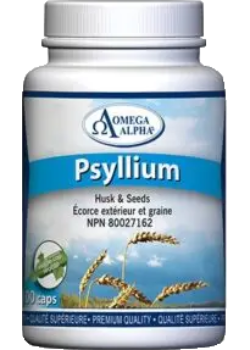
Omega Alpha’s Psyllium vegetarian capsules deliver 500mg of Psyllium Husks and Seeds in each capsule. Used in Herbal Medicine to provide a gentle relief of constipation and/or irregularity and as a bulk-forming laxative. Psyllium fibre, a well-known and very commonly used fibre supplement, contains both insoluble and soluble forms of fibre, as do all plant foods. Psyllium is extracted from the husks and seeds of several plantago species of plants. Psyllium contains mucilage, a gelatinous substance that acts as an intestinal regulator, providing bulk to the stool, which slows diarrhea, as well as initiating a defecation reflex in those suffering from constipation. Psyllium tends to have less gas and bloating effects than similar products, including bran. Recommended dosages of psyllium from Omega Alpha is to take 3 to 6 capsules per day while maintaining adequate fluid intake. [VCAP]
Each v-cap contains:
Plantago ovata (Psyllium) (Husk & Seed) 500 mg
Non-Medicinal Ingredients:
Hypromellose (vegetarian capsule shell).
Important Information:
Do not use if you are pregnant or breastfeeding. Consult a health care practitioner prior to use if you have symptoms such as abdominal pain, nausea, vomiting, fever; are taking medications which inhibit peristaltic movement or if laxative effect does not occur within seven days. Consult a health care practitioner immediately if you experience chest pain, vomiting, or difficulty in swallowing or breathing after taking this product. Do not use if you have difficulty swallowing, diabetes mellitus in which blood sugar is difficult to regulate or if you are experiencing a sudden change in bowel habits that has persisted for more than 2 weeks; undiagnosed rectal bleeding, or failure to defecate following the use of another laxative product. May cause temporary gas and/or bloating. Hypersensitivity, such as an allergy, has been known to occur following inhaled and/or ingested Psyllium; in which case, discontinue use. Store protected from light and moisture.
Dosage
Adults: Take 3 to 6 capsules per day. Maintain adequate fluid intake. Take 2 hours before or after taking other medications.
Advanced Herbal Formulas That Deliver
Support immune health, energy, and focus with Omega Alpha’s mushroom extracts.
Chaga Mushroom Extract
delivers antioxidant support, while
Cordyceps Mushroom Extract
boosts energy and endurance.
Coriolus (Turkey Tail) Mushroom Extract
supports immune and gut health, and
Lion’s Mane Mushroom Extract
enhances memory and cognition.
Maitake Mushroom Extract,
Reishi Mushroom Extract, and
Shiitake Mushroom Extract
provide additional support for immunity, stress balance, and overall wellness.
PSYLLIUM
Is it a laxative? Is it fibre? Yes, it's both. It's Psyllium, the mighty intestinal regulator! And it's here to protect you from diarrhea and constipation...
Psyllium is extracted from the husks and seeds of several plantago species of plants. Psyllium contains mucilage, a gelatinous substance that acts as an intestinal regulator, providing bulk to the stool, which slows diarrhea, as well as initiating a defecation reflex in those suffering from constipation.
Psyllium is a source of soluble fibre and as such, it has been shown to slow the absorption of sugar, making it a staple for diabetics. Incorporating soluble fibre into their diet prevents dangerous spikes in sugar levels after meals. Psyllium, as a source of soluble fibre, also binds excess cholesterol, prevents its absorption and aids in its elimination. Many cholesterol lowering agents that lower "bad" cholesterol (LDL, VLDL) have the same effect on "good" cholesterol (HDL). Psyllium is one of the few substances that does not have a detrimental effect on HDL, while lowering LDL cholesterol levels. The FDA has recognized Psyllium as an herb that reduces cholesterol, therefore also reducing the risk of heart disease, still the leading cause of death in Canada and United States.
Psyllium is not digested, but stimulates digestive processes through purely mechanical means. In the intestines, psyllium creates a large, soft, slimy mass (sounds yummy, right?) that travels through the intestines triggering contractions, coating the walls, slowing digestion and therefore regulating the rate of absorption. It is these effects that make it an excellent complimentary treatment for
hemorrhoids
(often caused or worsened by constipation),
IBD,
high cholesterol,
diabetes,
high blood pressure, obesity and heart disease.
Psyllium tends to have less gas and bloating effects than similar products, including bran. Recommended dosages of psyllium vary greatly, but in general for any concern, a dose of 7 – 30 g/day is adequate. It is very important to increase your water and fluid intake at the same time as increasing your psyllium intake, to avoid painful and dangerous bowel obstructions.
Psyllium allergies are possible, so be cautious if using for the first time. Rash, hives, difficulty breathing or anaphylaxis can develop in sensitive individuals. Diabetics taking insulin medication as well as psyllium should monitor their blood sugar regularly, as regular psyllium intake may require a lower dosage of medication. It is advised that psyllium be taken at least 1 hour away from supplements and prescription medication to avoid a possible decrease in absorption that delayed gastric emptying may cause.
Psyllium – Quick Facts
Parts Used
· Seeds, Seed Husks.
Applications
· Diarrhea, Constipation, Ibd,
hemorrhoids,
high cholesterol, Diabetes, Heart Disease
Optimum Dosage
· 7-30 G/Day, With Water. Take 1 Hour Away From Other Supplements And Medications.
Works Well With
· Water, Other Whole Grains And Sources Of Soluble And Insoluble Fiber
Important Information
· When Increasing You Psyllium Intake, Always Be Sure To Increase Your Water Intake, As Well. Diabetics On Insulin Treatment Should Monitor Their Blood Sugar Closely When Taking Psyllium, As Their Insulin Dosage May Need To Be Adjusted.
Carefully SelectedShips to the U.S.Wellness EssentialsTrusted Brands
Product Details
PSYLLIUM
Is it a laxative? Is it fibre? Yes, it's both. It's Psyllium, the mighty intestinal regulator! And it's here to protect you from diarrhea and constipation...
Psyllium is extracted from the husks and seeds of several plantago species of plants. Psyllium contains mucilage, a gelatinous substance that acts as an intestinal regulator, providing bulk to the stool, which slows diarrhea, as well as initiating a defecation reflex in those suffering from constipation.
Psyllium is a source of soluble fibre and as such, it has been shown to slow the absorption of sugar, making it a staple for diabetics. Incorporating soluble fibre into their diet prevents dangerous spikes in sugar levels after meals. Psyllium, as a source of soluble fibre, also binds excess cholesterol, prevents its absorption and aids in its elimination. Many cholesterol lowering agents that lower "bad" cholesterol (LDL, VLDL) have the same effect on "good" cholesterol (HDL). Psyllium is one of the few substances that does not have a detrimental effect on HDL, while lowering LDL cholesterol levels. The FDA has recognized Psyllium as an herb that reduces cholesterol, therefore also reducing the risk of heart disease, still the leading cause of death in Canada and United States.
Psyllium is not digested, but stimulates digestive processes through purely mechanical means. In the intestines, psyllium creates a large, soft, slimy mass (sounds yummy, right?) that travels through the intestines triggering contractions, coating the walls, slowing digestion and therefore regulating the rate of absorption. It is these effects that make it an excellent complimentary treatment for
hemorrhoids
(often caused or worsened by constipation),
IBD,
high cholesterol,
diabetes,
high blood pressure, obesity and heart disease.
Psyllium tends to have less gas and bloating effects than similar products, including bran. Recommended dosages of psyllium vary greatly, but in general for any concern, a dose of 7 – 30 g/day is adequate. It is very important to increase your water and fluid intake at the same time as increasing your psyllium intake, to avoid painful and dangerous bowel obstructions.
Psyllium allergies are possible, so be cautious if using for the first time. Rash, hives, difficulty breathing or anaphylaxis can develop in sensitive individuals. Diabetics taking insulin medication as well as psyllium should monitor their blood sugar regularly, as regular psyllium intake may require a lower dosage of medication. It is advised that psyllium be taken at least 1 hour away from supplements and prescription medication to avoid a possible decrease in absorption that delayed gastric emptying may cause.
Psyllium – Quick Facts
Parts Used
· Seeds, Seed Husks.
Applications
· Diarrhea, Constipation, Ibd,
hemorrhoids,
high cholesterol, Diabetes, Heart Disease
Optimum Dosage
· 7-30 G/Day, With Water. Take 1 Hour Away From Other Supplements And Medications.
Works Well With
· Water, Other Whole Grains And Sources Of Soluble And Insoluble Fiber
Important Information
· When Increasing You Psyllium Intake, Always Be Sure To Increase Your Water Intake, As Well. Diabetics On Insulin Treatment Should Monitor Their Blood Sugar Closely When Taking Psyllium, As Their Insulin Dosage May Need To Be Adjusted.
🌿
Daily Wellness
Easy to add to your everyday health routine.
✅
Carefully Selected
Chosen with quality and customer needs in mind.
💊
Simple to Use
Designed for convenient daily supplementation.
🚚
Ships to the U.S.
Fast, reliable shipping to U.S. customers.
Choosing a selection results in a full page refresh.