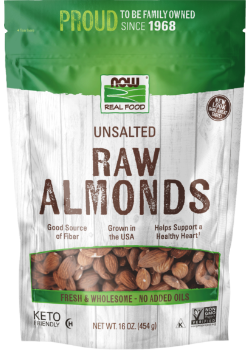
It’s hard to beat the satisfying crunch and flavour of NOW® Real Food Raw Almonds. There’s so much you can do with Almonds – roast them for snacking, chop them up for a healthy addition to your favourite recipe, or just eat them right out of the bag. And like many other nuts, almonds are bursting with nutrition. NOW® Real Food Raw Almonds are a natural source of protein, fibre and healthy fatty acids. In fact, Almonds may be the most nutrient-rich tree nut of them all. [NUTS]
3 tbsp (38g) contains:
Calories 220
Fat 19g
Saturated 1.5g
Trans 0g
Cholesterol 0mg
Sodium 0mg
Carbohydrate 8g
Fibre 5g
Sugars 2g
Protein 8g
Vitamin A 0mcg
Vitamin D 0mcg
Calcium 102mg
Iron 1.4mg
Potassium 279mg
Ingredient:
Raw Almonds
Important Information:
Keep out of reach of children. Refrigeration Recommended after opening.
Dosage
Roast them for snacking, chop them up for a healthy addition to your favourite recipe, or just eat them right out of the bag.
Since 1968 NOW has been a leader in the natural products industry. NOW Foods is an award-winning and highly respected manufacturer of vitamins, minerals, dietary supplements and natural foods. Now Foods brings you over 1600 Natural Foods, Supplements, Sports Nutrition and Personal Care Products. NOW supplements are high quality products at affordable prices.
ALMONDS
Almonds are good for your heart and your waistline!
You may think an almond is a nut, but it's technically a seed! Almonds have become a popular food in the world of nutrition because they're packed with nutrients that are beneficial for heart disease, diabetes and weight loss.
What Are Almonds?
Did you know there are two different kinds of almonds and the difference between them can be the difference between life and death?
Varieties:
Bitter almonds
Are the original wild variety of almonds that contain a toxic compound, called amygdalin, which breaks down in the body to small amounts of cyanide. Eating a few dozen bitter almonds can be fatal. Interestingly, amygdalin is used to make an alternative cell altering drug called Laetrile, which is used in some countries outside of the United States (where it is banned) to treat various different cell growths. Amygdalin has also been called vitamin
B17, however it is not recognized as a true vitamin.
Apricot kernels
are also a source of amygdalin and some people use them to treat cell growths, however again there is a risk of cyanide poisoning when you ingest them, so be sure to use them as directed.
Sweet almonds
Are the domesticated variety of almonds that we commonly eat today. While they originated from bitter almonds, they don't contain the toxic compound amygdalin and are completely safe to eat. Historically, sweet almonds were cultivated from bitter almonds and then grown all over the world, with the world's largest suppliers now in California. Interestingly, almond trees were transported to California from Europe and were able to survive and thrive in the climate of California. However, pollination of the almond trees require one million beehives to be trucked into the almond groves each year and is the largest annual managed pollination event in the world. In recent years, there has been a shortage of honeybees because of "colony collapse disorder", which has caused an increased price for Californian almonds.
What Are Almonds Used For?
Cardiovascular disease
Almonds protect your heart and blood vessels. Almonds are a good source of
vitamin E, which is an important antioxidant that protects your blood vessels from being clogged with harmful, oxidized cholesterol. The
vitamin E, together with monounsaturated fats and phytosterols, help to lower "bad cholesterol" and triglyceride levels, while increasing "good cholesterol".
Magnesium, naturally found in almonds, help take stress off the heart by relaxing blood vessels and lowering blood pressure.
Diabetes and Weight loss
Almonds contain healthy fats and fiber, which are very important macro-nutrients for balancing blood sugar levels. Diabetes and obesity go hand in hand because they are both caused by regular spikes in blood sugar, which encourages fat storage and causes problems with insulin. Adding almonds to a meal immediately lowers the glycemic index of the meal and eating low glycemic index foods is very important for regulating blood sugars and encouraging weight loss. It was found that eating 3oz of almonds with white bread decreased the glycemic index by 50%!
Energy Production
Yes, almonds will help you feel more energetic. They contain
manganese
and
copper, which are two
trace minerals
that the antioxidant superoxide dismutase needs to function. Superoxide dismutase is a powerful antioxidant that works in our mitochondria, which is the energy production powerhouse of every one of our cells. When superoxide dismutase is working optimally, you will feel more energetic.
Preventing Gallstones
A very large (80, 000 participants) Nurse' Health Study showed that women who ate one once of nuts or nut butter per week, had a 25% lowered risk of developing gallstones.
How Do You Use Almonds?
There are many ways to use almonds. You can simply start snacking on almonds. They make a nutritious snack on their own or can be paired with a piece of fruit or veggies to make a snack that will prevent that low energy afternoon slump. You can also add whole or sliced almonds to salads, oatmeal, steamed veggies or your baked goods. You can use almond butter on toast, cut up veggies or in smoothies. You can even make your own almond milk very easily by adding 3 tablespoons of almonds to your blender, with 1 cup of water and blend until smooth. Then strain through a nut bag for the tastiest almond milk you've ever had you won't even miss dairy! The almond meal pulp can then be added to muffins for baking or can be added to a smoothie.
What Kind Should I Get?
The most nutritious almonds are organic, raw, non-pasteurized, non-irritated almonds. Unprocessed almonds are the best because each processing step, like pasteurization, destroys the natural nutrients.
Since most of the world's almonds are grown in California and California has a mandatory pasteurization law in effect since 2007, you will not find true raw almonds from California. This means all Californian almonds have to be pasteurized before being sold to the public. Even if the label says the almonds are raw, you can be assured they have been either steam-pasteurized or chemically treated with propylene oxide.
Look for almonds from other countries like Spain. Try buying from companies like Organic Traditions, who are committed to offering whole foods, like almonds, in their most natural, unprocessed state.
Alternatives
Almonds are considered a tree nut and belongs to the Rosaceae plant family that also includes apple, pear, peach, plum, apricot and strawberry. Some people who are allergic to these foods, may also have an allergy to almonds.
If you are allergic to almonds, try seeds like pumpkin, sesame, chia, and sunflower. Raw seeds can also provide essential
Omega 3
fatty acids, minerals and
antioxidants
to benefit your health.
Carefully SelectedShips to the U.S.Wellness EssentialsTrusted Brands
Product Details
ALMONDS
Almonds are good for your heart and your waistline!
You may think an almond is a nut, but it's technically a seed! Almonds have become a popular food in the world of nutrition because they're packed with nutrients that are beneficial for heart disease, diabetes and weight loss.
What Are Almonds?
Did you know there are two different kinds of almonds and the difference between them can be the difference between life and death?
Varieties:
Bitter almonds
Are the original wild variety of almonds that contain a toxic compound, called amygdalin, which breaks down in the body to small amounts of cyanide. Eating a few dozen bitter almonds can be fatal. Interestingly, amygdalin is used to make an alternative cell altering drug called Laetrile, which is used in some countries outside of the United States (where it is banned) to treat various different cell growths. Amygdalin has also been called vitamin
B17, however it is not recognized as a true vitamin.
Apricot kernels
are also a source of amygdalin and some people use them to treat cell growths, however again there is a risk of cyanide poisoning when you ingest them, so be sure to use them as directed.
Sweet almonds
Are the domesticated variety of almonds that we commonly eat today. While they originated from bitter almonds, they don't contain the toxic compound amygdalin and are completely safe to eat. Historically, sweet almonds were cultivated from bitter almonds and then grown all over the world, with the world's largest suppliers now in California. Interestingly, almond trees were transported to California from Europe and were able to survive and thrive in the climate of California. However, pollination of the almond trees require one million beehives to be trucked into the almond groves each year and is the largest annual managed pollination event in the world. In recent years, there has been a shortage of honeybees because of "colony collapse disorder", which has caused an increased price for Californian almonds.
What Are Almonds Used For?
Cardiovascular disease
Almonds protect your heart and blood vessels. Almonds are a good source of
vitamin E, which is an important antioxidant that protects your blood vessels from being clogged with harmful, oxidized cholesterol. The
vitamin E, together with monounsaturated fats and phytosterols, help to lower "bad cholesterol" and triglyceride levels, while increasing "good cholesterol".
Magnesium, naturally found in almonds, help take stress off the heart by relaxing blood vessels and lowering blood pressure.
Diabetes and Weight loss
Almonds contain healthy fats and fiber, which are very important macro-nutrients for balancing blood sugar levels. Diabetes and obesity go hand in hand because they are both caused by regular spikes in blood sugar, which encourages fat storage and causes problems with insulin. Adding almonds to a meal immediately lowers the glycemic index of the meal and eating low glycemic index foods is very important for regulating blood sugars and encouraging weight loss. It was found that eating 3oz of almonds with white bread decreased the glycemic index by 50%!
Energy Production
Yes, almonds will help you feel more energetic. They contain
manganese
and
copper, which are two
trace minerals
that the antioxidant superoxide dismutase needs to function. Superoxide dismutase is a powerful antioxidant that works in our mitochondria, which is the energy production powerhouse of every one of our cells. When superoxide dismutase is working optimally, you will feel more energetic.
Preventing Gallstones
A very large (80, 000 participants) Nurse' Health Study showed that women who ate one once of nuts or nut butter per week, had a 25% lowered risk of developing gallstones.
How Do You Use Almonds?
There are many ways to use almonds. You can simply start snacking on almonds. They make a nutritious snack on their own or can be paired with a piece of fruit or veggies to make a snack that will prevent that low energy afternoon slump. You can also add whole or sliced almonds to salads, oatmeal, steamed veggies or your baked goods. You can use almond butter on toast, cut up veggies or in smoothies. You can even make your own almond milk very easily by adding 3 tablespoons of almonds to your blender, with 1 cup of water and blend until smooth. Then strain through a nut bag for the tastiest almond milk you've ever had you won't even miss dairy! The almond meal pulp can then be added to muffins for baking or can be added to a smoothie.
What Kind Should I Get?
The most nutritious almonds are organic, raw, non-pasteurized, non-irritated almonds. Unprocessed almonds are the best because each processing step, like pasteurization, destroys the natural nutrients.
Since most of the world's almonds are grown in California and California has a mandatory pasteurization law in effect since 2007, you will not find true raw almonds from California. This means all Californian almonds have to be pasteurized before being sold to the public. Even if the label says the almonds are raw, you can be assured they have been either steam-pasteurized or chemically treated with propylene oxide.
Look for almonds from other countries like Spain. Try buying from companies like Organic Traditions, who are committed to offering whole foods, like almonds, in their most natural, unprocessed state.
Alternatives
Almonds are considered a tree nut and belongs to the Rosaceae plant family that also includes apple, pear, peach, plum, apricot and strawberry. Some people who are allergic to these foods, may also have an allergy to almonds.
If you are allergic to almonds, try seeds like pumpkin, sesame, chia, and sunflower. Raw seeds can also provide essential
Omega 3
fatty acids, minerals and
antioxidants
to benefit your health.
🌿
Daily Wellness
Easy to add to your everyday health routine.
✅
Carefully Selected
Chosen with quality and customer needs in mind.
💊
Simple to Use
Designed for convenient daily supplementation.
🚚
Ships to the U.S.
Fast, reliable shipping to U.S. customers.
Choosing a selection results in a full page refresh.