Add Maca, Ashwagandha or any other adaptogen for added benefits.
Can also be enjoyed over ice, for an iced latte
Quantity
Couldn't load pickup availability
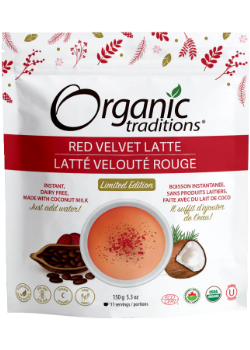
Red Velvet Latte - 150g - Organic Traditions
$23.99
Organic Traditions Red Velvet Latte - 150g - Organic Traditions is a dietary supplement in powder form, intended for adults as part of a daily wellness routine.
Red Velvet Latte from Organic Traditions is a healthy twist on the decadent treat we all know and love. As an instant superfood latte, Red Velvet Latte combines organic cacao powder which is rich in magnesium with dietary nitrate packed organic beet root powder. For a limited time you can enjoy Red Velvet Latte by simply blending 1.5 tbsp with 6oz of hot water. [POWDER]
Nutritional value per 1.5tbsp (13g):
Calories 60
Total Fat 6g
saturated fat 3g
trans fat 0g
Cholesterol 0mg
Sodium 110mg
Total Carbohydrate 6g
Dietray Fibre 2g
Total Sugars 4g
Added Sugars 3g
Protein 1g
Vitamin D 0mcg
Calcium 20mg
Iron 0.2mg
Phosphorus 20mg
Magnesium 15mg
Ingredients:
Organic Coconut Milk Powder, Organic Palm Sugar, Organic Gum Acacia, Organic Cacao Powder, Organic Beet Powder, Sea Salt, Organic Chocolate Flavour, Organic Vanilla Flavour
Important Information:
Packaged in a facility with tree nuts and sesame present. Contains an oxygen absorber. Do not consume.
Dosage
Combine 1.5 tablespoons with 6 oz. of warm or cold water or your milk of choice. Blend and enjoy.
It’s Not A Trend, It’s a Tradition... Naturally
Organic Traditions Fibre Flow range offers an easy and delicious way to support daily digestive health and increase fibre intake, with options like
Fibre Flow (Strawberry),
Fibre Flow (Unflavoured),
Fibre Flow (Yuzu Lime),
and
Fibre Flow (Variety Pack),
all made with clean, plant-based ingredients to support gut wellness.
The functional latte collection includes nourishing blends such as
Matcha Latte With Probiotics,
Turmeric Latte With Probiotics And Saffron,
Beet Latte With Probiotics,
Chocolate Latte With Ashwagandha And Probiotics,
Lavender Latte,
Pumpkin Spice Latte,
Holiday Spice Latte,
Mint Chocolate Latte,
and
Yerba Mate Mint Latte With Matcha And Probiotics,
delivering targeted benefits for energy, immunity, relaxation, and overall wellness.
Shop these high-quality superfoods right here at ca
Antioxidants
If there's a fountain of youth out there, antioxidants are it!
What are they?
Antioxidants are a large class of substances that help to neutralize free radicals. Free radicals are unstable molecules with an unpaired electron that are extremely reactive, and damage surrounding cell membranes, fats, and fat-soluble vitamins and nutrients. We encounter free radicals through environmental exposures, such as cigarette smoke, air pollution, processed foods, and ultraviolet radiation from the sun (UV rays).
What are the effects of free radicals?
Because of the highly reactive nature of free radicals, they can cause damage to any aspect of our cells and tissues. When the damage affects the cellular DNA, cell growths can result. When the damage is to cell membranes and nutrients, an inflammatory response results, which can cause a wide variety of different diseases. Eventually, with prolonged free radical attack, the body begins to break down and this results in the physical signs of aging.
What do they do?
Antioxidants play a huge role in our everyday cellular processes. Because of their far-reaching effects, it is difficult to study the effects of supplementation directly. Instead, research has focused on what occurs when antioxidant levels are low and oxidative stress becomes high in the body. This condition has been associated with stroke, cardiovascular disease, neurodegenerative disease, arthritis, Parkinson's, Alzheimer's, diabetes, and the physical signs of aging. Thus, it seems rational to suppose that increasing the intake of antioxidants can help to protect against the development of these conditions. Because of their ability to neutralize free radicals, antioxidants act as guardians in our bodies by protecting our cells, DNA, and nutrients from attack. Thus, antioxidants almost act as a "fountain of youth" by protecting us from the physical causes of aging and many diseases.
Antioxidants
Some examples of the better sources of antioxidants are listed below. Please note that fruits and vegetables naturally contain varying combinations and concentrations of many of the vitamins and nutrients listed here:
Vitamin A
This vitamin is required for the creation of the molecules in the back of our eyes responsible for vision. It also plays a role in blood cell development, immunity, and skin health.
Vitamin C
This vitamin speeds tissue growth and repair, supports hormone production, increases immune system functioning, protects the body from toxins and supports optimal cell growth. It also regulates cholesterol, blood pressure and blood clotting.
Vitamin E
Is a class of molecules that act as powerful antioxidants that can prevent, and treat, many conditions associated with aging such as: cardiovascular disease, cataracts, and Alzheimer's.
Alpha Lipoic Acid
Alpha lipoic acid is a potent dual solubility antioxidant and mitochondrial coenzyme that aids in the burning of glucose to form energy (as ATP). It is soluble in both fats and water, and aids in blood sugar control, and liver detoxification. It also helps to regenerate other antioxidants so they can continue to function even after they have been used once.
Carotenoids
This class of molecules is responsible for much of our vision, and greatly benefits
eye health. Some examples of common carotenoids are: astaxanthin, zeaxanthin, lutein,
lycopene
and beta-carotene.
CoEnzyme Q10 (CoQ10)
CoQ10 plays a role in the prevention of a number of cardiovascular diseases such as: heart attacks, strokes, high blood pressure, and
high cholesterol.
Super Oxide Dysmutase (SOD)
This enzyme is present in each of our cells and is responsible for converting the free radical superoxide into hydrogen peroxide and oxygen. It plays a huge role as an antioxidant and anti-inflammatory molecule.
Glutathione
This peptide is found in our liver and plays a large role in our detoxification pathways. It is used to change toxic chemicals and metabolic byproducts into harmless substances for excretion from the body.
Matcha
Like super-concentrated
green tea, matcha helps to provide a massive dose of antioxidants that is the equivalent to drinking 10 cups of regular green tea!
Melatonin
This naturally occurring hormone is released in our brain and is responsible for the feeling we refer to as "sleepy". Levels decline with age, and it is theorized that supplementation can help reverse the effects of aging.
Superfruits
These fruits contain such high levels of antioxidants by weight that they have earned the title "superfruit". Some examples of superfruits are: açaí berry, goji berry, noni fruit, and sea-buckthorn.
Carefully SelectedShips to the U.S.Wellness EssentialsTrusted Brands
Product Details
Antioxidants
If there's a fountain of youth out there, antioxidants are it!
What are they?
Antioxidants are a large class of substances that help to neutralize free radicals. Free radicals are unstable molecules with an unpaired electron that are extremely reactive, and damage surrounding cell membranes, fats, and fat-soluble vitamins and nutrients. We encounter free radicals through environmental exposures, such as cigarette smoke, air pollution, processed foods, and ultraviolet radiation from the sun (UV rays).
What are the effects of free radicals?
Because of the highly reactive nature of free radicals, they can cause damage to any aspect of our cells and tissues. When the damage affects the cellular DNA, cell growths can result. When the damage is to cell membranes and nutrients, an inflammatory response results, which can cause a wide variety of different diseases. Eventually, with prolonged free radical attack, the body begins to break down and this results in the physical signs of aging.
What do they do?
Antioxidants play a huge role in our everyday cellular processes. Because of their far-reaching effects, it is difficult to study the effects of supplementation directly. Instead, research has focused on what occurs when antioxidant levels are low and oxidative stress becomes high in the body. This condition has been associated with stroke, cardiovascular disease, neurodegenerative disease, arthritis, Parkinson's, Alzheimer's, diabetes, and the physical signs of aging. Thus, it seems rational to suppose that increasing the intake of antioxidants can help to protect against the development of these conditions. Because of their ability to neutralize free radicals, antioxidants act as guardians in our bodies by protecting our cells, DNA, and nutrients from attack. Thus, antioxidants almost act as a "fountain of youth" by protecting us from the physical causes of aging and many diseases.
Antioxidants
Some examples of the better sources of antioxidants are listed below. Please note that fruits and vegetables naturally contain varying combinations and concentrations of many of the vitamins and nutrients listed here:
Vitamin A
This vitamin is required for the creation of the molecules in the back of our eyes responsible for vision. It also plays a role in blood cell development, immunity, and skin health.
Vitamin C
This vitamin speeds tissue growth and repair, supports hormone production, increases immune system functioning, protects the body from toxins and supports optimal cell growth. It also regulates cholesterol, blood pressure and blood clotting.
Vitamin E
Is a class of molecules that act as powerful antioxidants that can prevent, and treat, many conditions associated with aging such as: cardiovascular disease, cataracts, and Alzheimer's.
Alpha Lipoic Acid
Alpha lipoic acid is a potent dual solubility antioxidant and mitochondrial coenzyme that aids in the burning of glucose to form energy (as ATP). It is soluble in both fats and water, and aids in blood sugar control, and liver detoxification. It also helps to regenerate other antioxidants so they can continue to function even after they have been used once.
Carotenoids
This class of molecules is responsible for much of our vision, and greatly benefits
eye health. Some examples of common carotenoids are: astaxanthin, zeaxanthin, lutein,
lycopene
and beta-carotene.
CoEnzyme Q10 (CoQ10)
CoQ10 plays a role in the prevention of a number of cardiovascular diseases such as: heart attacks, strokes, high blood pressure, and
high cholesterol.
Super Oxide Dysmutase (SOD)
This enzyme is present in each of our cells and is responsible for converting the free radical superoxide into hydrogen peroxide and oxygen. It plays a huge role as an antioxidant and anti-inflammatory molecule.
Glutathione
This peptide is found in our liver and plays a large role in our detoxification pathways. It is used to change toxic chemicals and metabolic byproducts into harmless substances for excretion from the body.
Matcha
Like super-concentrated
green tea, matcha helps to provide a massive dose of antioxidants that is the equivalent to drinking 10 cups of regular green tea!
Melatonin
This naturally occurring hormone is released in our brain and is responsible for the feeling we refer to as "sleepy". Levels decline with age, and it is theorized that supplementation can help reverse the effects of aging.
Superfruits
These fruits contain such high levels of antioxidants by weight that they have earned the title "superfruit". Some examples of superfruits are: açaí berry, goji berry, noni fruit, and sea-buckthorn.
🌿
Daily Wellness
Easy to add to your everyday health routine.
✅
Carefully Selected
Chosen with quality and customer needs in mind.
💊
Simple to Use
Designed for convenient daily supplementation.
🚚
Ships to the U.S.
Fast, reliable shipping to U.S. customers.
Choosing a selection results in a full page refresh.