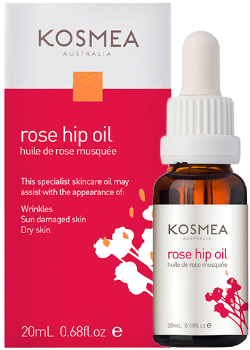
ROSE HIP OIL FOR HEALTHY SKINKosmea's Certified Organic Rose Hip Oil helps to repair and regenerate damaged skin tissue. Safe for the whole family and all skin types Rose Hip Oil contains essential fatty acids, vitamins, and antioxidants, that are easily absorbed into the skin. Once applied, Rose Hip Oil will leave your skin feeling smoother and softer and over time wrinkles, scars and stretch marks may begin to fade leaving your skin with a healthy glow. [LIQUID]
Ingredients:
100% Certified Organic Rosa Canina Fruit Oil
Important Information:
Topical use only. Avoid contact with the eyes. Do not apply on an open wound.
Dosage
Apply 2-3 drops to slightly damp skin morning and night after cleansing and before applying your daily moisturizer. Applying to slightly damp skin will allow for the oil to absorb quicker and deeper into the skin.
Kosmea natural skin care is an Australian based company founded on the healing properties of certified organic rosehip oil. Rosehip oil is rich in vitamin A or trans-retinoic acid. The latest research reveals that trans-retinoic acid could help prevent premature ageing caused due to sun exposure. Kosmea products include Face and Body Oils and Oil Serums, Body Mist and Cream.
Skin Health
The skin is the largest organ in the body. It has several important functions. It acts as a barrier to the external environment including harmful microbes, chemicals and radiation. It allows the exchange of water and some nutrients. It can eliminate toxins, minerals and other substances that have built up inside the body.
It modifies vitamins, like
vitamin D, into more active forms. It helps to regulate body temperature. It is a monitor as to the health of our internal environment because the skin is one of the last organs to be nourished. Signs of deficiency often show in the skin before other areas of the body have been affected.
Healthy skin also impacts on our mental and emotional well-being because skin is one of the first things we notice when we see someone. Skin can be used to judge a person’s age, social status and health. Billions of dollars are spent each year in the cosmetics and personal hygiene industry. A great majority of this is to make our skin look healthier and more youthful. What can we do naturally to help our skin so that it will be healthy and maintain its youthful appearance?
Skin is made up of several layers. The epidermal outer layer contains keratinized skin cells. It is the fibrous, protective shield for the body. The epidermis is firmly attached to inner layers of irregular connective tissue, the dermis. The dermis contains
collagen, the structural support, and elastin, the stretchy support. Only the dermis has blood supply, nutrients reach the outer skin layers only by diffusion.
Dry Skin
The skin is the largest organ in the body. Its function is to act as a barrier to the external environment, allow the exchange of water and to modify vitamins. Dry skin can be simple or complex.
Simple dry skin occurs when the skin is deficient in natural oils and fails to hold water in skin cells. Oil normally lubricates the skin and acts as a barrier to avoid excessive evaporation of water from the upper layers of the dermis.
Simple dry skin usually occurs in women under the age of 35. Complex dry skin lacks both oil and moisture. The
protein
components of the skin may be damaged from prolonged UV exposure. Complex dry skin tends to develop brown spots, fine lines and enlarged pores. Complex dry skin usually affects older adults and is associated with aging.
Dry skin appears dull, scaly, flaky, chapped or cracked, and develops fine lines and wrinkles more readily than healthy skin. It may feel tight after washing and be relieved when moisturizer is applied. It most commonly occurs on areas of the body that are exposed to the elements. It can be caused by nutrient deficiencies, dehydration, environmental factors (like dry heat, sun or wind), chemical use, cosmetics, excessive bathing and harsh soaps.
To fight dry skin topically, avoid chlorinated tap water for drinking and bathing. Stay out of the sun. Use gloves while handling any substance that irritates the skin. Avoid perfumes and colourings in laundry and personal hygiene products. Use glycerin and natural soaps to wash your body, face and hair. Take oatmeal baths to relieve itching.
Calendula or
vitamin E
cream or ointment or aloe vera gel can be used to nourish the skin. Steam the skin with herbs such as
chamomile,
lavender
or
peppermint.
Dietary change is important for nourishing the skin. Water. Water. Water. Eat foods high in
zinc
such as whole grains, sunflower seeds and raw nuts.
Eat lots of fruit, especially mango and apricot, for its water content and alpha-hydroxy acids. Sulphur rich foods like garlic, onions, eggs and asparagus, provide raw material for building skin proteins.
Essential fatty acids are a source of the good fats for the skin. Use cold pressed oils like flax, olive, sunflower and safflower. Avoid hydrogenated fats, fried foods, soft drinks, sugar, chocolate, junk foods, cigarettes and alcohol. Ask your health professional if the recommendation medication you are taking is contributing to your dry skin.
Carefully SelectedShips to the U.S.Wellness EssentialsTrusted Brands
Product Details
Skin Health
The skin is the largest organ in the body. It has several important functions. It acts as a barrier to the external environment including harmful microbes, chemicals and radiation. It allows the exchange of water and some nutrients. It can eliminate toxins, minerals and other substances that have built up inside the body.
It modifies vitamins, like
vitamin D, into more active forms. It helps to regulate body temperature. It is a monitor as to the health of our internal environment because the skin is one of the last organs to be nourished. Signs of deficiency often show in the skin before other areas of the body have been affected.
Healthy skin also impacts on our mental and emotional well-being because skin is one of the first things we notice when we see someone. Skin can be used to judge a person’s age, social status and health. Billions of dollars are spent each year in the cosmetics and personal hygiene industry. A great majority of this is to make our skin look healthier and more youthful. What can we do naturally to help our skin so that it will be healthy and maintain its youthful appearance?
Skin is made up of several layers. The epidermal outer layer contains keratinized skin cells. It is the fibrous, protective shield for the body. The epidermis is firmly attached to inner layers of irregular connective tissue, the dermis. The dermis contains
collagen, the structural support, and elastin, the stretchy support. Only the dermis has blood supply, nutrients reach the outer skin layers only by diffusion.
Dry Skin
The skin is the largest organ in the body. Its function is to act as a barrier to the external environment, allow the exchange of water and to modify vitamins. Dry skin can be simple or complex.
Simple dry skin occurs when the skin is deficient in natural oils and fails to hold water in skin cells. Oil normally lubricates the skin and acts as a barrier to avoid excessive evaporation of water from the upper layers of the dermis.
Simple dry skin usually occurs in women under the age of 35. Complex dry skin lacks both oil and moisture. The
protein
components of the skin may be damaged from prolonged UV exposure. Complex dry skin tends to develop brown spots, fine lines and enlarged pores. Complex dry skin usually affects older adults and is associated with aging.
Dry skin appears dull, scaly, flaky, chapped or cracked, and develops fine lines and wrinkles more readily than healthy skin. It may feel tight after washing and be relieved when moisturizer is applied. It most commonly occurs on areas of the body that are exposed to the elements. It can be caused by nutrient deficiencies, dehydration, environmental factors (like dry heat, sun or wind), chemical use, cosmetics, excessive bathing and harsh soaps.
To fight dry skin topically, avoid chlorinated tap water for drinking and bathing. Stay out of the sun. Use gloves while handling any substance that irritates the skin. Avoid perfumes and colourings in laundry and personal hygiene products. Use glycerin and natural soaps to wash your body, face and hair. Take oatmeal baths to relieve itching.
Calendula or
vitamin E
cream or ointment or aloe vera gel can be used to nourish the skin. Steam the skin with herbs such as
chamomile,
lavender
or
peppermint.
Dietary change is important for nourishing the skin. Water. Water. Water. Eat foods high in
zinc
such as whole grains, sunflower seeds and raw nuts.
Eat lots of fruit, especially mango and apricot, for its water content and alpha-hydroxy acids. Sulphur rich foods like garlic, onions, eggs and asparagus, provide raw material for building skin proteins.
Essential fatty acids are a source of the good fats for the skin. Use cold pressed oils like flax, olive, sunflower and safflower. Avoid hydrogenated fats, fried foods, soft drinks, sugar, chocolate, junk foods, cigarettes and alcohol. Ask your health professional if the recommendation medication you are taking is contributing to your dry skin.
🌿
Daily Wellness
Easy to add to your everyday health routine.
✅
Carefully Selected
Chosen with quality and customer needs in mind.
💊
Simple to Use
Designed for convenient daily supplementation.
🚚
Ships to the U.S.
Fast, reliable shipping to U.S. customers.
Choosing a selection results in a full page refresh.