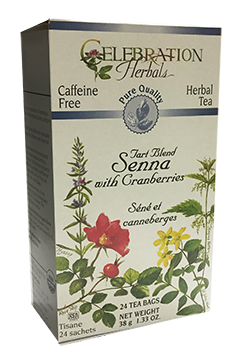
Senna With Cranberries Tea (Pure Quality) - 24 Tea Bags
$8.99
Celebration Herbals Senna With Cranberries Tea (Pure Quality) - 24 Tea Bags is a dietary supplement, intended for adults as part of a daily wellness routine.
Senna With Cranberries Tea from Celebration Herbals is made with Senna leaf, cranberries and hibiscus that have been carefully selected and thoroughly tested to ensure that the highest potency and flavour goes into every cup of tea. Senna is believed to be a natural and powerful laxative. Often combined with cinnamon, ginger, anise, and fennel, Celebration Herbals combined their Senna with premium cranberries and tart hibiscus for a unique and tasty herbal tea. [TEA BAGS]
Tea contains:
Senna Leaf (Cassia acutifolia), Dried Cranberries (Vaccinium macrocarpon), Hibiscus Flowers (Hibiscus sabdariffa)
Important Information:
Keep out of reach of children.
Dosage
Be sure that your water is slightly cooled from the boiling point when you pour it over your tea. If you desire a medicinal tea, be sure to use one tea bag per cup of hot water, cover and steep for 7-12 minutes. If you desire a pleasure tea or quick brew, use one teabag per cup of hot water. Pour water over teabags, cover, and let steep 3 to 5 minutes to taste.
Herbal Teas & Spices Without Added Flavourings Or Preservatives
Celebration Herbals, a family run company and the makers of fine herbal blended teas like: Milk Thistle Seed, Rosemary, Senna Leaf, St John's Wort, Turmeric Ginger Lemon Blends and Yerba Mate Teas. All teas are made from organically grown herbs and Celebration Herbals is dedicated to bringing you the best tasting tea.
SENNA
The use of senna as a cathartic or powerful laxative, has been accepted by both the conventional and herbal healthcare community...
Going back as far as the 9th century, individuals have been using senna as a tea or in a powdered form for its medicinal properties.
Senna is native to northern Africa, parts of the Middle East and southern India. Its name has Arabic origins and first record of senna and its medicinal use comes from the writings of two Arabic physicians.
Traditional Chinese medicine
recommends Senna as a treatment for Atherosclerosis,
constipation, as well as "clearing heat" in the liver and "brightening the eyes". In Indian Ayurvedic medicine it is known as a remedy for anemia, jaundice and
bronchitis. Other indications include dysentry, ringworm, fever,
hemorrhoids, wounds and
dermatitis.
Today, senna is almost exclusively used for the treatment of constipation. Senna's active constituents, anthranoid glycosides, are initially inactive while they pass through the stomach and small intestine. Once these compounds reach the large intestine, however, they are activated and irritate the intestinal lining causing the muscles in the intestinal wall to contract vigorously and rhythmically in waves. Fluid uptake by the cells of the large intestine is also prohibited by these glycosides, allowing for soft and easily passed bowel movements.
Senna is such as powerful laxative that it can cause sharp stomach pains and cramping even at recommended dosages. It is often combined with ginger, mint or cinnamon to relax the muscles of the stomach and gastrointestinal tract and prevent cramping. These herbs also make senna more palatable, as it has a bitter taste which most individuals find unpleasant. If used chronically, senna can cause electrolyte imbalances, and dependency. It is not recommended for long term use and should always be used under the guidance of a healthcare provider. The recommended daily intake of Senna is 600 mg 2 grams/day. Senna should always be taken with water. As with any fibre supplement, Senna can alter the absorption of many supplements as well as recommendation and OTC medications. Take away from these items.
Carefully SelectedShips to the U.S.Wellness EssentialsTrusted Brands
Product Details
SENNA
The use of senna as a cathartic or powerful laxative, has been accepted by both the conventional and herbal healthcare community...
Going back as far as the 9th century, individuals have been using senna as a tea or in a powdered form for its medicinal properties.
Senna is native to northern Africa, parts of the Middle East and southern India. Its name has Arabic origins and first record of senna and its medicinal use comes from the writings of two Arabic physicians.
Traditional Chinese medicine
recommends Senna as a treatment for Atherosclerosis,
constipation, as well as "clearing heat" in the liver and "brightening the eyes". In Indian Ayurvedic medicine it is known as a remedy for anemia, jaundice and
bronchitis. Other indications include dysentry, ringworm, fever,
hemorrhoids, wounds and
dermatitis.
Today, senna is almost exclusively used for the treatment of constipation. Senna's active constituents, anthranoid glycosides, are initially inactive while they pass through the stomach and small intestine. Once these compounds reach the large intestine, however, they are activated and irritate the intestinal lining causing the muscles in the intestinal wall to contract vigorously and rhythmically in waves. Fluid uptake by the cells of the large intestine is also prohibited by these glycosides, allowing for soft and easily passed bowel movements.
Senna is such as powerful laxative that it can cause sharp stomach pains and cramping even at recommended dosages. It is often combined with ginger, mint or cinnamon to relax the muscles of the stomach and gastrointestinal tract and prevent cramping. These herbs also make senna more palatable, as it has a bitter taste which most individuals find unpleasant. If used chronically, senna can cause electrolyte imbalances, and dependency. It is not recommended for long term use and should always be used under the guidance of a healthcare provider. The recommended daily intake of Senna is 600 mg 2 grams/day. Senna should always be taken with water. As with any fibre supplement, Senna can alter the absorption of many supplements as well as recommendation and OTC medications. Take away from these items.
🌿
Daily Wellness
Easy to add to your everyday health routine.
✅
Carefully Selected
Chosen with quality and customer needs in mind.
💊
Simple to Use
Designed for convenient daily supplementation.
🚚
Ships to the U.S.
Fast, reliable shipping to U.S. customers.
Choosing a selection results in a full page refresh.