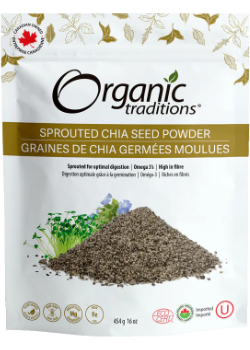
Organic Traditions Sprouted Chia Seed Powder (Organic) - 454g is a dietary supplement in powder form, intended for adults as part of a daily wellness routine.
ENJOY CHIA IN ANY RECIPE WITH THIS POWDER FROM ORGANIC TRADITIONSORGANIC ORGANIC COLD MILLED SPROUTED CHIA SEED POWDER Ready-to-use Chia Seed Powder is a good source of calcium and fibre with 3 grams of Omega-3 per serving! [POWDER]
Dosage
15g (1-1/2 tablespoon). Add 1-2 Tablespoons to any beverage or recipe.
It’s Not A Trend, It’s a Tradition... Naturally
Organic Traditions Fibre Flow range offers an easy and delicious way to support daily digestive health and increase fibre intake, with options like
Fibre Flow (Strawberry),
Fibre Flow (Unflavoured),
Fibre Flow (Yuzu Lime),
and
Fibre Flow (Variety Pack),
all made with clean, plant-based ingredients to support gut wellness.
The functional latte collection includes nourishing blends such as
Matcha Latte With Probiotics,
Turmeric Latte With Probiotics And Saffron,
Beet Latte With Probiotics,
Chocolate Latte With Ashwagandha And Probiotics,
Lavender Latte,
Pumpkin Spice Latte,
Holiday Spice Latte,
Mint Chocolate Latte,
and
Yerba Mate Mint Latte With Matcha And Probiotics,
delivering targeted benefits for energy, immunity, relaxation, and overall wellness.
Shop these high-quality superfoods right here at ca
CHIA (SALVIA HISPANICA)
Ch-ch-ch-chia. Did you know that the once popular commercial product known as the chia pet was actually the new super food? That's right, Chia is an excellent source of
omega 3
fatty acids,
protein,
antioxidants, and both soluble and insoluble fibre. p.s. Please don't eat your chia pet...
Chia seeds are derived from the plant called Salvia hispanica
Salvia hispanica is a flowering plant in the mint family and is native to central and southern Mexico and Guatemala. Chia was considered a staple food of the Aztec cultures, who would say that one small serving was all a man needed to run for a day. Australia is now one of the largest producers of chia in the world.
Chia seeds are high in omega 3 fatty acids, found normally from fish sources. It is both qualitatively and quantitatively high in complete protein, both soluble and insoluble fibre, as well as anti-oxidants,
magnesium, calcium, iron and
vitamin C.
A study conducted on Salba, a specific brand of Chia, found that 3.5 oz of Salba contained as much omega 3 as 28 oz of salmon, as much calcium as 3 cups of milk, and as much iron as 5 cups of raw spinach. Chia is also gluten free, a bonus for those with gluten sensitivities who have a hard time increasing fibre consumption. All that nutrition and it's also low in calories.
Studies have shown its use in the treatment of Type II Diabetes!
As a high source of fibre, it regulates blood sugar and insulin release by slowing digestion and therefore preventing the sugar "spikes" that are common after meals. Similarly, chia is said to be complimentary to exercise programs aimed at weight loss, as it keeps individuals feeling satisfied longer and therefore decreases total caloric consumption. It has also been shown to reduce inflammation (It decrease C- reactive protein, a marker of inflammation in our blood.), decrease blood pressure and has blood thinning effects, making it useful in the treatment and prevention of atherosclerosis, stroke and myocardial infarction (heart attack).
Chia can be consumed whole in seed form, ground and added to baking, or sprouted and used in salads and sandwiches. In Mexico, the seeds are soaked until they become gelatinous, and made into a drink called a chia fresco. Be cautious when buying chia that you are buying it from an agriculturally sound company, as to avoid high pesticide consumption.
Sprouting Foods:
Sprouting is the process of soaking, draining and then rinsing seeds at regular intervals until they germinate or "sprout". Sprouting can be done commercially, or in the privacy of your own home quite easily. Common beans for sprouting include mung beans,
alfalfa, chickpeas, barley, lentils and azuki beans.
What are some benefits of sprouting?
Very simply put, sprouts offer the highest amount and quality of vitamins, minerals, proteins, fibre and
enzymes
per unit of calorie. Among its many nutritional claims, sprouting is shown to increase content of B vitamins,
vitamin E
and A. Some argue they are the most nutritious food we can eat. As sprouting or germination occurs, the seed is transformed into only essential content, while the nutritionally undesirable content is broken down, producing energy or power to change from seed to sprout. In this case, the protein or amino acid content is increased as seed becomes sprout, while the carbohydrate content is decreased or broken down to provide the seed with the energy to grow.
Sprouts are a living food, they continue to gain in vitamin and nutritional content even after they are harvested and to a certain extent when refrigerated. Compare that to store bought vegetables which start to lose nutritional content as soon as they are picked, and at times long before they arrive at the store. As an added benefit, sprouts are very easily assimilated and digested,while improving the overall efficiency of digestion. This is particularly important in the case of protein, which is often requires more work to digest. Sprouting significantly increases the protein content of many beans, while making it one of the easiest forms of protein to digest.
A study conducted on Salba, a specific brand of Chia, found that 3.5 oz of Salba contained as much omega 3 as 28 oz of salmon, as much calcium as 3 cups of milk, and as much iron as 5 cups of raw spinach. Chia is also gluten free, a bonus for those with gluten sensitivities who have a hard time increasing fibre consumption. All that nutrition and it's also low in calories.
How to do it yourself!
The most important tip when sprouting is to make sure that the container you choose to use allows water to drain from it. A jar with a mesh or cheese cloth top works well. If the sprouts are not drained in the recommended time and allowed to sit in the water, they will quickly rot. Each seed has slightly varied soaking and sprouting schedules, but in general, you want to initially soak the seeds (in the case of mung beans, you soak for anywhere from 8-14 hours), then drain the seeds and let them sit. Rinse and drain the beans 2-3 times/day until the beans have sprouted. (Mung beans only take about 1 day to sprout.). You may put them in the fridge to prevent rottingonce sprouted for a maximum of two days. If not used within three days, the seeds usually go sour. As with most things, the fresher the better, so try to eat your sprouts as soon as they are ready add them to your salad, or make a live granola with sprouts, soaked nuts and dried fruits.
Sprouting is not dependent on weather or time of year. Sprouts can be grown from January to December. Sprouting does not work well in full sun, as the seeds tend to dry out. A window sill with indirect sun is the perfect spot to sprout. Mung beans can actually be grown in the dark, although it has been reported they lose some of their nutritional value.
Carefully SelectedShips to the U.S.Wellness EssentialsTrusted Brands
Product Details
CHIA (SALVIA HISPANICA)
Ch-ch-ch-chia. Did you know that the once popular commercial product known as the chia pet was actually the new super food? That's right, Chia is an excellent source of
omega 3
fatty acids,
protein,
antioxidants, and both soluble and insoluble fibre. p.s. Please don't eat your chia pet...
Chia seeds are derived from the plant called Salvia hispanica
Salvia hispanica is a flowering plant in the mint family and is native to central and southern Mexico and Guatemala. Chia was considered a staple food of the Aztec cultures, who would say that one small serving was all a man needed to run for a day. Australia is now one of the largest producers of chia in the world.
Chia seeds are high in omega 3 fatty acids, found normally from fish sources. It is both qualitatively and quantitatively high in complete protein, both soluble and insoluble fibre, as well as anti-oxidants,
magnesium, calcium, iron and
vitamin C.
A study conducted on Salba, a specific brand of Chia, found that 3.5 oz of Salba contained as much omega 3 as 28 oz of salmon, as much calcium as 3 cups of milk, and as much iron as 5 cups of raw spinach. Chia is also gluten free, a bonus for those with gluten sensitivities who have a hard time increasing fibre consumption. All that nutrition and it's also low in calories.
Studies have shown its use in the treatment of Type II Diabetes!
As a high source of fibre, it regulates blood sugar and insulin release by slowing digestion and therefore preventing the sugar "spikes" that are common after meals. Similarly, chia is said to be complimentary to exercise programs aimed at weight loss, as it keeps individuals feeling satisfied longer and therefore decreases total caloric consumption. It has also been shown to reduce inflammation (It decrease C- reactive protein, a marker of inflammation in our blood.), decrease blood pressure and has blood thinning effects, making it useful in the treatment and prevention of atherosclerosis, stroke and myocardial infarction (heart attack).
Chia can be consumed whole in seed form, ground and added to baking, or sprouted and used in salads and sandwiches. In Mexico, the seeds are soaked until they become gelatinous, and made into a drink called a chia fresco. Be cautious when buying chia that you are buying it from an agriculturally sound company, as to avoid high pesticide consumption.
Sprouting Foods:
Sprouting is the process of soaking, draining and then rinsing seeds at regular intervals until they germinate or "sprout". Sprouting can be done commercially, or in the privacy of your own home quite easily. Common beans for sprouting include mung beans,
alfalfa, chickpeas, barley, lentils and azuki beans.
What are some benefits of sprouting?
Very simply put, sprouts offer the highest amount and quality of vitamins, minerals, proteins, fibre and
enzymes
per unit of calorie. Among its many nutritional claims, sprouting is shown to increase content of B vitamins,
vitamin E
and A. Some argue they are the most nutritious food we can eat. As sprouting or germination occurs, the seed is transformed into only essential content, while the nutritionally undesirable content is broken down, producing energy or power to change from seed to sprout. In this case, the protein or amino acid content is increased as seed becomes sprout, while the carbohydrate content is decreased or broken down to provide the seed with the energy to grow.
Sprouts are a living food, they continue to gain in vitamin and nutritional content even after they are harvested and to a certain extent when refrigerated. Compare that to store bought vegetables which start to lose nutritional content as soon as they are picked, and at times long before they arrive at the store. As an added benefit, sprouts are very easily assimilated and digested,while improving the overall efficiency of digestion. This is particularly important in the case of protein, which is often requires more work to digest. Sprouting significantly increases the protein content of many beans, while making it one of the easiest forms of protein to digest.
A study conducted on Salba, a specific brand of Chia, found that 3.5 oz of Salba contained as much omega 3 as 28 oz of salmon, as much calcium as 3 cups of milk, and as much iron as 5 cups of raw spinach. Chia is also gluten free, a bonus for those with gluten sensitivities who have a hard time increasing fibre consumption. All that nutrition and it's also low in calories.
How to do it yourself!
The most important tip when sprouting is to make sure that the container you choose to use allows water to drain from it. A jar with a mesh or cheese cloth top works well. If the sprouts are not drained in the recommended time and allowed to sit in the water, they will quickly rot. Each seed has slightly varied soaking and sprouting schedules, but in general, you want to initially soak the seeds (in the case of mung beans, you soak for anywhere from 8-14 hours), then drain the seeds and let them sit. Rinse and drain the beans 2-3 times/day until the beans have sprouted. (Mung beans only take about 1 day to sprout.). You may put them in the fridge to prevent rottingonce sprouted for a maximum of two days. If not used within three days, the seeds usually go sour. As with most things, the fresher the better, so try to eat your sprouts as soon as they are ready add them to your salad, or make a live granola with sprouts, soaked nuts and dried fruits.
Sprouting is not dependent on weather or time of year. Sprouts can be grown from January to December. Sprouting does not work well in full sun, as the seeds tend to dry out. A window sill with indirect sun is the perfect spot to sprout. Mung beans can actually be grown in the dark, although it has been reported they lose some of their nutritional value.
🌿
Daily Wellness
Easy to add to your everyday health routine.
✅
Carefully Selected
Chosen with quality and customer needs in mind.
💊
Simple to Use
Designed for convenient daily supplementation.
🚚
Ships to the U.S.
Fast, reliable shipping to U.S. customers.
Choosing a selection results in a full page refresh.