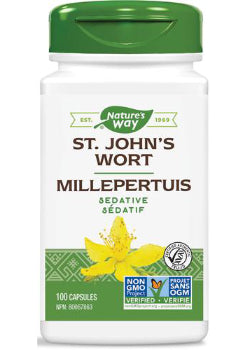
ST. JOHN'S WORT HERB 350 MG POTENCY FROM NATURE'S WAY.Derived from the stem, leaf and flower, Hypericum perforatum (St. John's Wort) is native to Europe and is widely used there as a remedy for mild depression. Nature's Way St. John's Wort is standardized to.3% Hypericin and contains both extract and herb to ensure optimal potency. St. John's Wort is not only used for its anti-depressant effects, it is also recommended for nerve pain and stress reduction. [CAPSULE]
Each capsule contains:
St. John's Wort (Hypericum perforatum) herb top 350mg
Non-Medicinal Ingredients:
Hydroxypropyl methylcellulose, microcrystalline cellulose.
Important Information:
Avoid prolonged exposure to sunlight, ultraviolet light (UV) or UV therapy. Consult a health care practitioner prior to use if you are taking anti-anxiety medications, seizure medications, antihistamines, bronchodilators, muscle relaxants and/or opiates, if you are pregnant or breastfeeding. or if symptoms persist or worsen. Do not use if you are taking anti-cancer medications, blood thinners, antidepressant medications (e.g. selective serotonin reuptake inhibitors (SSRI)), anti-HIV agents, cardiovascular medication, immunosuppressant and/or contraceptive medications. Hypersensitivity, such as an allergy, has been known to occur; in which case, discontinue use. Some people may experience mild gastrointestinal disturbances, nausea, restlessness and/or headaches. Keep out of reach of children.
Dosage
Adults take 1 capsule 3 times per day.
Quality Herbals For Over 40 Years.
For over 40 years, Nature’s Way has built a reputation for quality and trust. Nature's Way is committed to using pure ingredients, backed by rigorous testing, which has earned them a reputation as one of Canada’s most trusted natural product brands. Shop Nature's Way Canada Fenugreek, Probiotics, Astragalus, Liquid Coconut Oil, Echinacea and other natural herbal remedies.
What is St. John's Wort?
St. John's wort is one of the top selling natural health products. It is also one of the most well studied plants, with many scientific trials attesting to its efficacy as an infection fighter, anti-inflammatory, wound healer and anti-depressant. Its medicinal value has been attributed to a chemical called hypericin. Hypericin has shown to have anti-viral activity, including anti-HIV activity, by stimulating killer T cells.
T cells are immune cells that respond to
viral infections. It inhibits the hormone cascade that results in inflammation, heals tissue and improves nerve conduction. As an anti-depressant hypericin increases the amount of neurotransmitters in the brain, including
serotonin. Serotonin is involved in the brain's response of well-being, hunger and many other sensations. Trials of St. John's wort versus recommendation antidepressants have given clinical backing to the use of this herb for mild top moderate depression. St. John's wort is recommended by natural health practitioners for a variety of other conditions including, internally, for viral infections and anxiety, and externally for wound healing,
skin infections, nerve pain, bruises and muscle soreness.
Depression
Depression is a common medical problem that affects millions of people each year. It is a signal that one's coping mechanisms have been overwhelmed. Depression can be triggered by any perceived negative change in one's life or a negative reaction to a situation.
Physical causes of depression include nutritional deficiencies, biochemical / hormonal imbalances, substance abuse, hypothyroidism, liver disease and anemia. In these cases correcting the physical problem will result in alleviation of depression.
Symptoms of depression vary between individuals. Common signs and symptoms include
insomnia
or hypersomnia, weight loss or gain, digestive disturbances, headaches, bowel changes, low libido and frequent colds and flus. Severe depression can lead to hallucinations and suicidal ideation. Types of depression include seasonal affective disorder (SAD), a type of depression that affects people in the winter months because of dark and damp weather. Post-partum depression is a type of depression suffered by some women after childbirth. Manic-depressive disorder is characterized by severe depressive episodes alternating with periods of euphoria and exhilaration
Conventional treatment of depression includes the use of antidepressant medications. There are several types of this medication but all of them work by altering the way the brain uses the neurochemicals serotonin, dopamine and norepinephrine. Side effects vary depending on the type of medications that are used. Always consult a health professional before starting natural therapies if you are on antidepressant medications. Conventional treatment can also involve counselling. Music and colour therapy as well as biofeedback have also been studied for depression.
Lifestyle changes to help with depression include regular exercise, proper rest and undertaking enjoyable mental activities. Start a hobby that you enjoy. Learn to deal with stress in positive ways. Learn the triggers for your depression and how to avoid them. Dietary treatment of depression begins by an assessment of nutritional status and toxin levels. Deficiencies of nutrients can alter the functioning of the nervous system. A build-up of toxins in the brain can lead to symptoms that mimic depression. Balancing blood sugar is important because fluctuations can cause depression. Avoid caffeinated drinks, alcohol, tobacco, saturated fats, artificial sweeteners, wheat, refined flour products, refined sugar products and any foods you are sensitive to. Eat a whole foods diet including fresh fruits and vegetables, whole grains (especially oats) and nutritional yeast. Include foods that are high in tryptophan, the precursor to serotonin. They are ocean going fish, eggs, nuts and wheat germ.
Help Fight the Blues By:
-Reducing Sugar intake
-Eating a diet rich in fruit and vegetables
-Using herbs to help boost neurotransmitter production
-Using stress reduction techniques such as yoga or tai chi
-Doing exercise you enjoy
-Consuming enough essential fatty acids
-Talking with a counselor
-Supporting your adrenals with herbs and nutrients
-Getting your thyroid tested
Carefully SelectedShips to the U.S.Wellness EssentialsTrusted Brands
Product Details
What is St. John's Wort?
St. John's wort is one of the top selling natural health products. It is also one of the most well studied plants, with many scientific trials attesting to its efficacy as an infection fighter, anti-inflammatory, wound healer and anti-depressant. Its medicinal value has been attributed to a chemical called hypericin. Hypericin has shown to have anti-viral activity, including anti-HIV activity, by stimulating killer T cells.
T cells are immune cells that respond to
viral infections. It inhibits the hormone cascade that results in inflammation, heals tissue and improves nerve conduction. As an anti-depressant hypericin increases the amount of neurotransmitters in the brain, including
serotonin. Serotonin is involved in the brain's response of well-being, hunger and many other sensations. Trials of St. John's wort versus recommendation antidepressants have given clinical backing to the use of this herb for mild top moderate depression. St. John's wort is recommended by natural health practitioners for a variety of other conditions including, internally, for viral infections and anxiety, and externally for wound healing,
skin infections, nerve pain, bruises and muscle soreness.
Depression
Depression is a common medical problem that affects millions of people each year. It is a signal that one's coping mechanisms have been overwhelmed. Depression can be triggered by any perceived negative change in one's life or a negative reaction to a situation.
Physical causes of depression include nutritional deficiencies, biochemical / hormonal imbalances, substance abuse, hypothyroidism, liver disease and anemia. In these cases correcting the physical problem will result in alleviation of depression.
Symptoms of depression vary between individuals. Common signs and symptoms include
insomnia
or hypersomnia, weight loss or gain, digestive disturbances, headaches, bowel changes, low libido and frequent colds and flus. Severe depression can lead to hallucinations and suicidal ideation. Types of depression include seasonal affective disorder (SAD), a type of depression that affects people in the winter months because of dark and damp weather. Post-partum depression is a type of depression suffered by some women after childbirth. Manic-depressive disorder is characterized by severe depressive episodes alternating with periods of euphoria and exhilaration
Conventional treatment of depression includes the use of antidepressant medications. There are several types of this medication but all of them work by altering the way the brain uses the neurochemicals serotonin, dopamine and norepinephrine. Side effects vary depending on the type of medications that are used. Always consult a health professional before starting natural therapies if you are on antidepressant medications. Conventional treatment can also involve counselling. Music and colour therapy as well as biofeedback have also been studied for depression.
Lifestyle changes to help with depression include regular exercise, proper rest and undertaking enjoyable mental activities. Start a hobby that you enjoy. Learn to deal with stress in positive ways. Learn the triggers for your depression and how to avoid them. Dietary treatment of depression begins by an assessment of nutritional status and toxin levels. Deficiencies of nutrients can alter the functioning of the nervous system. A build-up of toxins in the brain can lead to symptoms that mimic depression. Balancing blood sugar is important because fluctuations can cause depression. Avoid caffeinated drinks, alcohol, tobacco, saturated fats, artificial sweeteners, wheat, refined flour products, refined sugar products and any foods you are sensitive to. Eat a whole foods diet including fresh fruits and vegetables, whole grains (especially oats) and nutritional yeast. Include foods that are high in tryptophan, the precursor to serotonin. They are ocean going fish, eggs, nuts and wheat germ.
Help Fight the Blues By:
-Reducing Sugar intake
-Eating a diet rich in fruit and vegetables
-Using herbs to help boost neurotransmitter production
-Using stress reduction techniques such as yoga or tai chi
-Doing exercise you enjoy
-Consuming enough essential fatty acids
-Talking with a counselor
-Supporting your adrenals with herbs and nutrients
-Getting your thyroid tested