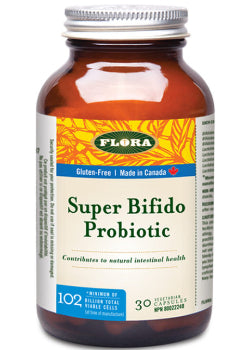
8 bacterial strains from a guaranteed minimum of 102 billion viable cells.
Contains pure, concentrated living probiotic bacteria.
Formulated with selective strains that survive stomach acid.
High percentage of Bifidobacteria.
Only contains medicinal human strains for those with sensitive digestive systems.
8 bacterial strains from a guaranteed minimum of 102 billion viable cells.
Contains pure, concentrated living probiotic bacteria.
Formulated with selective strains that survive stomach acid.
High percentage of Bifidobacteria.
Only contains medicinal human strains for those with sensitive digestive systems.
Quantity
Couldn't load pickup availability
Super Bifido Plus Probiotic (102 Billion) - 30 V-Caps
$100.67
Udo's Choice Super Bifido Plus Probiotic (102 Billion) - 30 V-Caps is a dietary supplement in capsule form, intended for adults as part of a daily wellness routine.
SUPER BIFIDO PLUS PROBIOTIC FROM FLORA CONTAINING 102 BILLION ACTIVE CELLS FROM 8 BACTERIAL STRAINSPoor diet, stress, antibiotics and more can upset the delicate balance of good and bad bacteria that exists in the intestines, leading to yeast overgrowth, digestive concerns and the possibility of more serious health conditions. Flora Super Bifido Plus Probiotic supplies 102 billion active cells from 8 different friendly bacteria strains including Lactobacillus acidophilus and Bifidobacterium bifidum. Udo's Choice Super Bifido Plus Probiotic is specially formulated to restore a healthful environment in the intestines and is particularly beneficial for those aged 19 or older with sensitive digestive systems. [VCAPS]
Each capsule contains:
102 billion viable cells at the time of manufacture.
Bifidobacterium breve HA-129 27.45 billion
Bifidobacterium longum HA-135 12.2 billion
Bifidobacterium bifidum HA-132 9.15 billion
Lactobacillus casei HA-108 4.88 billion
Lactobacillus rhamnosus HA-111 2.44 billion
Lactobacillus acidophilus HA-122 1.83 billion
Lactobacillus plantarum HA-119 1.83 billion
Lactobacillus salivarius HA-118 1.22 billion
Non-Medicinal Ingredients:
Ascorbic acid, silicon dioxide, stearic acid, potato starch, hypromellose
Important Information:
This product has come into contact with milk and soy lecithin. Do not use this product if you have a milk or soy allergy. Discontinue use and consult a health care practitioner if symptoms of digestive upset (e.g. diarrhea) occur, worsen, or persist beyond 3 days. Do not use if you are experiencing nausea, fever, vomiting, bloody diarrhea or severe abdominal pain. Do not use if you have an immune-compromised condition (e.g. AIDS, lymphoma, and patients undergoing long-term corticosteroid treatment). Keep out of reach of children. Keep bottle refrigerated.
Dosage
Adults: Take 1 capsule daily after meal or on a full stomach.
Udo’s Choice formulates top selling natural health supplements; DHA Oil blend, Udo’s Oil 3-6-9 blend, Adult and Seniors probiotics, Kids probiotics and Super 8 Plus Probiotic 25 billion. Udo’s Choice supports overall and digestive health with top quality supplements formulated in Germany. Udo’s Choice provides the best in cognitive, digestive and overall health.
I
ntestinal Flora: A Complex and Diverse Universe
Lactobacillae are located throughout the digestive tract but are especially abundant in the small intestine. Some of the main human varieties are:
Lactobacillus acidophilus, Lactobacillus rhamnosus, Lactobacillus plantarum, Lactobacillus brevis and Lactobacillus salivarius.
Bifidobacteria are located in the entire digestive tract but are especially abundant in the large intestine. The system's first inhabitants, these species evolve according to age, diminishing progressively towards the end of life. Some of the main varieties are: Bifidobacterium breve, Bifidobacterium infantis and Bifidobacterium longum in children, and Bifidobacterium bifidum and Bifidobacterium longum in adults.
Lactobacillae and bifidobacteria are the main probiotic groups found in the upper and lower intestine. They maintain a healthy balance of intestinal flora by producing organic compounds that increase the acidity of the intestine and inhibit the reproduction of many harmful bacteria. They also produce substances which act as natural antibiotics to kill undesirable microorganisms.
Friendly bacteria and their different roles
Lactobacillus acidophilus
is one of the most prominent micro-organisms found in the small intestine. L. acidophilus produces lactic acid which inhibits yeast growth, as well as natural antibiotics which enhance immune functions. L. acidophilus has been shown to inhibit the growth of pathogenic bacteria such as Salmonella, Shigella, S. faecalis and E. coli. Moreover, studies have shown that L. acidophilus is effective in reducing
lactose intolerance, reinforcing the immune system, as well as reducing cholesterol levels and supporting healthy immunity.
Lactobacillus bulgaricus
is a transient (nonimplanting) strain from dairy origin that carries out important protective functions on its way through the intestinal tract. Traditionally, L. bulgaricus is found in yogurt along with S. thermophilus. Results of studies indicate that L. bulgaricus produces interferon, a substance that can improve the body's natural response to infection and disease. Additional studies have also demonstrated the benefits of L. bulgaricus in cases of acute
diarrhea
and lactose sensitivity.
Lactobacillus casei
is a bacteria commonly used for milk fermentation and is naturally occurring in the mouth and digestive tract. L. casei breaks down
carbohydrates
and inhibits the growth of pathogenic and putrefactive bacteria in the small intestine. L. casei has been studied for its antimicrobial effects, and its role in cellular immunity. It has also shown to be helpful in treating diarrhea caused by antibiotics and viruses.
Lactobacillus plantarum, a strain from vegetal origin, is another major species found in the intestinal tract. It secretes the naturally occurring antibiotic lactolin, and has beneficial anti-microbial activities. This probiotic is being studied for its efficacy against allergies and
irritable bowel
syndrome.
Lactobacillus rhamnosus
is one of the most important probiotic strains for the health of the adult digestive tract from the mouth to the small intestine. It is primarily found in the small intestine and vaginal tract and is beneficial in inhibiting the bacteria involved in vaginal and urinary tract infections. L. rhamnosus has a high resistance to bile salts and stomach acid and therefore grows prolifically. It protects against the invasion of harmful microorganisms by stimulating gut lining cells to produce mucin, a mucous coating that also prevents toxins from reaching the blood. It provides excellent control over putrefactive microbes, and effectively inhibits disease-causing pathogens. One of the most intensively studied strains of Lactobacillus, it has been shown to stimulate immune responses, enhance the effectiveness of oral vaccinations against rotavirus and serve as an oral therapy for viral gastroenteritis.
Lactobacillus salivarius
is found in the mouth and in the small intestine and has been shown to improve bleeding gums,
tooth decay, bad breath, oral thrush and canker sores. L. salivarius produces B vitamins,
enzymes
and lactic acid, breaks down proteins and has strong antimicrobial effects which have been demonstrated clinically.
Bifidobacterium bifidum
is found primarily in the large intestine. As a producer of B vitamins, B. bifidum helps the body in the completion of its digestive process, specifically, in the absorption of
calcium, iron,
magnesium
and other vitamins and minerals. B. bifidum produces lactic and acetic acids, which lower the intestinal pH and inhibit unfriendly bacteria from growing. Recent studies have shown that B. bifidum can reduce the incidence of acute diarrhea in infants and is beneficial in the treatment of inflammatory bowel disease. With regular use, B. bifidum can improve immunological and inflammatory responses in seniors.
Bifidobacterium breve
colonizes the large intestine and is a producer of lactic and acetic acids that inhibit the growth of undesirable bacteria. It enhances immune responses against various pathogenic antigens and has been shown to repress the growth of ulcer-inducing bacteria. Recent studies have demonstrated that B. breve can colonize the immature bowel of infants very effectively and is associated with better weight gain in very low birth weight infants.
Bifidobacterium infantis
is the most important microorganism found in the large intestine of infants and has been validated as an effective adjunct therapy in the treatment of acute diarrhea. Bacteriocidal activity has also been observed against such pathogens as Clostridia, Salmonella, and Shigella. B. infantis has been shown to stimulate the production of immuno-modulating agents.
Bifidobacterium longum
colonizes the intestinal tract in very large quantities and plays a direct role in preventing invasion of pathogenic and putrefactive bacteria. B. longum breaks down bile salts, helps to synthesize B-complex vitamins and has been studied for its anti-carcinogenic activities. It also stimulates the immune system, through its effects on immunoglobulin A (IgA). B. longum produces lactic and acetic acids that lower the intestinal pH and inhibit the growth of undesirable bacteria. In clinical studies, B. longum has been found to improve lactose digestion and
constipation.
Carefully SelectedShips to the U.S.Wellness EssentialsTrusted Brands
Product Details
I
ntestinal Flora: A Complex and Diverse Universe
Lactobacillae are located throughout the digestive tract but are especially abundant in the small intestine. Some of the main human varieties are:
Lactobacillus acidophilus, Lactobacillus rhamnosus, Lactobacillus plantarum, Lactobacillus brevis and Lactobacillus salivarius.
Bifidobacteria are located in the entire digestive tract but are especially abundant in the large intestine. The system's first inhabitants, these species evolve according to age, diminishing progressively towards the end of life. Some of the main varieties are: Bifidobacterium breve, Bifidobacterium infantis and Bifidobacterium longum in children, and Bifidobacterium bifidum and Bifidobacterium longum in adults.
Lactobacillae and bifidobacteria are the main probiotic groups found in the upper and lower intestine. They maintain a healthy balance of intestinal flora by producing organic compounds that increase the acidity of the intestine and inhibit the reproduction of many harmful bacteria. They also produce substances which act as natural antibiotics to kill undesirable microorganisms.
Friendly bacteria and their different roles
Lactobacillus acidophilus
is one of the most prominent micro-organisms found in the small intestine. L. acidophilus produces lactic acid which inhibits yeast growth, as well as natural antibiotics which enhance immune functions. L. acidophilus has been shown to inhibit the growth of pathogenic bacteria such as Salmonella, Shigella, S. faecalis and E. coli. Moreover, studies have shown that L. acidophilus is effective in reducing
lactose intolerance, reinforcing the immune system, as well as reducing cholesterol levels and supporting healthy immunity.
Lactobacillus bulgaricus
is a transient (nonimplanting) strain from dairy origin that carries out important protective functions on its way through the intestinal tract. Traditionally, L. bulgaricus is found in yogurt along with S. thermophilus. Results of studies indicate that L. bulgaricus produces interferon, a substance that can improve the body's natural response to infection and disease. Additional studies have also demonstrated the benefits of L. bulgaricus in cases of acute
diarrhea
and lactose sensitivity.
Lactobacillus casei
is a bacteria commonly used for milk fermentation and is naturally occurring in the mouth and digestive tract. L. casei breaks down
carbohydrates
and inhibits the growth of pathogenic and putrefactive bacteria in the small intestine. L. casei has been studied for its antimicrobial effects, and its role in cellular immunity. It has also shown to be helpful in treating diarrhea caused by antibiotics and viruses.
Lactobacillus plantarum, a strain from vegetal origin, is another major species found in the intestinal tract. It secretes the naturally occurring antibiotic lactolin, and has beneficial anti-microbial activities. This probiotic is being studied for its efficacy against allergies and
irritable bowel
syndrome.
Lactobacillus rhamnosus
is one of the most important probiotic strains for the health of the adult digestive tract from the mouth to the small intestine. It is primarily found in the small intestine and vaginal tract and is beneficial in inhibiting the bacteria involved in vaginal and urinary tract infections. L. rhamnosus has a high resistance to bile salts and stomach acid and therefore grows prolifically. It protects against the invasion of harmful microorganisms by stimulating gut lining cells to produce mucin, a mucous coating that also prevents toxins from reaching the blood. It provides excellent control over putrefactive microbes, and effectively inhibits disease-causing pathogens. One of the most intensively studied strains of Lactobacillus, it has been shown to stimulate immune responses, enhance the effectiveness of oral vaccinations against rotavirus and serve as an oral therapy for viral gastroenteritis.
Lactobacillus salivarius
is found in the mouth and in the small intestine and has been shown to improve bleeding gums,
tooth decay, bad breath, oral thrush and canker sores. L. salivarius produces B vitamins,
enzymes
and lactic acid, breaks down proteins and has strong antimicrobial effects which have been demonstrated clinically.
Bifidobacterium bifidum
is found primarily in the large intestine. As a producer of B vitamins, B. bifidum helps the body in the completion of its digestive process, specifically, in the absorption of
calcium, iron,
magnesium
and other vitamins and minerals. B. bifidum produces lactic and acetic acids, which lower the intestinal pH and inhibit unfriendly bacteria from growing. Recent studies have shown that B. bifidum can reduce the incidence of acute diarrhea in infants and is beneficial in the treatment of inflammatory bowel disease. With regular use, B. bifidum can improve immunological and inflammatory responses in seniors.
Bifidobacterium breve
colonizes the large intestine and is a producer of lactic and acetic acids that inhibit the growth of undesirable bacteria. It enhances immune responses against various pathogenic antigens and has been shown to repress the growth of ulcer-inducing bacteria. Recent studies have demonstrated that B. breve can colonize the immature bowel of infants very effectively and is associated with better weight gain in very low birth weight infants.
Bifidobacterium infantis
is the most important microorganism found in the large intestine of infants and has been validated as an effective adjunct therapy in the treatment of acute diarrhea. Bacteriocidal activity has also been observed against such pathogens as Clostridia, Salmonella, and Shigella. B. infantis has been shown to stimulate the production of immuno-modulating agents.
Bifidobacterium longum
colonizes the intestinal tract in very large quantities and plays a direct role in preventing invasion of pathogenic and putrefactive bacteria. B. longum breaks down bile salts, helps to synthesize B-complex vitamins and has been studied for its anti-carcinogenic activities. It also stimulates the immune system, through its effects on immunoglobulin A (IgA). B. longum produces lactic and acetic acids that lower the intestinal pH and inhibit the growth of undesirable bacteria. In clinical studies, B. longum has been found to improve lactose digestion and
constipation.