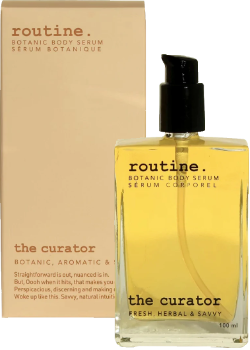
The Curator Botanic Body Serum from Routine is a very versatile oil. Made with 100% pure essential oils, The Curator Botanic Body Serum nourishes your body, face, hair, bath, shave, massage and cleanse. Leaving nothing behind but a sweet, fresh and herbal scent from eucalyptus, cocoa and rose geranium essential oils, The Curator Botanic Body Serum is packaged in an easy to use pump bottle made from unique biophotonic glass to protect it from light, thus prolonging its shelf life and potency. [OIL]
Dosage
Apply to body, face, or hair. Use it to shave, give massages, or amplify your bath
Makers of quality natural deodorant cream, Routine is not only great for your health, but smells great too. Top scents like Blackberry Betty, The Curator Baking Soda Free, Johnny’s Cash Baking Soda Free and Sexy Sadie Baking Soda Free, there’s a formula and scent for everyone. Routine deodorant cream is free of harsh chemicals and metals and fights body odour naturally.
SKIN HEALTH
Your skin is constantly exposed to stress from the environment such as sunlight, pollution, wind, and toxins. By taking the right supplements, you can improve the health of your skin and reduce premature aging...
The skin is the largest organ in the body. It has several important functions. It acts as a barrier to the external environment including harmful microbes, chemicals and radiation. It allows the exchange of water and some nutrients. It can eliminate toxins, minerals and other substances that have built up inside the body.
It modifies vitamins, like
vitamin D, into more active forms. It helps to regulate body temperature. It is a monitor as to the health of our internal environment because the skin is one of the last organs to be nourished. Signs of deficiency often show in the skin before other areas of the body have been affected.
Healthy skin also impacts on our mental and emotional well-being because skin is one of the first things we notice when we see someone. Skin can be used to judge a person’s age, social status and health. Billions of dollars are spent each year in the cosmetics and personal hygiene industry. A great majority of this is to make our skin look healthier and more youthful. What can we do naturally to help our skin so that it will be healthy and maintain its youthful appearance?
Skin is made up of several layers. The epidermal outer layer contains keratinized skin cells. It is the fibrous, protective shield for the body. The epidermis is firmly attached to inner layers of irregular connective tissue, the dermis. The dermis contains
collagen, the structural support, and elastin, the stretchy support. Only the dermis has blood supply, nutrients reach the outer skin layers only by diffusion.
Degeneration of the skin occurs for several reasons:
- Free radical damage
- Lack of moisture (water) and oil
- Lack of nutrients and
protein
Free radicals are unstable molecules that in their bid to become more stable must bump into healthy cells and cause damage. This can cause cell death, alterations in genetic material and autoimmune reactions to damaged cells. Ultraviolet radiation from the sun is the major contributor of free radicals that build up in the skin.
Skin oil is produced in the sebaceous glands. Its job is to coat the skin and prevent too much water from evaporating off the skin’s surface. Water keeps the skin hydrated. The connective tissue in the dermis is composed of elastin and
collagen. These substances need a supply of
protein
and nutrients to repair damage and form new tissue when needed.
Sunlight, poor diet, dehydration, environmental factors, chemicals, medications, hygiene routines, stress and disease elsewhere in the body all decrease the body’s ability to maintain healthy skin. This can result in poor skin quality, occurring in the following conditions:
Acne is a common skin complaint is characterized by pimples, blackheads, and whiteheads. It affects most of our society at some point in their life.
Nutritional deficiencies, exposure to environmental toxins, stress, genetics, hormonal imbalances and some pharmaceutical drugs can cause acne. It is rarely caused by uncleanliness.
Dermatitis
means inflammation of the skin. It is a general term that describes skin that scales, flakes, thickens, and weeps, crusts and itches. The skin may also change colour. Eczema is a term used interchangeably with dermatitis. Atopic dermatitis is caused by allergies, temperature change, stress and infection. Contact dermatitis or allergic dermatitis is caused by skin contact with an irritating substance. Seborrheic dermatitis is dermatitis affecting the scalp or face.
Dry skin can be simple or complex. Simple dry skin occurs when the skin is deficient in natural oils and fails to hold water in skin cells. Oil normally lubricates the skin and acts as a barrier to avoid excessive evaporation of water from the upper layers of the dermis. Simple dry skin usually occurs in women under the age of 35. Complex dry skin lacks both oil and moisture. The protein components of the skin may be damaged from prolonged UV exposure. Complex dry skin tends to develop brown spots, fine lines and enlarged pores. Complex dry skin usually affects older adults and is associated with aging.
Psoriasis
is a common skin condition in which there is an increase in the production of skin layers. Thick, silvery scales surrounded by a red border characterize psoriasis patches. Triggers for psoriasis include hormonal changes, emotional stress, recurrent skin irritations, surgery, cuts, medications, poor diet, and poor digestive function and alcohol consumption.
Rosacea
is a chronic skin condition in which acne-like pustules form in people over the age of 30. It is caused by an increase in sebum production. The first stage involves a reddening of the skin on the cheeks and nose, and later, the forehead and chin. Acne forms and pustules are visible. Tiny blood vessels can be seen below the skin’s surface. Underlying causes can be toxin accumulation, improper nutrition, insufficient stomach acid, food sensitivities, liver or gallbladder dysfunction or hypertension.
Rosacea
outbreaks are worsened by stress, worry, sunlight, heat and the consumption of coffee and alcohol.
Wrinkles form when the skin loses its elasticity and maintains a permanent crease. It usually happens around the eyes, cheeks and lips because these areas repetitively form facial expressions like smiling or frowning. The most important factor in the development of wrinkles is sun exposure. Damage from UVA rays, which are present all year round, can attribute to up to 90 percent of skin aging. Other factors that contribute to wrinkled skin are nutritional status, habitual facial expressions, stress, skin care, environmental pollutants, smoking and heredity
You can optimize your skin health and protect against skin degeneration in many ways, including:
- Follow a healthy dietary plan
- Drink lots of filtered water.
- Reduce the accumulation of toxins and waste products with regular organ detoxification
- Have a balanced lifestyle with time for exercise and relaxation
- Minimize exposure to the sun and wear sunscreen year round. Do not smoke.
- Have a daily skin regimen that includes skin-nourishing hygiene products.
- Use appropriate nutritional and herbal supplements
Carefully SelectedShips to the U.S.Wellness EssentialsTrusted Brands
Product Details
SKIN HEALTH
Your skin is constantly exposed to stress from the environment such as sunlight, pollution, wind, and toxins. By taking the right supplements, you can improve the health of your skin and reduce premature aging...
The skin is the largest organ in the body. It has several important functions. It acts as a barrier to the external environment including harmful microbes, chemicals and radiation. It allows the exchange of water and some nutrients. It can eliminate toxins, minerals and other substances that have built up inside the body.
It modifies vitamins, like
vitamin D, into more active forms. It helps to regulate body temperature. It is a monitor as to the health of our internal environment because the skin is one of the last organs to be nourished. Signs of deficiency often show in the skin before other areas of the body have been affected.
Healthy skin also impacts on our mental and emotional well-being because skin is one of the first things we notice when we see someone. Skin can be used to judge a person’s age, social status and health. Billions of dollars are spent each year in the cosmetics and personal hygiene industry. A great majority of this is to make our skin look healthier and more youthful. What can we do naturally to help our skin so that it will be healthy and maintain its youthful appearance?
Skin is made up of several layers. The epidermal outer layer contains keratinized skin cells. It is the fibrous, protective shield for the body. The epidermis is firmly attached to inner layers of irregular connective tissue, the dermis. The dermis contains
collagen, the structural support, and elastin, the stretchy support. Only the dermis has blood supply, nutrients reach the outer skin layers only by diffusion.
Degeneration of the skin occurs for several reasons:
- Free radical damage
- Lack of moisture (water) and oil
- Lack of nutrients and
protein
Free radicals are unstable molecules that in their bid to become more stable must bump into healthy cells and cause damage. This can cause cell death, alterations in genetic material and autoimmune reactions to damaged cells. Ultraviolet radiation from the sun is the major contributor of free radicals that build up in the skin.
Skin oil is produced in the sebaceous glands. Its job is to coat the skin and prevent too much water from evaporating off the skin’s surface. Water keeps the skin hydrated. The connective tissue in the dermis is composed of elastin and
collagen. These substances need a supply of
protein
and nutrients to repair damage and form new tissue when needed.
Sunlight, poor diet, dehydration, environmental factors, chemicals, medications, hygiene routines, stress and disease elsewhere in the body all decrease the body’s ability to maintain healthy skin. This can result in poor skin quality, occurring in the following conditions:
Acne is a common skin complaint is characterized by pimples, blackheads, and whiteheads. It affects most of our society at some point in their life.
Nutritional deficiencies, exposure to environmental toxins, stress, genetics, hormonal imbalances and some pharmaceutical drugs can cause acne. It is rarely caused by uncleanliness.
Dermatitis
means inflammation of the skin. It is a general term that describes skin that scales, flakes, thickens, and weeps, crusts and itches. The skin may also change colour. Eczema is a term used interchangeably with dermatitis. Atopic dermatitis is caused by allergies, temperature change, stress and infection. Contact dermatitis or allergic dermatitis is caused by skin contact with an irritating substance. Seborrheic dermatitis is dermatitis affecting the scalp or face.
Dry skin can be simple or complex. Simple dry skin occurs when the skin is deficient in natural oils and fails to hold water in skin cells. Oil normally lubricates the skin and acts as a barrier to avoid excessive evaporation of water from the upper layers of the dermis. Simple dry skin usually occurs in women under the age of 35. Complex dry skin lacks both oil and moisture. The protein components of the skin may be damaged from prolonged UV exposure. Complex dry skin tends to develop brown spots, fine lines and enlarged pores. Complex dry skin usually affects older adults and is associated with aging.
Psoriasis
is a common skin condition in which there is an increase in the production of skin layers. Thick, silvery scales surrounded by a red border characterize psoriasis patches. Triggers for psoriasis include hormonal changes, emotional stress, recurrent skin irritations, surgery, cuts, medications, poor diet, and poor digestive function and alcohol consumption.
Rosacea
is a chronic skin condition in which acne-like pustules form in people over the age of 30. It is caused by an increase in sebum production. The first stage involves a reddening of the skin on the cheeks and nose, and later, the forehead and chin. Acne forms and pustules are visible. Tiny blood vessels can be seen below the skin’s surface. Underlying causes can be toxin accumulation, improper nutrition, insufficient stomach acid, food sensitivities, liver or gallbladder dysfunction or hypertension.
Rosacea
outbreaks are worsened by stress, worry, sunlight, heat and the consumption of coffee and alcohol.
Wrinkles form when the skin loses its elasticity and maintains a permanent crease. It usually happens around the eyes, cheeks and lips because these areas repetitively form facial expressions like smiling or frowning. The most important factor in the development of wrinkles is sun exposure. Damage from UVA rays, which are present all year round, can attribute to up to 90 percent of skin aging. Other factors that contribute to wrinkled skin are nutritional status, habitual facial expressions, stress, skin care, environmental pollutants, smoking and heredity
You can optimize your skin health and protect against skin degeneration in many ways, including:
- Follow a healthy dietary plan
- Drink lots of filtered water.
- Reduce the accumulation of toxins and waste products with regular organ detoxification
- Have a balanced lifestyle with time for exercise and relaxation
- Minimize exposure to the sun and wear sunscreen year round. Do not smoke.
- Have a daily skin regimen that includes skin-nourishing hygiene products.
- Use appropriate nutritional and herbal supplements
🌿
Daily Wellness
Easy to add to your everyday health routine.
✅
Carefully Selected
Chosen with quality and customer needs in mind.
💊
Simple to Use
Designed for convenient daily supplementation.
🚚
Ships to the U.S.
Fast, reliable shipping to U.S. customers.
Choosing a selection results in a full page refresh.