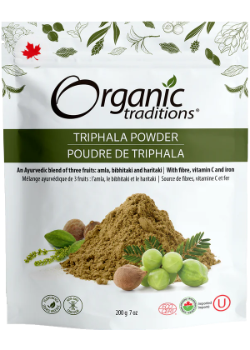
TRIPHALA STIMULATES DIGESTION AND IMPROVES CIRCULATIONTriphala means "three fruits" and is a blend of three herbs: haritaki, amla and bibhitaki. Together, these herbs stimulate digestion, improve circulation and aid elimination. Used over time, Triphala promotes regularity and is used to maintain hormone balance in a wide variety of conditions. Unlike other herbal laxatives, Triphala is considered a gentle detoxifier; it nourishes and cleanses as it removes toxins from the body. It is said to balance the three constitutional elements of human life: the nervous system, metabolic processes, and the body's structural integrity. [POWDER]
Contains:
Organic Triphala Powder
Important Information:
Product of USA.
Dosage
Add 1 tablespoon per serving to any beverage or recipe.
It’s Not A Trend, It’s a Tradition... Naturally
Organic Traditions Fibre Flow range offers an easy and delicious way to support daily digestive health and increase fibre intake, with options like
Fibre Flow (Strawberry),
Fibre Flow (Unflavoured),
Fibre Flow (Yuzu Lime),
and
Fibre Flow (Variety Pack),
all made with clean, plant-based ingredients to support gut wellness.
The functional latte collection includes nourishing blends such as
Matcha Latte With Probiotics,
Turmeric Latte With Probiotics And Saffron,
Beet Latte With Probiotics,
Chocolate Latte With Ashwagandha And Probiotics,
Lavender Latte,
Pumpkin Spice Latte,
Holiday Spice Latte,
Mint Chocolate Latte,
and
Yerba Mate Mint Latte With Matcha And Probiotics,
delivering targeted benefits for energy, immunity, relaxation, and overall wellness.
Shop these high-quality superfoods right here at ca
Triphala from Organic Traditions
Triphala is a mixture of three fruits (Amakaki, Haritaki and Bibitaki) is a staple food in the Ayurvedic tradition.
Organic Traditions Eco-Mission
The commitment to heal the planet begins with the commitment to "Go Green" within. At Organic Traditions, they are commited to supporting farmers who are dedicated to the principels of sustainable agriculture. Their superfoods are either certified organic, wildcrafted or ethically grown and harvested. Our eco-mission is a conscious commitment to support farming communities and ecosystems through fair trade initiatives.
Intestinal Health
Neglected, it can cause serious health concerns. Taken care of intestinal health can help you to stay energetic and full of life. Read on to discover how you can improve the health of your intestines...
The intestine is the main absorptive area of the digestive tract. It is essentially a tube with a thin mucosal lining and lots of blood vessels on the inside and muscles around the outside. It has its own immune tissue called GALT, or gut associated lymphoid tissue. The inner lining is filled with little fingers, or projection of the mucosa, which greatly increases its absorptive surface.
Lying on the membrane are many friendly organisms, which help our body with the digestive process. The small intestine attaches to the stomach. Near it's beginning, ducts from the liver and
pancreas
release digestive juices. These juices mix with the partially digested food from the stomach and continue the digestive process. Nutrients are absorbed through the thin intestinal wall and transported via the bloodstream, to where they are needed. The liver also excretes processed toxins and fats through the bile. These substances must be carried through the intestine without being absorbed.
The remainder of the food is pushed through into the large intestine. The main function of the large intestine is the preparation of stool for excretion. In order to do this the digested food must be dehydrated and compacted. The last bit of nutrients may also be absorbed here.
The immune system has an important role to play in the health of the intestine and the body at large. One can think of the digestive tract as part of the exterior since it is in contact with things taken in from our environment. GALT must identify normal food particles and nutrients from microbes, toxins and other foreign substances that can cause our body's harm. Improper immune responses are a cause of
food allergy,
food sensitivity
and can be the basis for autoimmune conditions.
Some of the most important players in intestinal health are not part of our own body. Friendly intestinal bacteria, often called
probiotics, are an essential part of digestion. They break down food particles, manufacture vitamins and prevent the infection of the tract with other microbes. Each bowel movement actually contains millions of these friendly bacteria; they are in a constant state of renewal. Many concerns like indigestion, gas, bloating and
constipation
can be due to an imbalance of the intestinal bacteria. It is easy to upset this balance by improper diet or taking medications like antibiotics.
Many foods that we eat, other substances we consume and our lifestyles contribute to intestinal disorders. Highly processed foods, alcohol, medications and tobacco are difficult for our body to break down and may also physically damage the digestive lining.
Processed foods are also deficient in nutrients so not only does the body have to work extra hard to digest the food, but it also gets depleted of the things it needs to do its work. Water and fibre intake is important to have proper moisture and bulk in the stool and make bowel movements regular.
Stress, anxiety and other emotional concerns put our nervous system in an excited state. Our digestive processes are only fully functional when our nervous system is relaxed. Sedentary lifestyles decrease movement throughout the digestive tract. As our transit time slows there is more opportunity for the re-absorption of processed toxins and greater chance of microbial overgrowth. Slow transit time also dries the stool and makes it more difficult to pass. Our body is designed so that each time we eat a meal we have a bowel movement. Many individuals can be considered constipated and have bowel movements less than once daily. One can eat the most nutritious food but if the intestinal membrane is not in good working order the body will not be able to absorb the nutrients.
Carefully SelectedShips to the U.S.Wellness EssentialsTrusted Brands
Product Details
Triphala from Organic Traditions
Triphala is a mixture of three fruits (Amakaki, Haritaki and Bibitaki) is a staple food in the Ayurvedic tradition.
Organic Traditions Eco-Mission
The commitment to heal the planet begins with the commitment to "Go Green" within. At Organic Traditions, they are commited to supporting farmers who are dedicated to the principels of sustainable agriculture. Their superfoods are either certified organic, wildcrafted or ethically grown and harvested. Our eco-mission is a conscious commitment to support farming communities and ecosystems through fair trade initiatives.
Intestinal Health
Neglected, it can cause serious health concerns. Taken care of intestinal health can help you to stay energetic and full of life. Read on to discover how you can improve the health of your intestines...
The intestine is the main absorptive area of the digestive tract. It is essentially a tube with a thin mucosal lining and lots of blood vessels on the inside and muscles around the outside. It has its own immune tissue called GALT, or gut associated lymphoid tissue. The inner lining is filled with little fingers, or projection of the mucosa, which greatly increases its absorptive surface.
Lying on the membrane are many friendly organisms, which help our body with the digestive process. The small intestine attaches to the stomach. Near it's beginning, ducts from the liver and
pancreas
release digestive juices. These juices mix with the partially digested food from the stomach and continue the digestive process. Nutrients are absorbed through the thin intestinal wall and transported via the bloodstream, to where they are needed. The liver also excretes processed toxins and fats through the bile. These substances must be carried through the intestine without being absorbed.
The remainder of the food is pushed through into the large intestine. The main function of the large intestine is the preparation of stool for excretion. In order to do this the digested food must be dehydrated and compacted. The last bit of nutrients may also be absorbed here.
The immune system has an important role to play in the health of the intestine and the body at large. One can think of the digestive tract as part of the exterior since it is in contact with things taken in from our environment. GALT must identify normal food particles and nutrients from microbes, toxins and other foreign substances that can cause our body's harm. Improper immune responses are a cause of
food allergy,
food sensitivity
and can be the basis for autoimmune conditions.
Some of the most important players in intestinal health are not part of our own body. Friendly intestinal bacteria, often called
probiotics, are an essential part of digestion. They break down food particles, manufacture vitamins and prevent the infection of the tract with other microbes. Each bowel movement actually contains millions of these friendly bacteria; they are in a constant state of renewal. Many concerns like indigestion, gas, bloating and
constipation
can be due to an imbalance of the intestinal bacteria. It is easy to upset this balance by improper diet or taking medications like antibiotics.
Many foods that we eat, other substances we consume and our lifestyles contribute to intestinal disorders. Highly processed foods, alcohol, medications and tobacco are difficult for our body to break down and may also physically damage the digestive lining.
Processed foods are also deficient in nutrients so not only does the body have to work extra hard to digest the food, but it also gets depleted of the things it needs to do its work. Water and fibre intake is important to have proper moisture and bulk in the stool and make bowel movements regular.
Stress, anxiety and other emotional concerns put our nervous system in an excited state. Our digestive processes are only fully functional when our nervous system is relaxed. Sedentary lifestyles decrease movement throughout the digestive tract. As our transit time slows there is more opportunity for the re-absorption of processed toxins and greater chance of microbial overgrowth. Slow transit time also dries the stool and makes it more difficult to pass. Our body is designed so that each time we eat a meal we have a bowel movement. Many individuals can be considered constipated and have bowel movements less than once daily. One can eat the most nutritious food but if the intestinal membrane is not in good working order the body will not be able to absorb the nutrients.
🌿
Daily Wellness
Easy to add to your everyday health routine.
✅
Carefully Selected
Chosen with quality and customer needs in mind.
💊
Simple to Use
Designed for convenient daily supplementation.
🚚
Ships to the U.S.
Fast, reliable shipping to U.S. customers.
Choosing a selection results in a full page refresh.