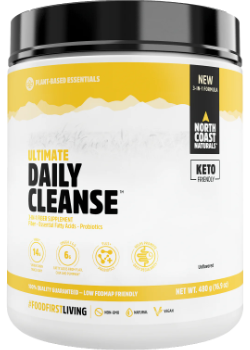
North Coast Naturals’ Ultimate Daily Cleanse is a high-quality 3-in-1 fiber formulation that delivers 14g of fiber (50% of your daily requirement) from 6 fibre sources, 6g of essential omega 3 and 6 fatty acids, and probiotics, all derived from whole food sources to support gentle daily fiber health, regularity and cleansing. Ultimate Daily Cleanse is vegan and also low FODMAP, easily digestible for people with IBS and abdominal discomfort. [POWDER]
Each scoop (16g) contains:
Calories 60
Fat 4 g
Saturated 0.5 g
+ Trans 0 g
Polyunsaturated 3 g
Omega-3 2.5 g
Omega-6 0.5 g
Cholesterol 0 mg
Sodium 5 mg
Carbohydrate 8 g
Dietary Fibre 7 g
Soluble Fibre 4 g
Insoluble Fibre 3 g
Sugars 0g
Protein 2 g
Potassium 25mg
Calcium 50mg
Iron 1mg
Ingredients:
Ground 100% Canadian flax seed, psyllium seed husk, organic quinoa powder, organic chia seed powder, organic pumpkin seed powder, organic sprouted brown rice powder, bacterial culture (Bacillus subtilis DE111®, Lactobacillus fermentum).
Important Information:
Store in a cool, dry place.
Dosage
Mix 1-2 servings in hot or cold cereal, yogurt, smoothie or protein shake. Use 2 servings per day.
Trusted Canadian Nutrition for Active Living
North Coast Naturals is Canadian owned and operated bringing you the same great products, now in new packaging! North Coast Naturals uses the best of science and nature to develop the highest quality certified organic nutrition and natural health products. Shop Canadian for North Coast Naturals Fermented L-Glutamine Powder, Hemp Seed Hearts, Organic Hemp Protein and Organic Brown Rice Protein at
WHAT IS DIETARY FIBRE?
Did you know that while Health Canada recommends that adult men and women consume 38 and 25g of dietary fibre daily, respectively, statistics tell us that most individuals consume less than half that amount? This is problematic because fibre is essential to health in a number of ways. For instance, dietary fibre promotes
digestive health
by adding bulk to the stool, preventing
constipation
and promoting regular bowel movements.
Fibre can also help prevent or alleviate common digestive issues like
hemorrhoids,
diverticulitis, and
irritable bowel
syndrome (IBS). Adequate consumption of dietary fibre also helps support weight management by making us feel fuller for extended periods and helps manage blood sugar levels by slowing the digestion and absorption of carbohydrates.
Moreover, fibre prevents rapid spikes in blood glucose after a meal, which is especially important for individuals with
diabetes
or those prone to the condition. Moreover, dietary fibre helps lower cholesterol levels, provides a nourishing environment for gut bacteria, and helps promote robust immune function.
Soluble Versus Insoluble Fibre
Dietary fibre is a carbohydrate in plant foods that the human body cannot digest. Some of the richest sources of fibre include fruits, vegetables, legumes, whole grains, nuts and seeds, cereals, berries, root vegetables, whole grain bread and pasta, and wheat bran and oat bran. These foods contain two kinds of fibre – soluble and insoluble fibre- each having different characteristics and playing distinct roles in our digestive system. Here's a breakdown of the differences between soluble and insoluble fibre:
Soluble Fiber
Dietary and supplement soluble fibre dissolves in water, forming a gel-like substance in the digestive tract. It is composed of complex carbohydrates that can be broken down by bacteria in the gut. Due to its ability to absorb water, soluble fibre can increase the viscosity of the contents in the digestive system, making it thicker. Soluble fibre is fermented by the beneficial bacteria in the large intestine. During fermentation, these bacteria break down the soluble fibre, producing short-chain fatty acids, such as butyrate, acetate, and propionate, which provide energy for the cells lining the colon. Soluble fibre is known to:
Lower cholesterol – i.e. help reduce LDL (bad) cholesterol levels by interfering with its absorption.
Regulate blood sugar levels
Promote a healthy gut
Insoluble Fibre
Dietary insoluble fibre does not dissolve in water and retains its form throughout digestion. It is made up of mostly cellulose, which is resistant to digestion.
Because it cannot absorb water, insoluble fibre does not significantly affect the consistency of the digestive contents. Moreover, since it passes relatively unchanged through the digestive system, it adds bulk to the stool. As such, it can help promote regular bowel movements and prevent constipation by speeding up food movement through the digestive tract. Insoluble fibre is known to:
Promote regular bowel movements, prevent constipation and promote regularity.
Prevent diverticular disease and other conditions affecting the colon.
Benefits Of Dietary Fibre Supplements
Acts As A Prebiotic To Feed Good Gut Bacteria
Aids Weight Loss / Weight Management
Helps Control Blood Sugar
Reduces Cholesterol
Relieves Constipation
Fibre Supplements
Fibre supplements
come in various shapes and sizes, including powder or granules, capsules and tablets, and chewable formats like tablets, wafers, and gummies. Soluble fibre supplements, such as
psyllium
husk, methylcellulose, or inulin, usually have a potency that ranges from 1 to 5 grams of fibre per serving. Insoluble fibre supplements, on the other hand, such as wheat bran or cellulose, tend to have a higher potency. They may provide around 3 to 10 grams of fibre per serving.
Selecting the Best Fibre Supplements For Your Needs
When taking fibre supplements, you should follow a few general guidelines. These include:
Choosing the right supplement
– As previously mentioned, various fibre supplements are available, each with its distinct effects. This is why it's essential to read labels carefully when selecting a fibre supplement.
Starting with a low dose
– Begin with a lower dosage and gradually increase it over time. This allows your body to adjust to the added fibre and helps prevent digestive discomfort, including gas and bloating.
Taking it with water
– Fibre supplements need adequate water to work effectively. Drink a full glass of water when taking the supplement.
Consistency
– It's important to take fibre supplements consistently. Incorporating them into your daily routine can help regulate
digestive health, lipid profile, weight, and overall health and wellness.
Carefully SelectedShips to the U.S.Wellness EssentialsTrusted Brands
Product Details
WHAT IS DIETARY FIBRE?
Did you know that while Health Canada recommends that adult men and women consume 38 and 25g of dietary fibre daily, respectively, statistics tell us that most individuals consume less than half that amount? This is problematic because fibre is essential to health in a number of ways. For instance, dietary fibre promotes
digestive health
by adding bulk to the stool, preventing
constipation
and promoting regular bowel movements.
Fibre can also help prevent or alleviate common digestive issues like
hemorrhoids,
diverticulitis, and
irritable bowel
syndrome (IBS). Adequate consumption of dietary fibre also helps support weight management by making us feel fuller for extended periods and helps manage blood sugar levels by slowing the digestion and absorption of carbohydrates.
Moreover, fibre prevents rapid spikes in blood glucose after a meal, which is especially important for individuals with
diabetes
or those prone to the condition. Moreover, dietary fibre helps lower cholesterol levels, provides a nourishing environment for gut bacteria, and helps promote robust immune function.
Soluble Versus Insoluble Fibre
Dietary fibre is a carbohydrate in plant foods that the human body cannot digest. Some of the richest sources of fibre include fruits, vegetables, legumes, whole grains, nuts and seeds, cereals, berries, root vegetables, whole grain bread and pasta, and wheat bran and oat bran. These foods contain two kinds of fibre – soluble and insoluble fibre- each having different characteristics and playing distinct roles in our digestive system. Here's a breakdown of the differences between soluble and insoluble fibre:
Soluble Fiber
Dietary and supplement soluble fibre dissolves in water, forming a gel-like substance in the digestive tract. It is composed of complex carbohydrates that can be broken down by bacteria in the gut. Due to its ability to absorb water, soluble fibre can increase the viscosity of the contents in the digestive system, making it thicker. Soluble fibre is fermented by the beneficial bacteria in the large intestine. During fermentation, these bacteria break down the soluble fibre, producing short-chain fatty acids, such as butyrate, acetate, and propionate, which provide energy for the cells lining the colon. Soluble fibre is known to:
Lower cholesterol – i.e. help reduce LDL (bad) cholesterol levels by interfering with its absorption.
Regulate blood sugar levels
Promote a healthy gut
Insoluble Fibre
Dietary insoluble fibre does not dissolve in water and retains its form throughout digestion. It is made up of mostly cellulose, which is resistant to digestion.
Because it cannot absorb water, insoluble fibre does not significantly affect the consistency of the digestive contents. Moreover, since it passes relatively unchanged through the digestive system, it adds bulk to the stool. As such, it can help promote regular bowel movements and prevent constipation by speeding up food movement through the digestive tract. Insoluble fibre is known to:
Promote regular bowel movements, prevent constipation and promote regularity.
Prevent diverticular disease and other conditions affecting the colon.
Benefits Of Dietary Fibre Supplements
Acts As A Prebiotic To Feed Good Gut Bacteria
Aids Weight Loss / Weight Management
Helps Control Blood Sugar
Reduces Cholesterol
Relieves Constipation
Fibre Supplements
Fibre supplements
come in various shapes and sizes, including powder or granules, capsules and tablets, and chewable formats like tablets, wafers, and gummies. Soluble fibre supplements, such as
psyllium
husk, methylcellulose, or inulin, usually have a potency that ranges from 1 to 5 grams of fibre per serving. Insoluble fibre supplements, on the other hand, such as wheat bran or cellulose, tend to have a higher potency. They may provide around 3 to 10 grams of fibre per serving.
Selecting the Best Fibre Supplements For Your Needs
When taking fibre supplements, you should follow a few general guidelines. These include:
Choosing the right supplement
– As previously mentioned, various fibre supplements are available, each with its distinct effects. This is why it's essential to read labels carefully when selecting a fibre supplement.
Starting with a low dose
– Begin with a lower dosage and gradually increase it over time. This allows your body to adjust to the added fibre and helps prevent digestive discomfort, including gas and bloating.
Taking it with water
– Fibre supplements need adequate water to work effectively. Drink a full glass of water when taking the supplement.
Consistency
– It's important to take fibre supplements consistently. Incorporating them into your daily routine can help regulate
digestive health, lipid profile, weight, and overall health and wellness.
🌿
Daily Wellness
Easy to add to your everyday health routine.
✅
Carefully Selected
Chosen with quality and customer needs in mind.
💊
Simple to Use
Designed for convenient daily supplementation.
🚚
Ships to the U.S.
Fast, reliable shipping to U.S. customers.
Choosing a selection results in a full page refresh.