Helps reduce cold-like symptoms in stressed adults
Probiotics and 100% daily value of zinc and vitamin C
Helps provide gentle relief of constipation and irregularity
Reduces the risk of developing upper-respiratory tract illness
12 different, science-backed probiotic strains
Delayed-release, once-daily capsule
No refrigeration required
Helps reduce coldlike symptoms in stressed adults
Probiotics and 100% daily value of zinc and vitamin C
Helps provide gentle relief of constipation and irregularity
Reduces the risk of developing upperrespiratory tract illness
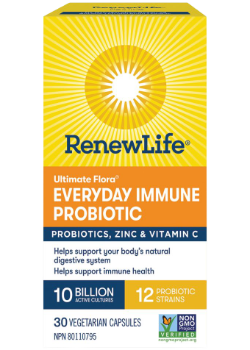
Renew Life Ultimate Flora Everyday Immune Probiotic 10 Billion - 30 V-Caps - Renew Life is a dietary supplement in capsule form, intended for adults as part of a daily wellness routine.
Renew Life's Ultimate Flora Everyday Immune Probiotic has been formulated to not only support a healthy digestive system but it has been clinically studied to show a reduction in cold-like symptoms is stressed adults. Containing 10 billion active cultures, zinc, and vitamin C Ultimate Flora Everyday Immune Probiotic comes in a convenient one-a-day dosage in an acid-resistant capsule to ensure the probiotic bacteria makes it through the stomach. [VCAPS] *For distribution in Canada only.
Each capsule contains:
Lactobacillus plantarum (HA-119) – Whole Cell 12 Billion CFU
Lactobacillus paracasei (HA-196) – Whole Cell 9 Billion CFU
Bifidobacterium animalis subsp. lactis (LAFTIB94) – Whole Cell 5.7 Billion CFU
Bifidobacterium bifidum (R0071) – Whole Cell 3 Billion CFU
Lactobacillus rhamnosus (HA-111) – Whole Cell 300 Million CFU
Non-Medicinal Ingredients:
Acid-resistant vegetable capsule (hypromellose, gellan gum, pectin), ingredients used to maintain the viability of live microorganisms (maltodextrin, sucrose, yeast extract, skim milk, trypticase-soy broth), potato starch, stearic acid, palmitic acid, ascorbic acid.
Important Information:
Do not use this product if you have an immune-compromised condition (e.g AIDS, lymphoma, patients undergoing long-term corticosteroid treatment). If you have fever, vomiting, bloody diarrhea or severe abdominal pain, consult a health care practitioner prior to use. Stop use and consult a health care practitioner if symptoms of digestive upset (e.g diarrhea) occur, worsen and/or persist beyond 3 days. No refrigeration required. Store in a cool, dry place.
Dosage
Take 1 capsule, 1 time per day. Take with food, a few hours before or after taking other medications or natural health products. Take at least 2-3 hours before or after antibiotics.
Renew Life creates top-selling Ultimate Flora probiotics, Fibre Smart, Flora Bear and Flora Baby, to bring the best in natural digestive health supplements. Renew Life provides quality intestinal and gut health probiotics with chewable formats for kids; to keep the whole families digestive health in check.
Probiotics
Probiotics aren't just essential for digestive and colon health, they also boost your health in general...
Probiotics are the beneficial microbial flora that we all need for optimal health. These "good" bacteria (and yeast) colonize our digestive and urinary tracts and the vagina in women where they grow and help to maintain the health of our mucous membranes. You can think of this in the same way as sowing your lawn with grass seed to create a thick, lush carpet of grass that can protect against the growth of weeds.
Probiotics seed your body with beneficial bacteria to help protect against the growth of pathological ("bad") microbes like E. coli and
Candida. This helps no matter the location of the mucous membrane in the body: whether the vagina, bladder or GI tract. In the gut they also promote proper digestion and in some cases actually produce or functionally convert essential nutrients for our absorption and use. Many normal, bodily functions require healthy gut flora, and their effects range from healthy immune function to proper heart function and skin health.
The Types of Friendly Bacteria
In general, probiotics can be categorized by where they are used in the body. For example, there are friendly bacteria, which only grow in the small intestine and those that proliferate only in the large intestine (colon). But, believe it or not, beneficial bacteria exist in the mouth, urinary tract, stomach, vagina, and even on the surface of the skin. Certain strains colonize certain areas of the body more easily than others. More specific information can be seen below.
Lack of Healthy Gut Flora
Without healthy gut flora, a number of conditions can result including: poor assimilation of nutrients, intestinal irritation,
diarrhea
or
constipation. Both naturopathic and medical doctors recognize the importance that the gut flora plays in overall health. Certain strains of Lactobacillus have been shown to be crucial for producing important immune factors, while others have been shown to be crucial for the reduction of bad cholesterol. For more information on Lactobacillus, please click here. Many infections are more common in those without proper body flora, including: gastroenteritis (the "stomach flu"), vaginal yeast infections, urinary tract infections (UTIs), and even skin conditions like acne.
Immune Regulation
Proper colonization of the gut by beneficial bacteria helps to regulate our entire immune system. Well over 70% of our immune cells are actually located in our gut tissue as "gut associated lymphatic tissue (GALT). These cells are constantly interacting with the bacteria in our gut, and having good bacteria present can help to train our immune system to be properly active against pathogens and tolerant to everything else. This is how probiotics can help to reduce and prevent autoimmune diseases such as:
lupus,
rheumatoid arthritis,
irritable bowel
disease,
psoriasis, and eczema.
Anti-infection and Detox
Candida infections can be particularly stubborn and often require long-term use of a probiotic in addition to the use of other therapies. For more information on Candida and its treatment, please click here. The same need for probiotics exists in instances of food poisoning, which not only deplete gut flora, but can also cause damage to the intestinal lining; the use of a high cell count, therapeutic probiotic is therefore appropriate if you've had food poisoning. Another common use for probiotics is for preventing parasites and diarrhea while traveling. For more information on treating
Traveller's Diarrhea, please click here. Whether the gut flora has been lost due to diarrhea or due to an intentional cleanse, probiotic supplements can perform a "rebuilding" function, helping to replenish friendly bacteria that have been depleted.
What to Look for in a Probiotic
There are literally thousands of probiotic supplements available in health food stores today; with so many available it can be difficult to know which one is best for you or your family. A multi-strain probiotic is frequently the best way to go for most people. This type of probiotic can supply you with at least 6, 8 or even as many as 10 or 20 different strains of healthy bacteria. Your body naturally contains a wide variety of strains, so it makes sense to take a supplement with as broad a spectrum as possible. This will give you the greatest coverage to replenish or maintain the natural gut flora. The greater the diversity, the greater the strength of your body's flora.
Probiotic Source
There are a number of different sources of probiotics. Some companies get their strains from soil sources (like HSO's), while some get them from lab strains, and still others from strains extracted from healthy human sources. There are a mind-boggling number of strains of bacteria available of each species of bacteria. Lactobacillus acidophilus is a species of bacteria and it has a vast number of different strains that are labeled using a chain of letters and numbers. We know very little about the specific differences of each species, and so the medical community tends to group the bacteria by species and ignore the strain in most cases. In addition to bacteria, some probiotics are other organisms; one great example of this are beneficial yeast called S. boulardii.
Targeted Probiotic Therapy
That being said, there are particular therapeutic probiotics, which are targeted towards certain health concerns. The homeostatic soil organism (HSO) type of probiotic contains healthy bacteria from soils. In years past we would have ingested these from root vegetables grown in the ground, but in our modern sanitized world, where we purchase cleaned vegetables from supermarkets, it's difficult for us to get it from food unless we're growing them ourselves. This particular type of beneficial bacteria has been clinically proven to help remove Candida.
Carefully SelectedShips to the U.S.Wellness EssentialsTrusted Brands
Product Details
Probiotics
Probiotics aren't just essential for digestive and colon health, they also boost your health in general...
Probiotics are the beneficial microbial flora that we all need for optimal health. These "good" bacteria (and yeast) colonize our digestive and urinary tracts and the vagina in women where they grow and help to maintain the health of our mucous membranes. You can think of this in the same way as sowing your lawn with grass seed to create a thick, lush carpet of grass that can protect against the growth of weeds.
Probiotics seed your body with beneficial bacteria to help protect against the growth of pathological ("bad") microbes like E. coli and
Candida. This helps no matter the location of the mucous membrane in the body: whether the vagina, bladder or GI tract. In the gut they also promote proper digestion and in some cases actually produce or functionally convert essential nutrients for our absorption and use. Many normal, bodily functions require healthy gut flora, and their effects range from healthy immune function to proper heart function and skin health.
The Types of Friendly Bacteria
In general, probiotics can be categorized by where they are used in the body. For example, there are friendly bacteria, which only grow in the small intestine and those that proliferate only in the large intestine (colon). But, believe it or not, beneficial bacteria exist in the mouth, urinary tract, stomach, vagina, and even on the surface of the skin. Certain strains colonize certain areas of the body more easily than others. More specific information can be seen below.
Lack of Healthy Gut Flora
Without healthy gut flora, a number of conditions can result including: poor assimilation of nutrients, intestinal irritation,
diarrhea
or
constipation. Both naturopathic and medical doctors recognize the importance that the gut flora plays in overall health. Certain strains of Lactobacillus have been shown to be crucial for producing important immune factors, while others have been shown to be crucial for the reduction of bad cholesterol. For more information on Lactobacillus, please click here. Many infections are more common in those without proper body flora, including: gastroenteritis (the "stomach flu"), vaginal yeast infections, urinary tract infections (UTIs), and even skin conditions like acne.
Immune Regulation
Proper colonization of the gut by beneficial bacteria helps to regulate our entire immune system. Well over 70% of our immune cells are actually located in our gut tissue as "gut associated lymphatic tissue (GALT). These cells are constantly interacting with the bacteria in our gut, and having good bacteria present can help to train our immune system to be properly active against pathogens and tolerant to everything else. This is how probiotics can help to reduce and prevent autoimmune diseases such as:
lupus,
rheumatoid arthritis,
irritable bowel
disease,
psoriasis, and eczema.
Anti-infection and Detox
Candida infections can be particularly stubborn and often require long-term use of a probiotic in addition to the use of other therapies. For more information on Candida and its treatment, please click here. The same need for probiotics exists in instances of food poisoning, which not only deplete gut flora, but can also cause damage to the intestinal lining; the use of a high cell count, therapeutic probiotic is therefore appropriate if you've had food poisoning. Another common use for probiotics is for preventing parasites and diarrhea while traveling. For more information on treating
Traveller's Diarrhea, please click here. Whether the gut flora has been lost due to diarrhea or due to an intentional cleanse, probiotic supplements can perform a "rebuilding" function, helping to replenish friendly bacteria that have been depleted.
What to Look for in a Probiotic
There are literally thousands of probiotic supplements available in health food stores today; with so many available it can be difficult to know which one is best for you or your family. A multi-strain probiotic is frequently the best way to go for most people. This type of probiotic can supply you with at least 6, 8 or even as many as 10 or 20 different strains of healthy bacteria. Your body naturally contains a wide variety of strains, so it makes sense to take a supplement with as broad a spectrum as possible. This will give you the greatest coverage to replenish or maintain the natural gut flora. The greater the diversity, the greater the strength of your body's flora.
Probiotic Source
There are a number of different sources of probiotics. Some companies get their strains from soil sources (like HSO's), while some get them from lab strains, and still others from strains extracted from healthy human sources. There are a mind-boggling number of strains of bacteria available of each species of bacteria. Lactobacillus acidophilus is a species of bacteria and it has a vast number of different strains that are labeled using a chain of letters and numbers. We know very little about the specific differences of each species, and so the medical community tends to group the bacteria by species and ignore the strain in most cases. In addition to bacteria, some probiotics are other organisms; one great example of this are beneficial yeast called S. boulardii.
Targeted Probiotic Therapy
That being said, there are particular therapeutic probiotics, which are targeted towards certain health concerns. The homeostatic soil organism (HSO) type of probiotic contains healthy bacteria from soils. In years past we would have ingested these from root vegetables grown in the ground, but in our modern sanitized world, where we purchase cleaned vegetables from supermarkets, it's difficult for us to get it from food unless we're growing them ourselves. This particular type of beneficial bacteria has been clinically proven to help remove Candida.