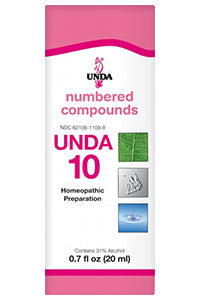
Unda #10 is a homeopathic remedy that is used to provide relief of minor symptoms associated with irregular menstrual cycles. The unique herbal and mineral blend in Unda #10 also provides relief for for hormonal irregularities, uterine conditions, drainage of the female reproductive system and menopause. Unda #10 has been specially designed to help in all hormonal, pubertal, and gynecological irregularities. [LIQUID]
Each drop contains:
Absinthium (common wormwood ) Flowering Plant 4X
Rhamnus frangula (Buckthorn) Bark 4X
Millefolium (Yarrow) Whole Plant 4X
Equisetum arvense (Common horsetail) Stem 4X
Juniperus communis (Common juniper) Berry 4X
Argentum metallicum (Silver) 12X
Non-Medicinal Ingredients:
Ethanol (beet), purified water
Important Information:
If symptoms persist or worsen, consult your healthcare practitioner. If you are pregnant or breastfeeding, consult your healthcare practitioner prior to use.
Dosage
Adults and Children (12 yearsand older):
Take 10 to 30 drops one to three times daily, or as recommended by your healthcare practitioner.
Children (6-11 years):
Take 5 to 15 drops one to three times daily, or as recommended by your healthcare practitioner.
Children (1-5 years):
Take 5 to 10 drops one to three times daily,or as recommended by your healthcare practitioner.
Infants (0-11 months):
Take 1 to 5 drops one to three times daily, or as recommended by your healthcare practitioner.
Acute Dosing:
Follow the above age recommended drop amounts and take every 15 to 60 minutes (up to 12 times per day) or until symptoms improve, then resume general dosing.
Homeopathic Liquid Compounds for Whole Body Health
Unda formulates
homeopathic supplements
including Unda #245 for hormone support, Unda #30 for insomnia support, Unda #8 to support circulation and Unda #6 for digestive support. Unda uses quality herbal blends to help support overall health and provide a diverse range of homeopathic supplements.
Pms Relief
PMS: for one week every month, women act the same way that men do all the time. If you experience the annoying symptoms of premenstrual syndrome, then PMS is no joke. Read on to discover how supplements and herbs can make a difference...
Premenstrual syndrome (PMS) affects women during the last two weeks of the menstrual cycle and usually subsides when the menstrual flow begins. Many women think of these symptoms as normal but they are in fact caused by extreme or unbalanced hormonal changes. Diets rich in animal products, sluggish liver function, lack of sleep, stress, inactivity, hypoglycemia, hypothyroidism, heavy metal toxicity and food allergies aggravate, or contribute, to PMS symptoms.
PMS is broken down into 4 classifications. PMS-A (anxiety) has anxiety, irritability and
insomnia. PMS-C (craving) has increased appetite, sweet cravings, headache, fatigue, fainting spells and heart palpitations. PMS-D (depression) has depression. PMS-H (hyper-hydration) has weight gain, abdominal bloating, breast tenderness and swelling of the face, hands and ankles. Most women suffer from a combination of these subtypes. Other PMS symptoms that are not associated with a specific classification are abdominal cramps, backache and skin problems.
Conventional treatment of PMS involves the use of oral contraceptives to artificially regulate hormonal changes. Natural treatment of PMS includes liver and bowel cleansing. The liver is the organ that is responsible for processing hormones. The bowels are responsible for excreting processed hormones. Performing liver and bowel cleansing will help to decrease PMS by ensuring proper functioning of these organs. See the section on detoxification for more information.
The nutritional approach to PMS should include these three facets: balancing hormones, providing nutrients specific for women’s health, and reducing symptoms.
Balancing hormones can often be a challenge. The symptoms that we experience as women during PMS are merely one example of how these very powerful substances in our bodies can have a profound effect on our health, well being and enjoyment of life.
Many PMS symptoms are caused by an imbalance between estrogen and progesterone. You can optimize your progesterone levels with supplements like
primrose oil
and
borage oil. They both contain the essential fat GLA which is needed to produce this important hormone. Take these along with vitamin B6; it is needed for your body to use GLA effectively. Wild yam sourced progesterone cream can also be applied topically.
Decreasing overactive estrogen levels is equally as important as optimizing progesterone production. The activity of estrogen can be blocked with the herb dong quai, which blocks estrogen receptor sites with less active plant source estrogen.
You can also help the liver reduce excess estrogens with the supplement D-glucarate; it is used to make an enzyme that breaks estrogen down.
Milk thistle
can provide benefit for the liver in this respect, too.
Providing nutrients specific for women on a daily basis can make a big difference for hormonal health. An overall nutritional supplement like a complete multivitamin specifically for women or a green food supplement both provide important micro and macro nutrients for optimum nutrition. Essential fats, B vitamins,
amino acids, and
trace minerals
are important because they are all needed for balancing of hormones. The mineral iron is important because of the loss of haemoglobin during menstruation.
Reducing The Symptoms of PMS:
Depression and mood swings can be two of the most troublesome symptoms of PMS. Optimizing neurotransmitter levels can elevate your mood during this stressful time. Use St. John’s wort; it has been clinically proven to improve mood and to reduce anxiety. Do not use it if you are taking recommendation antidepressants. You can also use the supplement 5HTP, which your brain uses to make the neurotransmitter serotonin.
Melatonin
can help in cases of insomnia, in addition it can elevate mood. Each of these should be taken with vitamin B6, as it will improve their activity.
Cramps can generally be relieved with an active and highly digestible form of
calcium
with
magnesium. Use either citrate or chelate as they can give you high absorption. The magnesium helps to relax the muscular contractions of the uterus that hormone imbalances can cause.
Vitamin E
can also be used for muscle cramps.
Water retention can be relieved with a number of natural cleansing herbs such as horsetail, marshmallow, and dandelion.
Cravings for chocolate and other sweet foods are common and one of the most frustrating symptoms, because it can also cause weight gain and increased stress when you are following a healthy meal plan. It is important to keep blood sugar levels stable - use a green food supplement and a
protein
shake a couple times per day as they often help to eliminate cravings and help to keep blood sugar stable.
Chromium
optimizes insulin function and can also reduce cravings. The amino acid glutamine reduces cravings and appetite.
Balance, in all areas of your life and external environment, helps to promote balance inside the body. Regular exercise should be a part of a stress reduction program for PMS sufferers. Topically castor oil compresses over the abdomen can reduce cramping and water retention. It also helps the organs of detoxification to process hormones.
Dietary changes for PMS involve choosing foods that correct imbalances in hormones, neurotransmitters and prostaglandins. A vegetarian diet helps to excrete excess estrogens from the body. Animal protein contributes to PMS by inhibiting the formation of anti-inflammatory hormones. To increase the production of anti-inflammatory compounds take unrefined, cold pressed nut and seed oils like flax, hemp, sunflower and sesame oil. Magnesium, vitamin B6 and vitamin E containing foods also reduce PMS symptoms. Eat wheat germ, nutritional yeast, cabbage, cantaloupe, alfalfa, figs, nuts, lemons and grapefruit. Yogurt and other fermented dairy products reduce PMS by replacing friendly bacteria. These bacteria prevent estrogen conversion in the intestine. Drink 2L of filtered water daily. Do not consume salt, processed foods, junk foods, non-fermented dairy products, red meat, caffeine or alcohol.
Carefully SelectedShips to the U.S.Wellness EssentialsTrusted Brands
Product Details
Pms Relief
PMS: for one week every month, women act the same way that men do all the time. If you experience the annoying symptoms of premenstrual syndrome, then PMS is no joke. Read on to discover how supplements and herbs can make a difference...
Premenstrual syndrome (PMS) affects women during the last two weeks of the menstrual cycle and usually subsides when the menstrual flow begins. Many women think of these symptoms as normal but they are in fact caused by extreme or unbalanced hormonal changes. Diets rich in animal products, sluggish liver function, lack of sleep, stress, inactivity, hypoglycemia, hypothyroidism, heavy metal toxicity and food allergies aggravate, or contribute, to PMS symptoms.
PMS is broken down into 4 classifications. PMS-A (anxiety) has anxiety, irritability and
insomnia. PMS-C (craving) has increased appetite, sweet cravings, headache, fatigue, fainting spells and heart palpitations. PMS-D (depression) has depression. PMS-H (hyper-hydration) has weight gain, abdominal bloating, breast tenderness and swelling of the face, hands and ankles. Most women suffer from a combination of these subtypes. Other PMS symptoms that are not associated with a specific classification are abdominal cramps, backache and skin problems.
Conventional treatment of PMS involves the use of oral contraceptives to artificially regulate hormonal changes. Natural treatment of PMS includes liver and bowel cleansing. The liver is the organ that is responsible for processing hormones. The bowels are responsible for excreting processed hormones. Performing liver and bowel cleansing will help to decrease PMS by ensuring proper functioning of these organs. See the section on detoxification for more information.
The nutritional approach to PMS should include these three facets: balancing hormones, providing nutrients specific for women’s health, and reducing symptoms.
Balancing hormones can often be a challenge. The symptoms that we experience as women during PMS are merely one example of how these very powerful substances in our bodies can have a profound effect on our health, well being and enjoyment of life.
Many PMS symptoms are caused by an imbalance between estrogen and progesterone. You can optimize your progesterone levels with supplements like
primrose oil
and
borage oil. They both contain the essential fat GLA which is needed to produce this important hormone. Take these along with vitamin B6; it is needed for your body to use GLA effectively. Wild yam sourced progesterone cream can also be applied topically.
Decreasing overactive estrogen levels is equally as important as optimizing progesterone production. The activity of estrogen can be blocked with the herb dong quai, which blocks estrogen receptor sites with less active plant source estrogen.
You can also help the liver reduce excess estrogens with the supplement D-glucarate; it is used to make an enzyme that breaks estrogen down.
Milk thistle
can provide benefit for the liver in this respect, too.
Providing nutrients specific for women on a daily basis can make a big difference for hormonal health. An overall nutritional supplement like a complete multivitamin specifically for women or a green food supplement both provide important micro and macro nutrients for optimum nutrition. Essential fats, B vitamins,
amino acids, and
trace minerals
are important because they are all needed for balancing of hormones. The mineral iron is important because of the loss of haemoglobin during menstruation.
Reducing The Symptoms of PMS:
Depression and mood swings can be two of the most troublesome symptoms of PMS. Optimizing neurotransmitter levels can elevate your mood during this stressful time. Use St. John’s wort; it has been clinically proven to improve mood and to reduce anxiety. Do not use it if you are taking recommendation antidepressants. You can also use the supplement 5HTP, which your brain uses to make the neurotransmitter serotonin.
Melatonin
can help in cases of insomnia, in addition it can elevate mood. Each of these should be taken with vitamin B6, as it will improve their activity.
Cramps can generally be relieved with an active and highly digestible form of
calcium
with
magnesium. Use either citrate or chelate as they can give you high absorption. The magnesium helps to relax the muscular contractions of the uterus that hormone imbalances can cause.
Vitamin E
can also be used for muscle cramps.
Water retention can be relieved with a number of natural cleansing herbs such as horsetail, marshmallow, and dandelion.
Cravings for chocolate and other sweet foods are common and one of the most frustrating symptoms, because it can also cause weight gain and increased stress when you are following a healthy meal plan. It is important to keep blood sugar levels stable - use a green food supplement and a
protein
shake a couple times per day as they often help to eliminate cravings and help to keep blood sugar stable.
Chromium
optimizes insulin function and can also reduce cravings. The amino acid glutamine reduces cravings and appetite.
Balance, in all areas of your life and external environment, helps to promote balance inside the body. Regular exercise should be a part of a stress reduction program for PMS sufferers. Topically castor oil compresses over the abdomen can reduce cramping and water retention. It also helps the organs of detoxification to process hormones.
Dietary changes for PMS involve choosing foods that correct imbalances in hormones, neurotransmitters and prostaglandins. A vegetarian diet helps to excrete excess estrogens from the body. Animal protein contributes to PMS by inhibiting the formation of anti-inflammatory hormones. To increase the production of anti-inflammatory compounds take unrefined, cold pressed nut and seed oils like flax, hemp, sunflower and sesame oil. Magnesium, vitamin B6 and vitamin E containing foods also reduce PMS symptoms. Eat wheat germ, nutritional yeast, cabbage, cantaloupe, alfalfa, figs, nuts, lemons and grapefruit. Yogurt and other fermented dairy products reduce PMS by replacing friendly bacteria. These bacteria prevent estrogen conversion in the intestine. Drink 2L of filtered water daily. Do not consume salt, processed foods, junk foods, non-fermented dairy products, red meat, caffeine or alcohol.
🌿
Daily Wellness
Easy to add to your everyday health routine.
✅
Carefully Selected
Chosen with quality and customer needs in mind.
💊
Simple to Use
Designed for convenient daily supplementation.
🚚
Ships to the U.S.
Fast, reliable shipping to U.S. customers.
Choosing a selection results in a full page refresh.