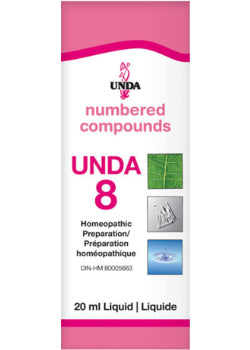
UNDA #8: CIRCULATION SUPPORT Unda #8 is a unique homeopathic remedy used for relief of symptom associated with overall poor circulation. The herbal and mineral blend found in Unda #8 makes an impact on the heart' making it effective in all pathologies of cardiac function' both arterial and venous. The copper in Unda #8 plays an important role in hematopoiesis. Hawthorn also play a big role in Unda #8 by helping to regulate blood pressure by balancing the amount of fluid in the vessels. [LIQUID]
Each drop contains:
Hamamelis virginiana (Witch hazel) Bark 4X
Millefolium (Yarrow) Whole Plant 4X
Equisetum arvense (Common horsetail) Stem 4X
Mercurialis perennis Whole Plant 4X
Thlaspi bursa-pastoris (Shepherd's purse) Whole Plant 4X
Cactus grandiflorus (Night-blooming cereus) Stem 4X
Crataegus (Hawthorn) Fruit 4X
Cuprum metallicum (Copper) 12X
Ethanol (beet), purified water
Important Information:
If symptoms persist or worsen, consult your healthcare practitioner. If you are pregnant or breastfeeding, consult your healthcare practitioner prior to use.
Dosage
Adults and Children (12 years and older):
Take 10 to 30 drops one to three times daily, or as recommended by your healthcare practitioner.
Children (6-11 years):
Take 5 to 15 drops one to three times daily, or as recommended by your healthcare practitioner.
Children (1-5 years):
Take 5 to 10 drops one to three times daily, or as recommended by your healthcare practitioner.
Infants (0-11 months):
Take 1 to 5 drops one to three times daily, or as recommended by your healthcare practitioner.
Acute Dosing:
Follow the above age recommended drop amounts and take every 15 to 60 minutes (up to 12 times per day) or until symptoms improve, then resume general dosing.
Homeopathic Liquid Compounds for Whole Body Health
Unda formulates
homeopathic supplements
including Unda #245 for hormone support, Unda #30 for insomnia support, Unda #8 to support circulation and Unda #6 for digestive support. Unda uses quality herbal blends to help support overall health and provide a diverse range of homeopathic supplements.
COPPER
One of copper's most important roles is as part
antioxidants...
The body uses copper in several systems. In the blood, it is a component of hemoglobin, the oxygen-carrying portion of the red blood cell. A deficiency of copper leads to anemia. It is important for wound healing and maintaining the integrity of the skin, bone, cartilage and tendons. Copper works with
zinc
and
vitamin C
to form elastin and
collagen, which provide structural stability to most tissues and play a special role in maintaining elasticity in areas like the lungs and skin.
Copper is a component of melanin, the pigment that gives colour to the hair and skin. One of copper's most important roles is as part antioxidants, such as superoxide dismutase (SOD). SOD protects the red blood cells from damage by free radicals. Free radicals are unstable molecules that in their bid to become more stable must bump into healthy cells and cause damage. Ironically if copper is taken in excess amounts it acts as an oxidant, produces free radicals and can cause tissue damage. Therefore it is important to take copper in moderate amounts. Copper is recommended by natural health care practitioners for osteoporosis, rheumatoid arthritis, anemia, poor hair and skin quality, and low immune function.
Supplemental copper is available in many forms and as a single mineral or in a mineral complex. Chelated or citrated copper supplements are easier for the body to use. Chelated simply means that copper is bonded to a
protein
molecule or amino acid, and citrated means that copper is bonded to a citrate molecule. Both processes enhance copper's absorption in the intestinal tract. It is often recommended to take a zinc supplement concurrently with copper, usually in a ratio of 10-15mg of zinc to 1mg copper.
It is important to balance one's consumption of copper with zinc and
vitamin C. High intake of vitamin C or zinc causes copper levels to decline and high copper intake causes levels of vitamin C and zinc to decline. If your diet is high in fructose, fruit sugar, a copper deficiency is more likely to occur. Some antibiotics and antiviral medications deplete copper. Oral contraceptives and hormone replacement therapy containing estrogen can increase
serum
copper levels. Eye tissue is particularly sensitive to damage from copper and those with eye disease should use copper cautiously.
Copper QUICK FACTS
FOOD SOURCES
Almonds, avocados, barley, beans, blackstrap molasses,
broccoli, garlic, liver, mushrooms, nuts, oats, oranges, pecans, raisins, salmon, soybeans, green leafy vegetables.
DEFICIENCY SYMPTOMS
Loss of hair and skin colour, anemia, arthritis, weak connective tissue, heart disease and low immune function.
OPTIMUM DOSAGE
2-3mg daily. (Clinical doses may be higher as recommended by your practitioner.
WORKS WELL WITH
Vitamin C,
calcium, zinc.
IMPORTANT INFORMATION
Persons with eye problems should use copper cautiously and always balance their intake of copper with iron, zinc and
calcium
Copper toxicity causes destruction of eye tissue, anemia, jaundice, nausea, vomiting, headache, dizziness, diarrhea and stomach pains.
Carefully SelectedShips to the U.S.Wellness EssentialsTrusted Brands
Product Details
COPPER
One of copper's most important roles is as part
antioxidants...
The body uses copper in several systems. In the blood, it is a component of hemoglobin, the oxygen-carrying portion of the red blood cell. A deficiency of copper leads to anemia. It is important for wound healing and maintaining the integrity of the skin, bone, cartilage and tendons. Copper works with
zinc
and
vitamin C
to form elastin and
collagen, which provide structural stability to most tissues and play a special role in maintaining elasticity in areas like the lungs and skin.
Copper is a component of melanin, the pigment that gives colour to the hair and skin. One of copper's most important roles is as part antioxidants, such as superoxide dismutase (SOD). SOD protects the red blood cells from damage by free radicals. Free radicals are unstable molecules that in their bid to become more stable must bump into healthy cells and cause damage. Ironically if copper is taken in excess amounts it acts as an oxidant, produces free radicals and can cause tissue damage. Therefore it is important to take copper in moderate amounts. Copper is recommended by natural health care practitioners for osteoporosis, rheumatoid arthritis, anemia, poor hair and skin quality, and low immune function.
Supplemental copper is available in many forms and as a single mineral or in a mineral complex. Chelated or citrated copper supplements are easier for the body to use. Chelated simply means that copper is bonded to a
protein
molecule or amino acid, and citrated means that copper is bonded to a citrate molecule. Both processes enhance copper's absorption in the intestinal tract. It is often recommended to take a zinc supplement concurrently with copper, usually in a ratio of 10-15mg of zinc to 1mg copper.
It is important to balance one's consumption of copper with zinc and
vitamin C. High intake of vitamin C or zinc causes copper levels to decline and high copper intake causes levels of vitamin C and zinc to decline. If your diet is high in fructose, fruit sugar, a copper deficiency is more likely to occur. Some antibiotics and antiviral medications deplete copper. Oral contraceptives and hormone replacement therapy containing estrogen can increase
serum
copper levels. Eye tissue is particularly sensitive to damage from copper and those with eye disease should use copper cautiously.
Copper QUICK FACTS
FOOD SOURCES
Almonds, avocados, barley, beans, blackstrap molasses,
broccoli, garlic, liver, mushrooms, nuts, oats, oranges, pecans, raisins, salmon, soybeans, green leafy vegetables.
DEFICIENCY SYMPTOMS
Loss of hair and skin colour, anemia, arthritis, weak connective tissue, heart disease and low immune function.
OPTIMUM DOSAGE
2-3mg daily. (Clinical doses may be higher as recommended by your practitioner.
WORKS WELL WITH
Vitamin C,
calcium, zinc.
IMPORTANT INFORMATION
Persons with eye problems should use copper cautiously and always balance their intake of copper with iron, zinc and
calcium
Copper toxicity causes destruction of eye tissue, anemia, jaundice, nausea, vomiting, headache, dizziness, diarrhea and stomach pains.
🌿
Daily Wellness
Easy to add to your everyday health routine.
✅
Carefully Selected
Chosen with quality and customer needs in mind.
💊
Simple to Use
Designed for convenient daily supplementation.
🚚
Ships to the U.S.
Fast, reliable shipping to U.S. customers.
Choosing a selection results in a full page refresh.