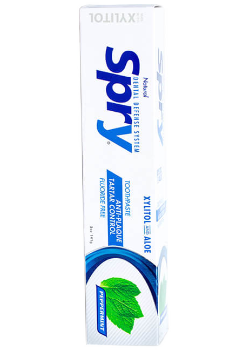
XYLITOL SWEETENED PEPPERMINT FLUORIDE-FREE TOOTHPASTE FROM SPRYThis sugar-free, fluoride-free toothpaste provides a powerful punch of refreshing, peppermint flavor and is sweetened with 100% xylitol! Clinical studies have repeatedly shown that xylitol may reduce the risk of dental caries in people who consistently use products sweetened with 100% xylitol. Consistent use of Spry products can help inhibit the ability of cavity-causing, plaque-forming bacteria to stick to teeth and actually help reverse early cavity formation. Enjoy breath and a cleaner mouth with Spry's Xylitol Peppermint Toothpaste! [PASTE]
Ingredients:
Water, Glycerin, Silica, Xylitol, Erythritol, Lauryl glucoside, Sodium Methyl Cocoyl Taurate, Zinc Citrate, Cranberry Extract, Aloe Vera, Xanthan Gum, Cellulose Gum, Stevia, Natural Peppermint flavour, Sodium Benzoate, Titanium Dioxide.
Important Information:
Contains no fluoride and is "kid safe". Not harmful if swallowed.
Dosage
Adults and children 2+: brush teeth thoroughly after meals, or at least twice a day or as directed by your dentist.
Xlear and Spry brands create sugar-free, natural breath freshening products to support oral health. Made with Xylitol, Xlear’s top sellers include; Power Peppermint Mints, Berry Blast Mints, Spry Spearmint Gum, Spry Cinnamon Gum and even Spry Green Tea Gum, plus many more flavours. Xlear delivers on delicious flavoured, sugar-free oral health products.
Dental Health
JUST AS ESSENTIAL AS THE HEALTH OF OTHER PARTS OF YOUR BODY - BUT OFTEN IGNORED - THE HEALTH OF YOUR MOUTH & TEETH CAN BE ENHANCED WITH PROPER NUTRITION...
We often overlook the importance of taking care of our teeth and gums. The mouth is an important digestive organ. It begins the digestive process by secreting saliva and by physically breaking down food with chewing. Problems in the mouth can lead to malnutrition when foods are avoided due to pain or the inability to chew them correctly.
Periodontal disease is the inflammation of the gum (gingivitis) and support structure of the tooth. In mild cases, gums that bleed easily may be the only sign of a problem. In severe cases the gums are inflamed and receding and teeth loosen and become abscessed. Chronic bad breath is a sign of poor hygiene and often correlates with periodontal disease. Periodontal disease can be caused by poor hygiene, nutritional deficiencies, stress, toxin overload, medications and hormonal changes.
Tooth decay
occurs when bacteria produce acid that erodes the teeth. It does not cause toothache or temperature sensitivity until the decay affects the nerve in the centre of the tooth. Besides bacterial presence, tooth decay will only occur if the enamel is vulnerable and sugars are available for the bacteria to feed on.
Periodontal disease and tooth decay can be prevented with the proper diet and hygiene. Proper dental hygiene includes regular tooth brushing and flossing. Make sure to use a soft bristled toothbrush to prevent damaging tooth enamel. Gargle with salt water to ease dental pain and purify the mouth. Topical
clove oil
is analgesic when used on the teeth and gums. Goldenseal, sage and
thyme
can be made into teas and used as an antibacterial mouthwash.
Stress can be a contributing factor to gingivitis and tooth decay. It decreases the immune system and may lead to increased bacteria in the mouth. We often eat poorly and crave sugar and junk foods during stressful times, which can also contribute to dental problems.
A diet high in raw fruits and vegetables provides a good source of vitamins, minerals and
antioxidants. Raw crunchy foods, like apples and carrots, clean the teeth as you chew. Unsweetened
cranberry
juice has been studied for its plaque fighting properties and may one day be added into toothpaste.
Avoid all refined sugars, sticky foods, smoking, carbonated beverages and chewable
vitamin C
tablets.
Fluoride has been added to drinking water and dental hygiene products. It is believed to strengthen the tooth enamel and increase resistance to decay. Many dentists recommend fluoride treatments for children. It is becoming a controversial practice because fluoride supplementation may cause poor bone quality and be a carcinogen. Consumers should think carefully about using these products.
The sugar xylitol has been studied for its antibacterial properties. Studies show that consuming this sugar changes the bacterial flora of the mouth. The bacteria produce less acid and therefore cause less tooth decay. In Finland, dental care for children is based on using xylitol. Xylitol can be purchased for use in baking or found in gums and mints. It is a natural sweetener and its only side effect is that it can cause
diarrhea
in a small number of individuals.
What You Can Do:
-Cut out Sugar; Use alternatives like
Stevia
-Eat lots of vegetables
-Ensure a healthy PH by maintaining mineral balance; acid leaches out minerals from the teeth
-Take
CoQ10
if you have Gum disease
-Consider alternatives to mercury filling
-Don't drink coffee; it stains teeth and depletes nutrients
Did You Know? (Dental Health Facts)
-Your mouth has friendly bacteria just like the colon
-Some people don't get wisdom teeth
Carefully SelectedShips to the U.S.Wellness EssentialsTrusted Brands
Product Details
Dental Health
JUST AS ESSENTIAL AS THE HEALTH OF OTHER PARTS OF YOUR BODY - BUT OFTEN IGNORED - THE HEALTH OF YOUR MOUTH & TEETH CAN BE ENHANCED WITH PROPER NUTRITION...
We often overlook the importance of taking care of our teeth and gums. The mouth is an important digestive organ. It begins the digestive process by secreting saliva and by physically breaking down food with chewing. Problems in the mouth can lead to malnutrition when foods are avoided due to pain or the inability to chew them correctly.
Periodontal disease is the inflammation of the gum (gingivitis) and support structure of the tooth. In mild cases, gums that bleed easily may be the only sign of a problem. In severe cases the gums are inflamed and receding and teeth loosen and become abscessed. Chronic bad breath is a sign of poor hygiene and often correlates with periodontal disease. Periodontal disease can be caused by poor hygiene, nutritional deficiencies, stress, toxin overload, medications and hormonal changes.
Tooth decay
occurs when bacteria produce acid that erodes the teeth. It does not cause toothache or temperature sensitivity until the decay affects the nerve in the centre of the tooth. Besides bacterial presence, tooth decay will only occur if the enamel is vulnerable and sugars are available for the bacteria to feed on.
Periodontal disease and tooth decay can be prevented with the proper diet and hygiene. Proper dental hygiene includes regular tooth brushing and flossing. Make sure to use a soft bristled toothbrush to prevent damaging tooth enamel. Gargle with salt water to ease dental pain and purify the mouth. Topical
clove oil
is analgesic when used on the teeth and gums. Goldenseal, sage and
thyme
can be made into teas and used as an antibacterial mouthwash.
Stress can be a contributing factor to gingivitis and tooth decay. It decreases the immune system and may lead to increased bacteria in the mouth. We often eat poorly and crave sugar and junk foods during stressful times, which can also contribute to dental problems.
A diet high in raw fruits and vegetables provides a good source of vitamins, minerals and
antioxidants. Raw crunchy foods, like apples and carrots, clean the teeth as you chew. Unsweetened
cranberry
juice has been studied for its plaque fighting properties and may one day be added into toothpaste.
Avoid all refined sugars, sticky foods, smoking, carbonated beverages and chewable
vitamin C
tablets.
Fluoride has been added to drinking water and dental hygiene products. It is believed to strengthen the tooth enamel and increase resistance to decay. Many dentists recommend fluoride treatments for children. It is becoming a controversial practice because fluoride supplementation may cause poor bone quality and be a carcinogen. Consumers should think carefully about using these products.
The sugar xylitol has been studied for its antibacterial properties. Studies show that consuming this sugar changes the bacterial flora of the mouth. The bacteria produce less acid and therefore cause less tooth decay. In Finland, dental care for children is based on using xylitol. Xylitol can be purchased for use in baking or found in gums and mints. It is a natural sweetener and its only side effect is that it can cause
diarrhea
in a small number of individuals.
What You Can Do:
-Cut out Sugar; Use alternatives like
Stevia
-Eat lots of vegetables
-Ensure a healthy PH by maintaining mineral balance; acid leaches out minerals from the teeth
-Take
CoQ10
if you have Gum disease
-Consider alternatives to mercury filling
-Don't drink coffee; it stains teeth and depletes nutrients
Did You Know? (Dental Health Facts)
-Your mouth has friendly bacteria just like the colon
-Some people don't get wisdom teeth
🌿
Daily Wellness
Easy to add to your everyday health routine.
✅
Carefully Selected
Chosen with quality and customer needs in mind.
💊
Simple to Use
Designed for convenient daily supplementation.
🚚
Ships to the U.S.
Fast, reliable shipping to U.S. customers.
Choosing a selection results in a full page refresh.