

1
/
of
1
Now
Xyliwhite Toothpaste (Charcoal Refresh, Mint) - 181g
Xyliwhite Toothpaste (Charcoal Refresh, Mint) - 181g
Regular price
$15.74 USD
Regular price
Sale price
$15.74 USD
Shipping calculated at checkout.
Availability
In stock, and ready to ship
- Natural & Fluoride Free
- With Xylitol, Activated Charcoal & Baking Soda
- Freshens Breath, Cleanses Mouth & Whitens
- Promotes Dental Health
- Free from SLS, paraben, gluten & GMOs
Quantity
Couldn't load pickup availability

Xyliwhite Toothpaste (Charcoal Refresh, Mint) - 181g
$15.74
Now Xyliwhite Toothpaste (Charcoal Refresh, Mint) - 181g is a dietary supplement in powder form, intended for adults as part of a daily wellness routine.
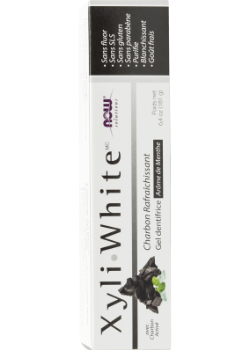
NOW® Solutions offers XyliWhite™ Toothpaste, natural dental care without the use of fluoride. The XyliWhite™ Advantage: XyliWhite™ is a remarkable fluoride-free toothpaste gel that uses natural xylitol as its main ingredient. A great selection of flavours gives variety to everyone in the family. XyliWhite™ Charcoal Refresh Toothpaste Gel from NOW® Solutions cleanses, whitens and has a fresh taste. Contains the whitening power of charcoal and baking soda. [TOOTHPASTE]
Functional ingredients:
Xylitol 25%*
*Sodium bicarbonate (whitening), papain (whitening), charcoal powder (whitening).
Other Ingredients:
Water, xylitol (25%)*, hydrated silica, glycerin, sorbitol, sodium bicarbonate, sodium carbonate, sodium coco-sulfate, xanthan gum, potassium sorbate, mentha viridis (spearmint) leaf oil, papain, mentha piperita (peppermint) oil, charcoal powder, melaleuca alternifolia (tea tree) leaf oil.
*Non-GMO
Important Information:
Xylitol is harmful to pets. Do not feed Xylitol to dogs or other pets. Seek veterinary care immediately if ingestion is suspected.
Xylitol 25%*
*Sodium bicarbonate (whitening), papain (whitening), charcoal powder (whitening).
Other Ingredients:
Water, xylitol (25%)*, hydrated silica, glycerin, sorbitol, sodium bicarbonate, sodium carbonate, sodium coco-sulfate, xanthan gum, potassium sorbate, mentha viridis (spearmint) leaf oil, papain, mentha piperita (peppermint) oil, charcoal powder, melaleuca alternifolia (tea tree) leaf oil.
*Non-GMO
Important Information:
Xylitol is harmful to pets. Do not feed Xylitol to dogs or other pets. Seek veterinary care immediately if ingestion is suspected.
Dosage
Adults and children 2 years and older: Apply XyliWhite™ toothpaste gel on to a soft bristle toothbrush. Brush thoroughly after meals, at least twice a day, or as directed by your dentist.
Adults and children 2 years and older: Apply XyliWhite™ toothpaste gel on to a soft bristle toothbrush. Brush thoroughly after meals, at least twice a day, or as directed by your dentist.
Since 1968 NOW has been a leader in the natural products industry. NOW Foods is an award-winning and highly respected manufacturer of vitamins, minerals, dietary supplements and natural foods. Now Foods brings you over 1600 Natural Foods, Supplements, Sports Nutrition and Personal Care Products. NOW supplements are high quality products at affordable prices.
XYLITOL
This sugar alcohol is certainly no newcomer in the world of
alternative sweeteners. It has been used throughout various regions of the world since the 1940's, and is just now getting the attention it so rightly deserves. It has been proven both safe and effective for users of all ages, and is suitable for just about any application that would call for regular table sugar.
The Natural Sweetener!
Xylitol is a sugar alcohol that is naturally present in small amounts in various fruits and vegetables. It was originally extracted from
birch
trees in Finland. NOW Xylitol is derived from non-GMO corn. It is comparable to xylitol derived from other sources, such as birch.
It resembles sugar in consistency and taste, but has a third fewer calories and is a great sugar alternative for diabetics. Xylitol may also inhibit cavities by denying plaque bacteria the fuel (sugar) it needs to erode tooth enamel. It can be used as a sugar substitute in most sugar-free recipes.
A Sweet Alternative!
You might be surprised to learn that sugar is rotting more than just your teeth. A tablespoon here, a packet there, a sugar cube with your afternoon tea. It adds up faster than you might think. And while satisfying the old sweet tooth is a pleasure that we are all guilty of, it is important to remember that, over time, excessive sugar consumption may take a serious toll on a person's overall health. Unfortunately, the problem doesn't stop at table sugar. In fact, some of the most concerning sugar products often hide in popular processed foods and beverages.
High fructose corn syrup (HFCS) is a perfect example. Popularized in the 1970's, HCFS is commonly used in soda, jelly, candy, sauces, condiments, beer, cookies, breakfast cereals, and many more. After a chemically-intense extraction and treatment process, all that remains is a nutritionally-depleted chemical that is inexpensive to manufacture, extremely sweet, and high on the glycemic scale. Within the body, high glycemic sweeteners are among the most unfavorable, as they can reduce insulin sensitivity and encourage the body to store greater amounts of fat.
Despite respectable media coverage, diets high in sugar can lead to a number of health ailments that only seem to generate the attention after it is too late. Even more frightening, many Americans have been left in the dark with regard to the damage that can be caused by regularly consuming excessive amounts of sugar. Don't panic. Nature has blessed us with a host of natural sweeteners that can serve as much healthier alternatives. One of the most exciting is Xylitol.
Discovered in the 1800's, Xylitol is an all natural sugar alcohol that has been the subject of intense research for over thirty years. This ongoing research continues to teach us that Xylitol is an excellent choice when it comes to sugar substitutes. For starters, Xylitol looks, and has the same texture as sugar. Side by side, it can be difficult to distinguish one from the other. With regards to taste, Xylitol is sweet, but not nearly as overpowering as conventional table sugar. Finally, it mixes instantly in beverages and easily takes the place of sugar in baking applications. Despite how similar the two are, Xylitol clearly has a number of health advantages.
For instance, Xylitol has approximately 40% fewer calories than table sugar. At 2.4 calories per gram vs.. 4 calories per gram in conventional sugar, it is easy to see why Xylitol has created such a stir among calorie counters. Moreover, it is absorbed and utilized at a much slower pace than sugar, and therefore does not cause blood sugar and insulin levels to spike in the manner that sugar does. From a metabolic perspective, Xylitol has an extremely low glycemic rating or 7, while refined sugar is closer to 100.
Unlike sugar and high fructose corn syrup, Xylitol does not promote cavities. Studies have shown that when consumed in chewing gums, tooth pastes, oral rinses, mints, and hard candy, Xylitol is a smart choice for individuals concerned with dental health. It is absolutely safe for people of every age, and is now officially endorsed by six International Dental Associations.
Finally, the mouth, middle ear, and upper respiratory systems are prone to a number of harmful infection-causing bacteria. One of the major problems with conventional sugar is that it creates an environment favorable to bacterial growth. Xylitol, on the other hand, can not be utilized by these bacteria. And unlike many commercially marketed artificial sweeteners, Xylitol is a completely natural substance that the body produces every day.
The Xylitol Revolution: Sweet Versatility
Sounds almost too good to be true: a natural sweetener that is as sweet as sugar, has 40% less calories, may prevent dental carries, support
bone health, aid in weight management,
joint health, muscle building, and be suitable for diabetics? Xylitol may just be that sweetener.
Xylitol has been available since the 1960's. First discovered in 1891, xylitol has garnered strong support in Finland where it is known as "koivusokeri" or "birch sugar" since it can be derived from the fiber of birch tree bark. Commercial xylitol is produced from xylose, which in turn is derived from corn. It is a type of carbohydrate classified as a sugar alcohol, as are sorbitol, maltitol, lactitol, and mannitol. This classification describes their chemical structures rather than suggesting an intoxicating quality. Naturally found in many foods (such as plums, berries, fibrous vegetables, and mushrooms), 15 grams a day or more can be produced naturally in the body from other foods.
Xylitol tastes like sugar but adds a cool "icy" taste sensation due to its unusual property of having a negative heat of dissolution: it actually cools the dissolving liquid. Snack foods made with xylitol taste great and are well accepted by adults and children alike.
Look Mom, No Cavities
Studies using Xylitol demonstrate a consistent decrease in dental caries (cavities) ranging from 30 to 60 percent.
The mechanism of dental caries formation is one of the more extensively studied and better-understood body processes. Multiple factors play key roles, particularly bacteria and dietary sugars. The bacteria present in the mouth, such as Streptococcus mutans, ferment sugars found in the foods we eat. The bacteria then excrete organic acids as waste products of their sugar metabolism, that lowers the pH of the mouth by increasing its acidity. Once the pH falls below 5.7 the minerals of the tooth may start to dissolve, or demineralize. As this process continues, the surface of the tooth becomes weak and may eventually collapse, forming a cavity. We need something that can inhibit these bacteria or limit their metabolism. Xylitol may be an answer.
In the past, artificial sweeteners were the only choices for non-cariogenic foods since they are not metabolized in the same way as sugars. Studies show the natural sweetener xylitol is not fermented by cavity-forming bacteria. Xylitol inhibits their growth and therefore may actually decrease oral bacteria counts, contrasting with the known effects of white sugar 2,3! One fascinating study even suggests that mothers who habitually use xylitol give birth to children who may be less susceptible to cavities as they age4. An ideal delivery method is chewing xylitol gum. This proven and commercially available form has the additional benefit of increasing flow of saliva, which may provide for increased buffering of plaque acids and enhanced clearance of sugars from the mouth. Xylitol is finding its way into toothpaste as the preferred sweetener.
Dieters And Diabetics Rejoice
Low carb dieters are very interested in low glycemic foods. The glycemic index (GI) is a way of measuring how quickly a food raises blood sugar levels. The higher the glycemic index, the worse a food is for individuals with blood sugar irregularities. Those struggling with weight loss are particularly concerned, since high glycemic foods may be much more likely to be stored as fat.
Glucose, which is blood sugar itself and found in corn syrup or as dextrose, is given a GI score of 100. A GI of 70 or more is considered high and includes white bread (70), Cornflakes (83) and most breakfast cereals, honey (72), and French Fries (75). Medium GI foods of 56 to 69 include table sugar (60), Coca Cola (63), pastas such as spaghetti (61) and most grains. A GI of 55 or less is considered low and includes milk (40) and most milk products, most fruits, soybeans (18), and most nuts such as peanuts (14). Xylitol has a super low glycemic index of 7! Its mostly insulin-independent metabolism makes it ideal for maintaining steady blood sugar and insulin levels.
Xylitol is an ideal sweetener for dieters for other reasons, as well. A teaspoon of xylitol is just as sweet as the same amount of sugar, yet has 40% fewer calories! Studies also show that xylitol consumption can decrease total caloric intake by encouraging slower gastric emptying 5. A dieter's appetite might be tastefully controlled.
Strong Bones
Aging tends to bring with it a variety of changes, including changes in nutrient absorption and metabolism.
Vitamin D, for example, plays an important role in
calcium
absorption. But aging brings decreased intestinal receptors for
Vitamin D, which eventually affects bone formation. Impaired bone formation can then lead to gradual bone thinning and
osteoporosis.
Studies show that continuous moderate dietary xylitol intake leads to increased bone volume and increased bone mineral content 6. Dietary xylitol increases bone
calcium
and
phosphorus
concentrations in animal studies, as well as protects against a decrease in bone minerals and bone density during osteoporosis. Xylitol increases calcium absorption and bioavailability independent of such factors as Vitamin D status. In fact, xylitol's ability to chelate or complex with minerals may account for its ability to enhance the absorption of other minerals, such as iron and
magnesium.
This sugar alcohol is certainly no newcomer in the world of
alternative sweeteners. It has been used throughout various regions of the world since the 1940's, and is just now getting the attention it so rightly deserves. It has been proven both safe and effective for users of all ages, and is suitable for just about any application that would call for regular table sugar.
The Natural Sweetener!
Xylitol is a sugar alcohol that is naturally present in small amounts in various fruits and vegetables. It was originally extracted from
birch
trees in Finland. NOW Xylitol is derived from non-GMO corn. It is comparable to xylitol derived from other sources, such as birch.
It resembles sugar in consistency and taste, but has a third fewer calories and is a great sugar alternative for diabetics. Xylitol may also inhibit cavities by denying plaque bacteria the fuel (sugar) it needs to erode tooth enamel. It can be used as a sugar substitute in most sugar-free recipes.
A Sweet Alternative!
You might be surprised to learn that sugar is rotting more than just your teeth. A tablespoon here, a packet there, a sugar cube with your afternoon tea. It adds up faster than you might think. And while satisfying the old sweet tooth is a pleasure that we are all guilty of, it is important to remember that, over time, excessive sugar consumption may take a serious toll on a person's overall health. Unfortunately, the problem doesn't stop at table sugar. In fact, some of the most concerning sugar products often hide in popular processed foods and beverages.
High fructose corn syrup (HFCS) is a perfect example. Popularized in the 1970's, HCFS is commonly used in soda, jelly, candy, sauces, condiments, beer, cookies, breakfast cereals, and many more. After a chemically-intense extraction and treatment process, all that remains is a nutritionally-depleted chemical that is inexpensive to manufacture, extremely sweet, and high on the glycemic scale. Within the body, high glycemic sweeteners are among the most unfavorable, as they can reduce insulin sensitivity and encourage the body to store greater amounts of fat.
Despite respectable media coverage, diets high in sugar can lead to a number of health ailments that only seem to generate the attention after it is too late. Even more frightening, many Americans have been left in the dark with regard to the damage that can be caused by regularly consuming excessive amounts of sugar. Don't panic. Nature has blessed us with a host of natural sweeteners that can serve as much healthier alternatives. One of the most exciting is Xylitol.
Discovered in the 1800's, Xylitol is an all natural sugar alcohol that has been the subject of intense research for over thirty years. This ongoing research continues to teach us that Xylitol is an excellent choice when it comes to sugar substitutes. For starters, Xylitol looks, and has the same texture as sugar. Side by side, it can be difficult to distinguish one from the other. With regards to taste, Xylitol is sweet, but not nearly as overpowering as conventional table sugar. Finally, it mixes instantly in beverages and easily takes the place of sugar in baking applications. Despite how similar the two are, Xylitol clearly has a number of health advantages.
For instance, Xylitol has approximately 40% fewer calories than table sugar. At 2.4 calories per gram vs.. 4 calories per gram in conventional sugar, it is easy to see why Xylitol has created such a stir among calorie counters. Moreover, it is absorbed and utilized at a much slower pace than sugar, and therefore does not cause blood sugar and insulin levels to spike in the manner that sugar does. From a metabolic perspective, Xylitol has an extremely low glycemic rating or 7, while refined sugar is closer to 100.
Unlike sugar and high fructose corn syrup, Xylitol does not promote cavities. Studies have shown that when consumed in chewing gums, tooth pastes, oral rinses, mints, and hard candy, Xylitol is a smart choice for individuals concerned with dental health. It is absolutely safe for people of every age, and is now officially endorsed by six International Dental Associations.
Finally, the mouth, middle ear, and upper respiratory systems are prone to a number of harmful infection-causing bacteria. One of the major problems with conventional sugar is that it creates an environment favorable to bacterial growth. Xylitol, on the other hand, can not be utilized by these bacteria. And unlike many commercially marketed artificial sweeteners, Xylitol is a completely natural substance that the body produces every day.
The Xylitol Revolution: Sweet Versatility
Sounds almost too good to be true: a natural sweetener that is as sweet as sugar, has 40% less calories, may prevent dental carries, support
bone health, aid in weight management,
joint health, muscle building, and be suitable for diabetics? Xylitol may just be that sweetener.
Xylitol has been available since the 1960's. First discovered in 1891, xylitol has garnered strong support in Finland where it is known as "koivusokeri" or "birch sugar" since it can be derived from the fiber of birch tree bark. Commercial xylitol is produced from xylose, which in turn is derived from corn. It is a type of carbohydrate classified as a sugar alcohol, as are sorbitol, maltitol, lactitol, and mannitol. This classification describes their chemical structures rather than suggesting an intoxicating quality. Naturally found in many foods (such as plums, berries, fibrous vegetables, and mushrooms), 15 grams a day or more can be produced naturally in the body from other foods.
Xylitol tastes like sugar but adds a cool "icy" taste sensation due to its unusual property of having a negative heat of dissolution: it actually cools the dissolving liquid. Snack foods made with xylitol taste great and are well accepted by adults and children alike.
Look Mom, No Cavities
Studies using Xylitol demonstrate a consistent decrease in dental caries (cavities) ranging from 30 to 60 percent.
The mechanism of dental caries formation is one of the more extensively studied and better-understood body processes. Multiple factors play key roles, particularly bacteria and dietary sugars. The bacteria present in the mouth, such as Streptococcus mutans, ferment sugars found in the foods we eat. The bacteria then excrete organic acids as waste products of their sugar metabolism, that lowers the pH of the mouth by increasing its acidity. Once the pH falls below 5.7 the minerals of the tooth may start to dissolve, or demineralize. As this process continues, the surface of the tooth becomes weak and may eventually collapse, forming a cavity. We need something that can inhibit these bacteria or limit their metabolism. Xylitol may be an answer.
In the past, artificial sweeteners were the only choices for non-cariogenic foods since they are not metabolized in the same way as sugars. Studies show the natural sweetener xylitol is not fermented by cavity-forming bacteria. Xylitol inhibits their growth and therefore may actually decrease oral bacteria counts, contrasting with the known effects of white sugar 2,3! One fascinating study even suggests that mothers who habitually use xylitol give birth to children who may be less susceptible to cavities as they age4. An ideal delivery method is chewing xylitol gum. This proven and commercially available form has the additional benefit of increasing flow of saliva, which may provide for increased buffering of plaque acids and enhanced clearance of sugars from the mouth. Xylitol is finding its way into toothpaste as the preferred sweetener.
Dieters And Diabetics Rejoice
Low carb dieters are very interested in low glycemic foods. The glycemic index (GI) is a way of measuring how quickly a food raises blood sugar levels. The higher the glycemic index, the worse a food is for individuals with blood sugar irregularities. Those struggling with weight loss are particularly concerned, since high glycemic foods may be much more likely to be stored as fat.
Glucose, which is blood sugar itself and found in corn syrup or as dextrose, is given a GI score of 100. A GI of 70 or more is considered high and includes white bread (70), Cornflakes (83) and most breakfast cereals, honey (72), and French Fries (75). Medium GI foods of 56 to 69 include table sugar (60), Coca Cola (63), pastas such as spaghetti (61) and most grains. A GI of 55 or less is considered low and includes milk (40) and most milk products, most fruits, soybeans (18), and most nuts such as peanuts (14). Xylitol has a super low glycemic index of 7! Its mostly insulin-independent metabolism makes it ideal for maintaining steady blood sugar and insulin levels.
Xylitol is an ideal sweetener for dieters for other reasons, as well. A teaspoon of xylitol is just as sweet as the same amount of sugar, yet has 40% fewer calories! Studies also show that xylitol consumption can decrease total caloric intake by encouraging slower gastric emptying 5. A dieter's appetite might be tastefully controlled.
Strong Bones
Aging tends to bring with it a variety of changes, including changes in nutrient absorption and metabolism.
Vitamin D, for example, plays an important role in
calcium
absorption. But aging brings decreased intestinal receptors for
Vitamin D, which eventually affects bone formation. Impaired bone formation can then lead to gradual bone thinning and
osteoporosis.
Studies show that continuous moderate dietary xylitol intake leads to increased bone volume and increased bone mineral content 6. Dietary xylitol increases bone
calcium
and
phosphorus
concentrations in animal studies, as well as protects against a decrease in bone minerals and bone density during osteoporosis. Xylitol increases calcium absorption and bioavailability independent of such factors as Vitamin D status. In fact, xylitol's ability to chelate or complex with minerals may account for its ability to enhance the absorption of other minerals, such as iron and
magnesium.
Carefully Selected
Ships to the U.S.
Wellness Essentials
Trusted Brands
Product Details
XYLITOLThis sugar alcohol is certainly no newcomer in the world of
alternative sweeteners. It has been used throughout various regions of the world since the 1940's, and is just now getting the attention it so rightly deserves. It has been proven both safe and effective for users of all ages, and is suitable for just about any application that would call for regular table sugar.
The Natural Sweetener!
Xylitol is a sugar alcohol that is naturally present in small amounts in various fruits and vegetables. It was originally extracted from
birch
trees in Finland. NOW Xylitol is derived from non-GMO corn. It is comparable to xylitol derived from other sources, such as birch.
It resembles sugar in consistency and taste, but has a third fewer calories and is a great sugar alternative for diabetics. Xylitol may also inhibit cavities by denying plaque bacteria the fuel (sugar) it needs to erode tooth enamel. It can be used as a sugar substitute in most sugar-free recipes.
A Sweet Alternative!
You might be surprised to learn that sugar is rotting more than just your teeth. A tablespoon here, a packet there, a sugar cube with your afternoon tea. It adds up faster than you might think. And while satisfying the old sweet tooth is a pleasure that we are all guilty of, it is important to remember that, over time, excessive sugar consumption may take a serious toll on a person's overall health. Unfortunately, the problem doesn't stop at table sugar. In fact, some of the most concerning sugar products often hide in popular processed foods and beverages.
High fructose corn syrup (HFCS) is a perfect example. Popularized in the 1970's, HCFS is commonly used in soda, jelly, candy, sauces, condiments, beer, cookies, breakfast cereals, and many more. After a chemically-intense extraction and treatment process, all that remains is a nutritionally-depleted chemical that is inexpensive to manufacture, extremely sweet, and high on the glycemic scale. Within the body, high glycemic sweeteners are among the most unfavorable, as they can reduce insulin sensitivity and encourage the body to store greater amounts of fat.
Despite respectable media coverage, diets high in sugar can lead to a number of health ailments that only seem to generate the attention after it is too late. Even more frightening, many Americans have been left in the dark with regard to the damage that can be caused by regularly consuming excessive amounts of sugar. Don't panic. Nature has blessed us with a host of natural sweeteners that can serve as much healthier alternatives. One of the most exciting is Xylitol.
Discovered in the 1800's, Xylitol is an all natural sugar alcohol that has been the subject of intense research for over thirty years. This ongoing research continues to teach us that Xylitol is an excellent choice when it comes to sugar substitutes. For starters, Xylitol looks, and has the same texture as sugar. Side by side, it can be difficult to distinguish one from the other. With regards to taste, Xylitol is sweet, but not nearly as overpowering as conventional table sugar. Finally, it mixes instantly in beverages and easily takes the place of sugar in baking applications. Despite how similar the two are, Xylitol clearly has a number of health advantages.
For instance, Xylitol has approximately 40% fewer calories than table sugar. At 2.4 calories per gram vs.. 4 calories per gram in conventional sugar, it is easy to see why Xylitol has created such a stir among calorie counters. Moreover, it is absorbed and utilized at a much slower pace than sugar, and therefore does not cause blood sugar and insulin levels to spike in the manner that sugar does. From a metabolic perspective, Xylitol has an extremely low glycemic rating or 7, while refined sugar is closer to 100.
Unlike sugar and high fructose corn syrup, Xylitol does not promote cavities. Studies have shown that when consumed in chewing gums, tooth pastes, oral rinses, mints, and hard candy, Xylitol is a smart choice for individuals concerned with dental health. It is absolutely safe for people of every age, and is now officially endorsed by six International Dental Associations.
Finally, the mouth, middle ear, and upper respiratory systems are prone to a number of harmful infection-causing bacteria. One of the major problems with conventional sugar is that it creates an environment favorable to bacterial growth. Xylitol, on the other hand, can not be utilized by these bacteria. And unlike many commercially marketed artificial sweeteners, Xylitol is a completely natural substance that the body produces every day.
The Xylitol Revolution: Sweet Versatility
Sounds almost too good to be true: a natural sweetener that is as sweet as sugar, has 40% less calories, may prevent dental carries, support
bone health, aid in weight management,
joint health, muscle building, and be suitable for diabetics? Xylitol may just be that sweetener.
Xylitol has been available since the 1960's. First discovered in 1891, xylitol has garnered strong support in Finland where it is known as "koivusokeri" or "birch sugar" since it can be derived from the fiber of birch tree bark. Commercial xylitol is produced from xylose, which in turn is derived from corn. It is a type of carbohydrate classified as a sugar alcohol, as are sorbitol, maltitol, lactitol, and mannitol. This classification describes their chemical structures rather than suggesting an intoxicating quality. Naturally found in many foods (such as plums, berries, fibrous vegetables, and mushrooms), 15 grams a day or more can be produced naturally in the body from other foods.
Xylitol tastes like sugar but adds a cool "icy" taste sensation due to its unusual property of having a negative heat of dissolution: it actually cools the dissolving liquid. Snack foods made with xylitol taste great and are well accepted by adults and children alike.
Look Mom, No Cavities
Studies using Xylitol demonstrate a consistent decrease in dental caries (cavities) ranging from 30 to 60 percent.
The mechanism of dental caries formation is one of the more extensively studied and better-understood body processes. Multiple factors play key roles, particularly bacteria and dietary sugars. The bacteria present in the mouth, such as Streptococcus mutans, ferment sugars found in the foods we eat. The bacteria then excrete organic acids as waste products of their sugar metabolism, that lowers the pH of the mouth by increasing its acidity. Once the pH falls below 5.7 the minerals of the tooth may start to dissolve, or demineralize. As this process continues, the surface of the tooth becomes weak and may eventually collapse, forming a cavity. We need something that can inhibit these bacteria or limit their metabolism. Xylitol may be an answer.
In the past, artificial sweeteners were the only choices for non-cariogenic foods since they are not metabolized in the same way as sugars. Studies show the natural sweetener xylitol is not fermented by cavity-forming bacteria. Xylitol inhibits their growth and therefore may actually decrease oral bacteria counts, contrasting with the known effects of white sugar 2,3! One fascinating study even suggests that mothers who habitually use xylitol give birth to children who may be less susceptible to cavities as they age4. An ideal delivery method is chewing xylitol gum. This proven and commercially available form has the additional benefit of increasing flow of saliva, which may provide for increased buffering of plaque acids and enhanced clearance of sugars from the mouth. Xylitol is finding its way into toothpaste as the preferred sweetener.
Dieters And Diabetics Rejoice
Low carb dieters are very interested in low glycemic foods. The glycemic index (GI) is a way of measuring how quickly a food raises blood sugar levels. The higher the glycemic index, the worse a food is for individuals with blood sugar irregularities. Those struggling with weight loss are particularly concerned, since high glycemic foods may be much more likely to be stored as fat.
Glucose, which is blood sugar itself and found in corn syrup or as dextrose, is given a GI score of 100. A GI of 70 or more is considered high and includes white bread (70), Cornflakes (83) and most breakfast cereals, honey (72), and French Fries (75). Medium GI foods of 56 to 69 include table sugar (60), Coca Cola (63), pastas such as spaghetti (61) and most grains. A GI of 55 or less is considered low and includes milk (40) and most milk products, most fruits, soybeans (18), and most nuts such as peanuts (14). Xylitol has a super low glycemic index of 7! Its mostly insulin-independent metabolism makes it ideal for maintaining steady blood sugar and insulin levels.
Xylitol is an ideal sweetener for dieters for other reasons, as well. A teaspoon of xylitol is just as sweet as the same amount of sugar, yet has 40% fewer calories! Studies also show that xylitol consumption can decrease total caloric intake by encouraging slower gastric emptying 5. A dieter's appetite might be tastefully controlled.
Strong Bones
Aging tends to bring with it a variety of changes, including changes in nutrient absorption and metabolism.
Vitamin D, for example, plays an important role in
calcium
absorption. But aging brings decreased intestinal receptors for
Vitamin D, which eventually affects bone formation. Impaired bone formation can then lead to gradual bone thinning and
osteoporosis.
Studies show that continuous moderate dietary xylitol intake leads to increased bone volume and increased bone mineral content 6. Dietary xylitol increases bone
calcium
and
phosphorus
concentrations in animal studies, as well as protects against a decrease in bone minerals and bone density during osteoporosis. Xylitol increases calcium absorption and bioavailability independent of such factors as Vitamin D status. In fact, xylitol's ability to chelate or complex with minerals may account for its ability to enhance the absorption of other minerals, such as iron and
magnesium.


🌿
Daily Wellness
Easy to add to your everyday health routine.
✅
Carefully Selected
Chosen with quality and customer needs in mind.
💊
Simple to Use
Designed for convenient daily supplementation.
🚚
Ships to the U.S.
Fast, reliable shipping to U.S. customers.